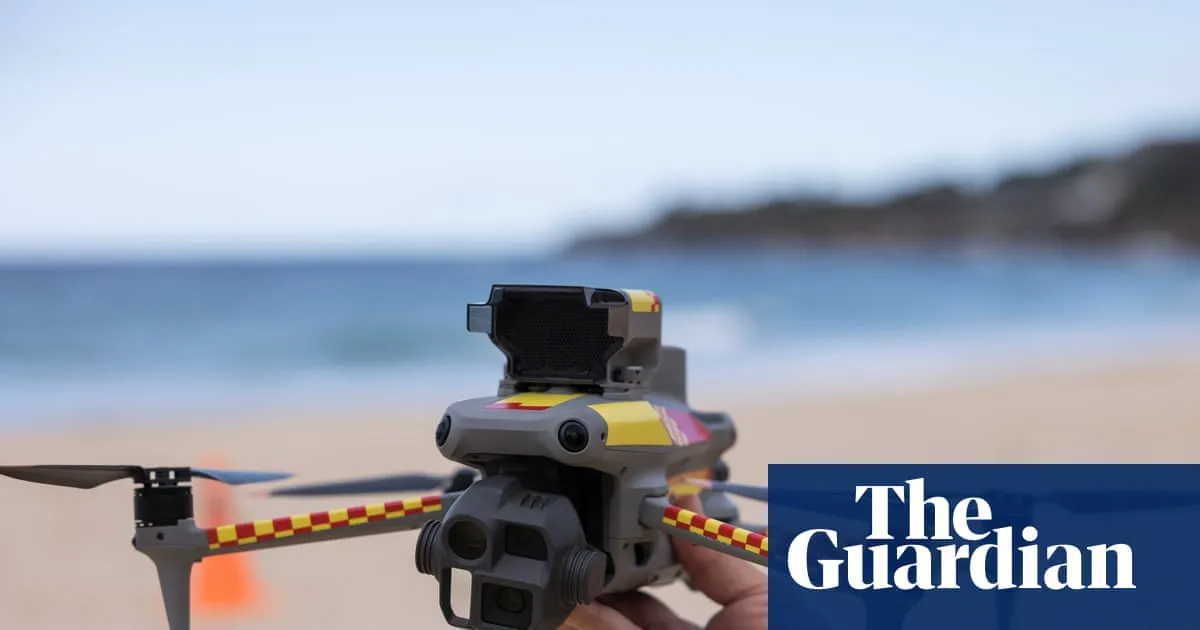
Surf Life Saving NSW will run daily drone flights across 70 beaches in NSW as part of a plan to put ‘more eyes in the sky’ to minimise shark interactions. Photograph: Anna Kucera/AAP View image in fullscreen Surf Life Saving NSW will run daily drone flights across 70 beaches in NSW as part of a plan to put ‘more eyes in the sky’ to minimise shark interactions. Photograph: Anna Kucera/AAP NSW beaches to get dawn-to-dusk drone patrols in $34m anti-shark program Premier Chris Minns says he wants to restore confidence to beachgoers after series of shark sightings and attacks Follow our Australia news live blog for latest updates Get our breaking news email, free app or daily news podcast Shark-spotting drones will fly from dawn to dusk throughout the year at 70 beaches in New South Wales under an expanded monitoring program, the state government says. The NSW premier, Chris Minns, said the $34m initiative would restore confidence to beachgoers after a series of shark sightings and attacks. They include one by a great white shark on Sydney mother Leah Stewart, who is no longer in a critical condition following the attack at Coogee beach earlier this month. “While no one can ever promise no shark interactions, this investment is about putting more eyes in the sky so we can spot sharks earlier and give people a clear heads-up when they’re in the water,” Minns said on Sunday. The 70 beaches covered year-round from 1 July will include all 38 of Sydney’s ocean beaches plus 32 in the rest of the state. The expanded program also promises greater drone monitoring at other regional beaches, with daily flights from 1 December to 30 April, flights every weekend throughout the year, and extended daily flight hours. It will be carried out by Surf Life Saving NSW, which already undertakes Drone Surveillance, including an existing school holiday drone program along the coast. The organisation’s chief executive, Steve Pearce, said drones were already an “extremely effective component” of the state’s shark management program, “having this year alone identified and prevented over 2000 sharks interacting with swimmers and surfers, and conducting over 100,000 flights”. The funding will include trials of new Artificial Intelligence shark detection systems over summer that it is hoped will pave the way for automated flights. University of Sydney shark policy expert Associate Prof Christopher Pepin-Neff said the planned use of AI was a “ambitious and bold”. “But we need to be realistic about what drones can do and what they can’t do,” they said. “With more drones in the air, that is going to mean sharks are discussed a lot more across Australian beaches. “We need to treat the beach like the bush. It’s the wild.” Although coverage will not be limited to patrolled beaches, it will not take place at every beach in the state. The 70 beaches to benefit from year-round drone monitoring, including at least one beach in every coastal local government area, include those with the highest numbers of swimmers and surfers. In Sydney, year-round drone monitoring will expand from 26 to all 38 ocean beaches, from Palm beach in the northern beaches to Cronulla in the south. Two SharkSmart listening stations in Sydney harbour will alert swimmers to tagged sharks. Following multiple attacks in the past 12 months, some fatal, the premier has resisted calls for a cull, including great white sharks, which are a protected species. Minns told Sky News on Sunday morning that “the distances these [white] sharks travel are massive”. “It’s not like we can knock a few off and send a message to the rest of them.” Pepin-Neff agreed. “White sharks are pelagic, so they travel the entire ocean, they don’t travel together,” they said. “A white shark on Tuesday could be from New Zealand, and the white shark on Wednesday could be from Queensland … so doing a cull doesn’t have any effect on them.” Minns said it was “a different situation for bull sharks” – not a protected species – and the government was “looking at all of those measures”. “We’re looking particularly at an audit of the number of sharks in Sydney harbour.” On Sunday morning, Minns told reporters he “can’t rule out” a cull of bull sharks if their numbers were higher in the normal in the summer. Robert Harcourt, emeritus professor of marine ecology at Macquarie University, said analysis of long-term tagging of bull sharks showed there was “no evidence in an increase of abundance”. “There is some evidence that sharks are coming down earlier and staying longer,” said Harcourt. “A cull is not a rational response to that.” But Harcourt welcomed greater funding for drone monitoring, which he said was “not just about sharks, it also provides swimmer surveillance and everything else … to keep people safe from all hazards”. Explore more on these topics New South Wales Sydney Sharks Marine life New South Wales politics news Share Reuse this content
SRCThe Guardian - World News
LANGEN
LEANCenter-Left
WORDS825
ENT10
SUN · 2026-06-28 · 01:03 GMTBRIEF NSR-2026-0628-87989
NSR-2026-0628-87989News Report·EN·Public Health
NSW beaches to get dawn-to-dusk drone patrols in $34m anti-shark program
The New South Wales government is launching a $34 million initiative to deploy dawn-to-dusk drone patrols at 70 beaches year-round to enhance shark monitoring. This program, managed by Surf Life Saving NSW, aims to restore beachgoer confidence following recent shark sightings and attacks.
Penry BuckleyThe Guardian - World NewsFiled 2026-06-28 · 01:03 GMTLean · Center-LeftRead · 4 min
The Guardian - World NewsFIG 01
Reading time
4min
Word count
825words
Sources cited
3cited
Entities identified
10entities
Quality score
100%
§ 01
Briefing Summary
AI-generatedNEWSAR · AI
The New South Wales government is launching a $34 million initiative to deploy dawn-to-dusk drone patrols at 70 beaches year-round to enhance shark monitoring. This program, managed by Surf Life Saving NSW, aims to restore beachgoer confidence following recent shark sightings and attacks. The drones will provide increased aerial surveillance, with expanded coverage and flight hours at both Sydney's ocean beaches and regional locations. The funding also includes trials of artificial intelligence shark detection systems. Premier Chris Minns stated the investment is about spotting sharks earlier and providing warnings, while experts note the limitations of drone effectiveness and the migratory nature of great white sharks. The government is also reviewing bull shark numbers in Sydney Harbour.
Confidence 0.90Sources 3Claims 5Entities 10
§ 02
Article analysis
Model · rule-basedFraming
Public Health
Technology
Tone
Measured
AI-assessed
CalmNeutralAlarmist
Factuality
0.70 / 1.00
Factual
LowHigh
Sources cited
3
Well sourced
FewMany
§ 03
Key claims
5 extracted01
The initiative aims to restore confidence to beachgoers after a series of shark sightings and attacks.
quoteChris Minns
Confidence
1.00
02
NSW beaches will receive dawn-to-dusk drone patrols at 70 beaches as part of a $34m anti-shark program.
factual
Confidence
1.00
03
The planned use of AI shark detection systems is ambitious and bold, but realistic expectations are needed.
quoteChristopher Pepin-Neff
Confidence
0.90
04
Drones have identified and prevented over 2000 sharks from interacting with swimmers and surfers this year.
statisticSteve Pearce
Confidence
0.90
05
More drones in the air will mean sharks are discussed more across Australian beaches.
predictionChristopher Pepin-Neff
Confidence
0.80
§ 04
Full report
4 min read · 825 words§ 05
Entities
10 identifiedKey playerOppositionContextPositiveNeutralNegative
People4
Organizations1
§ 06
Keywords & salience
9 termsshark monitoring
1.00
drone patrols
1.00
nsw beaches
0.90
anti-shark program
0.80
shark interactions
0.70
artificial intelligence
0.70
surf life saving nsw
0.60
beach safety
0.50
chris minns
0.40
§ 07
Topic connections
Interactive graph No topic relationship data available yet. This graph will appear once topic relationships have been computed.