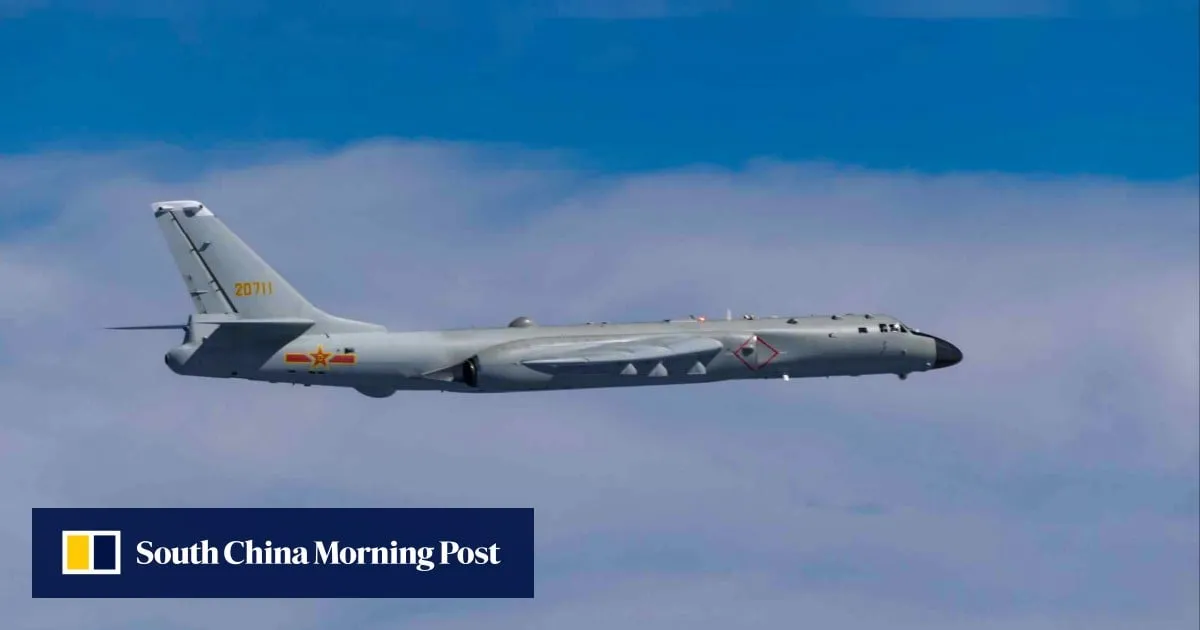
Japan and South Korea scrambled fighter jets in response to a joint Russian-Chinese bomber patrol on Saturday.The People’s Liberation Army Air Force said the patrols passed over the Japan" class="entity-link entity-location" data-entity-id="19667" data-entity-type="location">Sea of Japan, the China-sea" class="entity-link entity-location" data-entity-id="19685" data-entity-type="location">East China Sea and the Western Pacific, adding that they showed the two countries’ resolve and ability to safeguard regional peace and stability.It was the 11th patrol of this kind since 2019, but the first this year.Japan’s defence ministry said it had tracked two separate flights involving Chinese H-6 bombers and Russian Tu-95 strategic bombers.It added that Chinese J-16 fighter jets, Russian Tu-142 maritime patrol aircraft and a Russian Su-30 fighter had accompanied the bombers.A flight map released by the ministry showed some of the aircraft had flown through the Miyako Strait, a key waterway between Okinawa and the Miyako Islands that provides access to the Western Pacific from the China-sea" class="entity-link entity-location" data-entity-id="19685" data-entity-type="location">East China Sea.South Korea said it had scrambled fighters after more than 10 Chinese and Russian military aircraft entered its air defence identification zone, according to Yonhap News Agency. The aircraft did not violate South Korean airspace, the report added.
SRCSouth China Morning Post
LANGEN
LEANCenter-Right
WORDS182
ENT12
SUN · 2026-06-28 · 07:00 GMTBRIEF NSR-2026-0628-88025
NSR-2026-0628-88025News Report·EN·National Security
Japan and South Korea scramble fighters in response to Chinese-Russian bomber patrol
On Saturday, Japan and South Korea scrambled fighter jets in response to a joint bomber patrol conducted by Russia and China. The Chinese air force stated the patrols traversed the Sea of Japan, East China Sea, and western Pacific, asserting they demonstrated the nations' commitment to regional peace.
Amber WangSouth China Morning PostFiled 2026-06-28 · 07:00 GMTLean · Center-RightRead · 1 min
South China Morning PostFIG 01
Reading time
1min
Word count
182words
Sources cited
3cited
Entities identified
12entities
Quality score
100%
§ 01
Briefing Summary
AI-generatedNEWSAR · AI
On Saturday, Japan and South Korea scrambled fighter jets in response to a joint bomber patrol conducted by Russia and China. The Chinese air force stated the patrols traversed the Sea of Japan, East China Sea, and western Pacific, asserting they demonstrated the nations' commitment to regional peace. This marked the first such patrol this year, with eleven having occurred since 2019. Japan's defense ministry tracked two distinct flights involving Chinese H-6 bombers and Russian Tu-95 strategic bombers, accompanied by other Chinese and Russian aircraft. South Korea reported scrambling fighters after over ten Chinese and Russian military aircraft entered its air defense identification zone, though they did not breach South Korean airspace.
Confidence 0.90Sources 3Claims 5Entities 12
§ 02
Article analysis
Model · rule-basedFraming
National Security
Diplomatic
Tone
Measured
AI-assessed
CalmNeutralAlarmist
Factuality
0.90 / 1.00
Factual
LowHigh
Sources cited
3
Well sourced
FewMany
§ 03
Key claims
5 extracted01
Japan’s defence ministry tracked two separate flights involving Chinese H-6 bombers and Russian Tu-95 strategic bombers.
factualJapan’s defence ministry
Confidence
1.00
02
Japan and South Korea scrambled fighter jets in response to a joint Russian-Chinese bomber patrol on Saturday.
factual
Confidence
1.00
03
The aircraft did not violate South Korean airspace.
factualSouth Korea (via Yonhap News Agency)
Confidence
0.95
04
South Korea scrambled fighters after more than 10 Chinese and Russian military aircraft entered its air defence identification zone.
factualSouth Korea (via Yonhap News Agency)
Confidence
0.95
05
The joint patrols passed over the Sea of Japan, the East China Sea and the western Pacific.
factualPeople’s Liberation Army Air Force
Confidence
0.90
§ 04
Full report
1 min read · 182 words§ 05
Entities
12 identifiedKey playerOppositionContextPositiveNeutralNegative
Organizations2
Locations10
SK
South Korea
CountryKey Player
3x
90
C
China
CountryOpposition
4x
90
R
Russia
CountryOpposition
4x
90
J
Japan
CountryKey Player
3x
90
SO
Sea of Japan
StrategicContext
60
EC
East China Sea
RegionContext
2x
60
MS
Miyako Strait
StrategicContext
50
WP
Western Pacific
StrategicContext
2x
50
O
Okinawa
RegionContext
40
MI
Miyako Islands
RegionContext
40
§ 06
Keywords & salience
9 termsjoint bomber patrol
1.00
fighter jets
0.90
air defence identification zone
0.80
regional peace and stability
0.70
strategic bombers
0.60
east china sea
0.50
western pacific
0.50
sea of japan
0.50
miyako strait
0.40
§ 07
Topic connections
Interactive graph No topic relationship data available yet. This graph will appear once topic relationships have been computed.