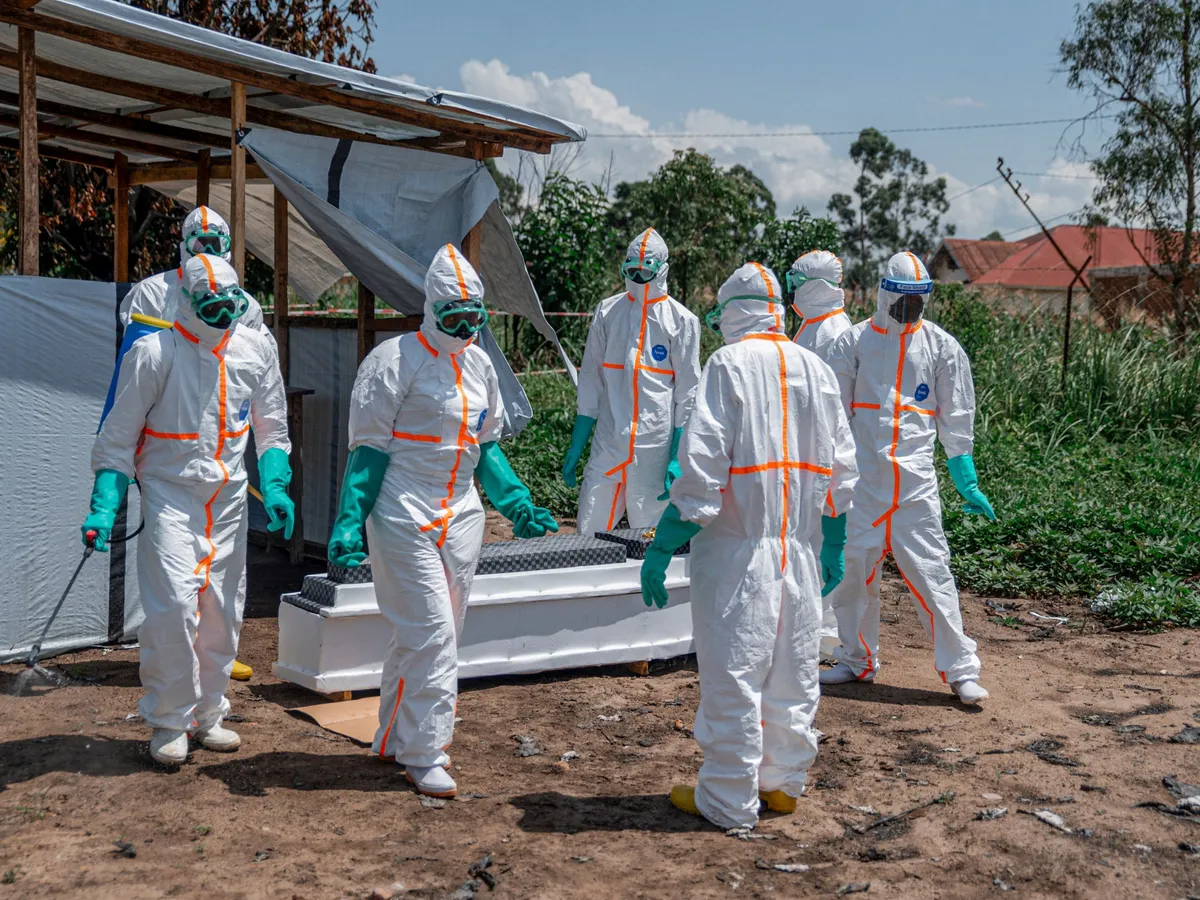
Health officials say the Ebola response cannot succeed without addressing the humanitarian crisis.Kinshasa, Democratic Republic of the Congo – The latest Ebola outbreak in eastern Democratic Republic of the Congo is unfolding against the backdrop of one of the world’s most complex humanitarian crises.Conflict involving armed groups and intercommunal violence has displaced large numbers of people, while insecurity has made it difficult for health workers to reach many communities, particularly camps for internally displaced people (IDPs).Officials say the lack of access is hampering case detection, contact tracing and treatment, while communities that have long been deprived of basic services remain sceptical of an Ebola-focused response.Al Jazeera speaks to Jean Kaseya, Director General of the Africa Centres for Disease Control and Prevention (CDC) about the humanitarian challenges hampering the response, the funding gap and what it will take to bring the outbreak under control.Al Jazeera: What are the main priorities?Jean Kaseya: We are in a region where around a million people are living in camps for internally displaced people. These people cannot access even the most basic services and reaching those camps is a major challenge.Some of the people coming from the camps to seek treatment are telling us there are many more cases there, but we cannot access them. We are talking about close to two million people.Al Jazeera: You cannot go there because of security reasons?Jean Kaseya: We cannot go there because of security concerns, which are linked not only to rebel groups but also to conflict between the Hema and Lendu communities. The people living in these camps have not received humanitarian support for a very long time.
SRCAl Jazeera
LANGEN
LEANCenter
WORDS270
ENT10
SUN · 2026-06-28 · 15:01 GMTBRIEF NSR-2026-0628-88118
NSR-2026-0628-88118News Report·EN·Public Health
Q&A: Why humanitarian aid is crucial to stopping the Ebola outbreak
Health officials state that the Ebola outbreak in eastern Democratic Republic of the Congo is significantly hindered by the ongoing humanitarian crisis. Widespread conflict and violence have displaced nearly a million people into camps, where they lack basic services and are difficult for health workers to access.
Catherine Wambua-SoiAl JazeeraFiled 2026-06-28 · 15:01 GMTLean · CenterRead · 2 min
Al JazeeraFIG 01
Reading time
2min
Word count
270words
Sources cited
1cited
Entities identified
10entities
Quality score
100%
§ 01
Briefing Summary
AI-generatedNEWSAR · AI
Health officials state that the Ebola outbreak in eastern Democratic Republic of the Congo is significantly hindered by the ongoing humanitarian crisis. Widespread conflict and violence have displaced nearly a million people into camps, where they lack basic services and are difficult for health workers to access. This insecurity, stemming from rebel groups and intercommunal clashes, prevents effective case detection, contact tracing, and treatment. Jean Kaseya, Director General of the Africa Centres for Disease Control and Prevention, highlights that communities deprived of aid for extended periods are skeptical of Ebola-focused efforts. Addressing these humanitarian challenges and ensuring access to affected populations are crucial for controlling the outbreak.
Confidence 0.90Sources 1Claims 5Entities 10
§ 02
Article analysis
Model · rule-basedFraming
Public Health
Conflict
Tone
Measured
AI-assessed
CalmNeutralAlarmist
Factuality
0.80 / 1.00
Factual
LowHigh
Sources cited
1
Limited
FewMany
§ 03
Key claims
5 extracted01
We cannot go there because of security concerns, which are linked not only to rebel groups but also to conflict between the Hema and Lendu communities.
quoteJean Kaseya
Confidence
0.90
02
Around a million people are living in camps for internally displaced people in the region.
statisticJean Kaseya
Confidence
0.90
03
Conflict involving armed groups and intercommunal violence has displaced large numbers of people, while insecurity has made it difficult for health workers to reach many communities.
factual
Confidence
0.90
04
The latest Ebola outbreak in eastern DRC is unfolding against the backdrop of one of the world’s most complex humanitarian crises.
factual
Confidence
0.90
05
Officials say the lack of access is hampering case detection, contact tracing and treatment, while communities that have long been deprived of basic services remain sceptical of an Ebola-focused response.
factualofficials
Confidence
0.80
§ 04
Full report
2 min read · 270 words§ 05
Entities
10 identifiedKey playerOppositionContextPositiveNeutralNegative
People1
Organizations4
Events1
§ 06
Keywords & salience
10 termshumanitarian crisis
1.00
ebola outbreak
1.00
internally displaced people
0.90
humanitarian aid
0.90
security concerns
0.80
health officials
0.70
basic services
0.60
case detection
0.50
contact tracing
0.50
democratic republic of the congo
0.40
§ 07
Topic connections
Interactive graph Network visualization showing 51 related topics
View Full Graph Person Organization Location Event|Click node to navigate|Edge numbers = shared articles