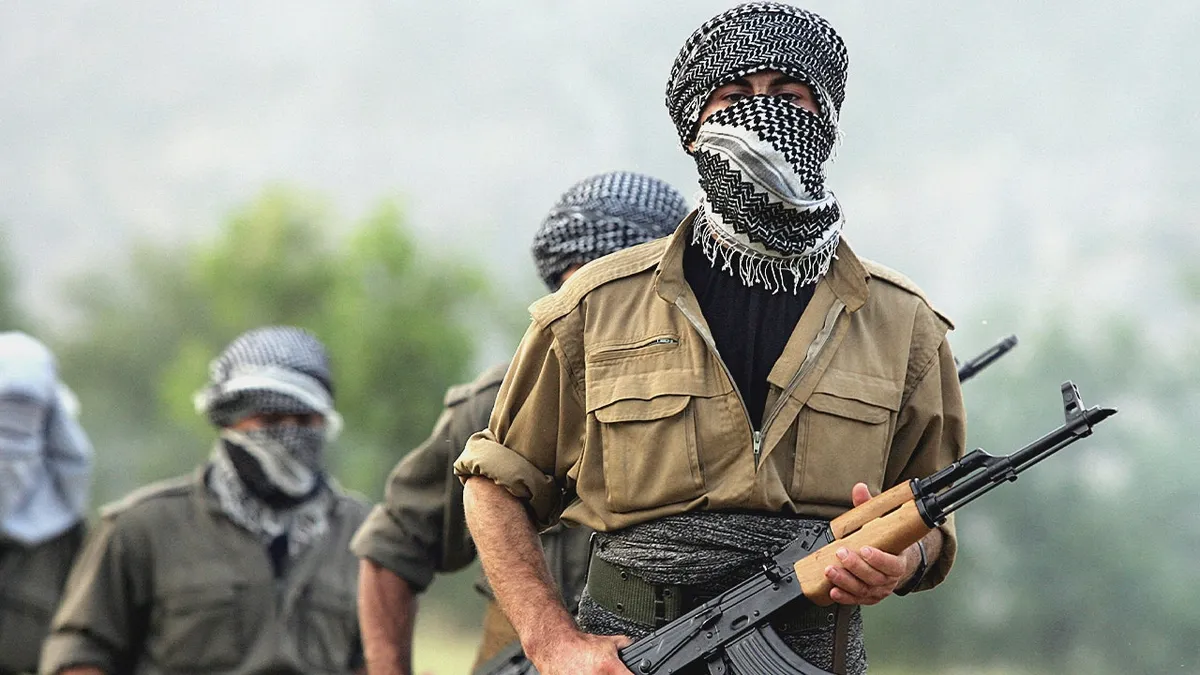
close Video Iranian Kurdish leader: ‘We are ready,’ but waiting to see how war with Tehran unfolds KDPI spokesperson Khalid Azizi says Kurdish forces are prepared to challenge Iran but will not launch a ground offensive yet as the U.S.-Israel conflict with Tehran develops. NEWYou can now listen to Fox News articles! Hören Sie sich diesen Artikel an 7 Min Iran’s Islamic Revolutionary Guard Corps is facing a new round of violence in the country’s Kurdish-majority west, raising questions about whether a long-simmering Kurdish insurgency is entering a more active phase as fragile talks between Iran and Washington continue, experts say. The flare-up matters beyond Iran’s borderlands because Kurdish opposition groups were recently viewed as a potential pressure point against Iran during the U.S.-Israeli war with Iran — and now some Kurdish voices fear they could be left exposed as Washington and Tehran return to fragile diplomacy. In recent days, Iranian security forces have been killed in several reported attacks and clashes across western and northwestern Iran. Four Iranian security personnel reportedly were killed and several others injured in two separate armed attacks Tuesday, reported The Jerusalem Post, in an analysis by Seth J. Frantzman, citing Iraq’s Shafaq News. IRANIAN REGIME CRITIC WARNS TRUMP DEAL COULD BE 'LIFELINE' FOR REGIME, CLAIMS PEOPLE ARE 'NERVOUS' Kurdish separatists attempted Iran crossing from Iraq amid protests. (Mustafa Ozer/AFP via Getty Images) Two Islamic Revolutionary Guard Corps members were reportedly killed and two others wounded in what it called an "armed terrorist attack" in Paveh, Iran, a border city in Kermanshah Province, reported Tasnim News, an Iranian outlet close to the Islamic Revolutionary Guard Corps. In Baneh, Iran, gunmen attacked a police checkpoint, killing two police officers and injuring three other people, including a 3-year-old girl, The Jerusalem Post reported. Clashes had spread to Iran's Paveh, Marivan and Mahabad, the outlet reported, citing Rojhelat.Info, a Kurdish-focused media account. The Paveh, Iran, attack was claimed by a little-known armed group called Xore Heva, or "Sun of Hope," which said it carried out the attack in retaliation for Iran’s crackdown on protests sparked by the 2022 death of Kurdish woman Mahsa Amini. The 22-year-old died after being detained by Iran’s morality police for allegedly violating the country’s mandatory hijab rules, The National reported. The Kurds are one of the largest stateless ethnic groups in the Middle East, with communities spread across Iran, Iraq, Syria and Turkey. In Iran, many Kurds live in the country’s mountainous west and northwest, where Kurdish opposition groups have long accused Iran of political repression, executions, forced assimilation and military crackdowns. Iranian authorities, in turn, view armed Kurdish factions as separatist or terrorist threats, especially groups such as PJAK, which has clashed for years with the Islamic Revolutionary Guard Corps along Iran’s western border. The fight is not simply ethnic: It is also political, rooted in Kurdish demands for rights and autonomy, Iran’s fear of separatism and the Islamic Revolutionary Guard Corps’s role in suppressing dissent in border regions. Jino Victoria Doabi, head of international relation at Hiwa, a Kurdish-led human rights organization, told Fox News Digital the latest clashes could appear to mark more than isolated exchanges. "It looks like this could be an escalation," Doabi said, referring to the spread of reported clashes. She said the initial attack appeared to be framed by Kurdish forces as retaliation, but argued the geographic spread suggested the confrontation may continue. IRANIAN REGIME CRITIC WARNS TRUMP DEAL COULD BE 'LIFELINE' FOR REGIME, CLAIMS PEOPLE ARE 'NERVOUS' People hold Kurdish scarves and roses during Nowruz festivities in Saqqez, Iran, on March 15, 2024. (Barbod Khorshidi/Middle East Images/AFP via Getty Images) Doabi said Kurdish anger is being driven not only by the latest casualties, but by a broader sense that Iran has been able to target Kurdish areas and opposition groups systemically without consequence. "The Kurdish people in Iran are very dissatisfied that the IRGC can attack Kurdish parties and Kurdish fighters and no one reacts," Doabi said. The violence comes as Iran is moving forward with a memorandum of understanding with Washington that has drawn criticism from Iranian opposition circles. Iranian President Masoud Pezeshkian said Supreme Leader Mojtaba Khamenei had approved the U.S.–Iran memorandum after receiving assurances that Iran’s rights would be protected, IranWire reported Tuesday. Iranian officials have described the deal as having the support of top officials, even as critics inside Iran have attacked negotiators over the arrangement, IranWire also reported. Doabi said Kurdish parties are deeply skeptical of any memorandum of understanding or negotiated arrangement with Iran, arguing that many Kurds believe such a deal would only strengthen the regime. "Kurdish parties do not believe that making a deal with this regime can help the people in Iran," Doabi said. "Their position is that a deal would only strengthen the regime." IRANIAN REGIME CRITIC WARNS TRUMP DEAL COULD BE 'LIFELINE' FOR REGIME, CLAIMS PEOPLE ARE 'NERVOUS' Iran-backed fighters celebrate after the IRGC attack on Israel, in Basra, Iraq, Oct. 1, 2024. (Essam Al-sudani/Reuters) She added that many Kurds in Iran are "very angry" over the idea of any agreement with Iran, citing decades of repression, arrests and killings in Kurdish areas. "It is going to be very dangerous for people in Iran, and especially in Kurdistan, Azerbaijan and Baluchistan," Doabi said, "because that is where much of the resistance and activism is." The Kurdish groups now under scrutiny include the Party for a Free Life in Kurdistan, known as PJAK, and its armed wing, the East Kurdistan Defense Units, or YRK. IranWire reported earlier in June that YRK accused Iran’s Islamic Revolutionary Guard Corps of launching artillery and mortar attacks against its positions near Marivan, Iran, beginning June 8, prompting what YRK described as a defensive response. Iranian official outlets had not responded to YRK’s casualty claims at the time, according to IranWire. That regional sensitivity was on display earlier in 2026, when reports emerged that Kurdish opposition groups could open a front against Iran during the U.S.–Israeli war with Iran. Israel had been backing plans by Iranian Kurdish militias to seize border areas inside Iran, Reuters reported in March, though the outlet said the fighters would likely need U.S. and Israeli backing to make a significant move. Five long-standing Iranian dissident groups, including PJAK, the Democratic Party of Iranian Kurdistan and the Kurdistan Freedom Party, had formed an alliance, Reuters also reported. During the war, Trump told Reuters that he would be "all for it" if the Kurds wanted to move against Iran and said their objective should be "to win." But Reuters reported that Kurdish commanders were frustrated by a lack of clear U.S. or Israeli strategy and that Iran’s threats helped keep Kurdish forces from launching an incursion. Regional reports later claimed Turkish President Recep Tayyip Erdogan persuaded Trump to abandon a plan to arm Iranian opposition groups and Iraqi Kurdish groups against Tehran. Israeli media reported June 6 that Erdogan pressed Trump to scrap the proposal after details were allegedly leaked to Turkey by White House officials. Islamic Revolutionary Guard Corps (IRGC) personnel walk along Enghelab (Revolution) Avenue as an Iranian Kheibar missile is unveiled during the Ela Beit Al-Moghaddas (Al-Aqsa Mosque) military rally in Tehran, Iran, on Nov. 24, 2023. (Morteza Nikoubazl/NurPhoto via Getty Images) The latest violence does not prove that a coordinated insurgency is underway. But the reported spread of clashes across multiple Kurdish areas, the involvement claimed by Kurdish militant factions and Kurdish opposition to ongoing U.S.–Iran talks suggest that Iran’s western borderlands could become a new pressure point for Tehran at a moment when the regime is trying to preserve both internal control and fragile diplomatic momentum. Fox News Digital has reached out to Iranian officials and Kurdish representatives for comment. Efrat Lachter is a reporter for Fox News Digital covering international affairs and the United Nations. Follow her on X @efratlachter. Stories can be sent to efrat.lachter@fox.com.
SRCFox News - World
LANGEN
LEANCenter-Right
WORDS1 315
ENT12
TUE · 2026-06-30 · 20:38 GMTBRIEF NSR-2026-0630-88766
NSR-2026-0630-88766News Report·EN·Conflict
Wave of attacks on Iran's IRGC raises questions about renewed Kurdish insurgency
Recent attacks on Iran's Islamic Revolutionary Guard Corps (IRGC) in the country's Kurdish-majority west have raised concerns about a potential escalation of Kurdish insurgency. Several Iranian security personnel have been killed in armed clashes and attacks across western and northwestern Iran in recent days.
Fox News - WorldFiled 2026-06-30 · 20:38 GMTLean · Center-RightRead · 6 min
Fox News - WorldFIG 01
Reading time
6min
Word count
1 315words
Sources cited
5cited
Entities identified
12entities
Quality score
100%
§ 01
Briefing Summary
AI-generatedNEWSAR · AI
Recent attacks on Iran's Islamic Revolutionary Guard Corps (IRGC) in the country's Kurdish-majority west have raised concerns about a potential escalation of Kurdish insurgency. Several Iranian security personnel have been killed in armed clashes and attacks across western and northwestern Iran in recent days. One attack in Paveh was claimed by a group called Xore Heva, stating it was retaliation for Iran's crackdown on protests following the 2022 death of Mahsa Amini. These incidents occur as fragile diplomatic talks between Iran and Washington continue, leading some Kurdish voices to fear being exposed. Kurdish opposition groups have historically accused Iran of repression, while Iranian authorities view armed Kurdish factions as threats. Experts suggest the spread of these clashes could indicate an escalation beyond isolated incidents.
Confidence 0.90Sources 5Claims 5Entities 12
§ 02
Article analysis
Model · rule-basedFraming
Conflict
Political Strategy
Tone
Mixed Tone
AI-assessed
CalmNeutralAlarmist
Factuality
0.60 / 1.00
Mixed
LowHigh
Sources cited
5
Well sourced
FewMany
§ 03
Key claims
5 extracted01
Iran's Islamic Revolutionary Guard Corps is facing a new round of violence in the country’s Kurdish-majority west.
factual
Confidence
0.90
02
Gunmen attacked a police checkpoint in Baneh, Iran, killing two police officers and injuring three others, including a child.
factualThe Jerusalem Post
Confidence
0.85
03
Two Islamic Revolutionary Guard Corps members were killed and two others wounded in an 'armed terrorist attack' in Paveh, Iran.
factualTasnim News
Confidence
0.85
04
Four Iranian security personnel were killed and several others injured in two separate armed attacks on Tuesday.
factualThe Jerusalem Post, citing Iraq’s Shafaq News
Confidence
0.80
05
The Paveh attack was claimed by Xore Heva, stating it was retaliation for Iran’s crackdown on protests sparked by Mahsa Amini's death.
factualXore Heva, The National
Confidence
0.75
§ 04
Full report
6 min read · 1 315 words§ 05
Entities
12 identifiedKey playerOppositionContextPositiveNeutralNegative
Organizations2
Locations7
§ 06
Keywords & salience
8 termskurdish insurgency
1.00
islamic revolutionary guard corps
0.90
iran attacks
0.80
kurdish opposition groups
0.70
mahsa amini protests
0.60
kurdish separatists
0.50
iran diplomacy
0.50
us-israel conflict
0.40
§ 07
Topic connections
Interactive graph No topic relationship data available yet. This graph will appear once topic relationships have been computed.