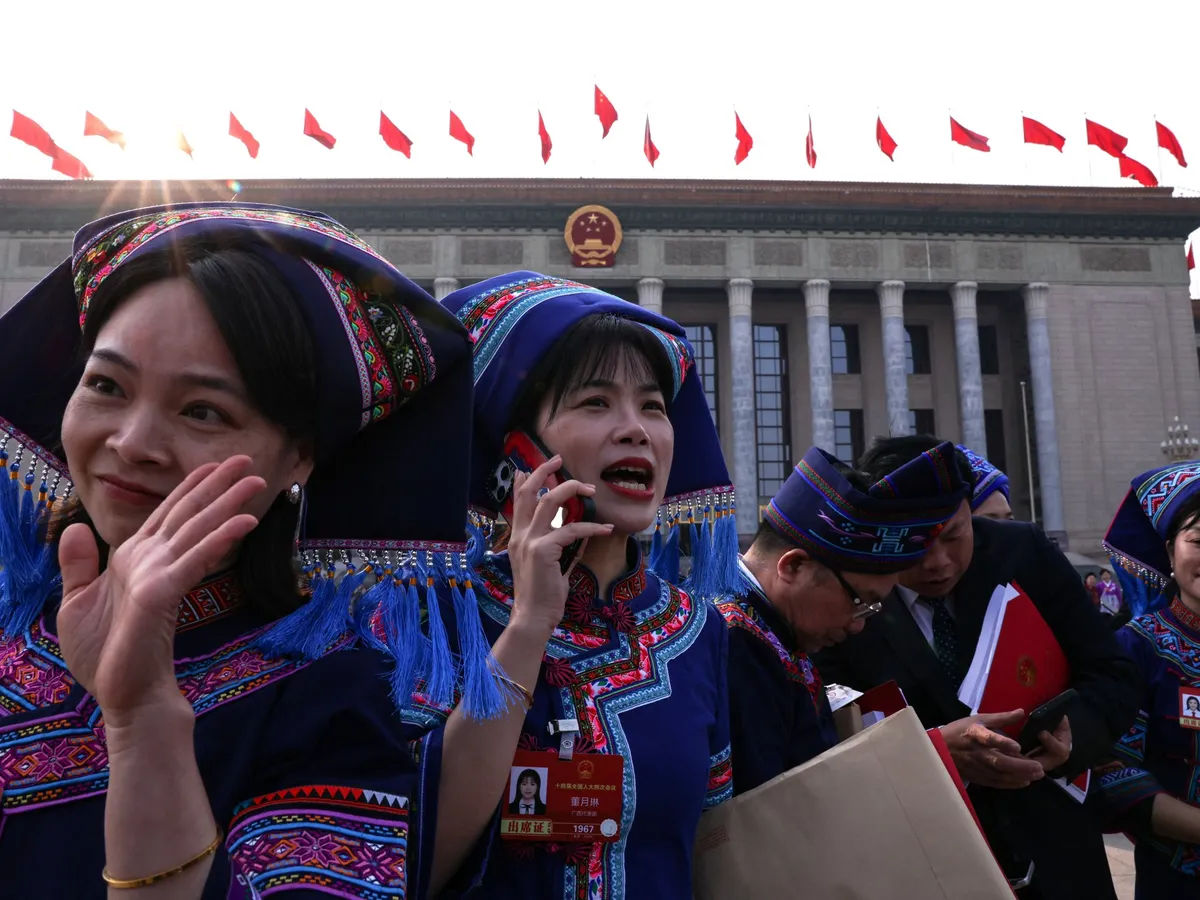
Rather than promote ethnic harmony, activists say Law on the Promotion of ethnic unity and Progress could justify transnational repression.China says it has the right to pursue legal action against overseas individuals and organisations that undermine its ethnic unity as Beijing moves to expand its extraterritorial reach.Passed in March by the National People’s Congress, the “Law on the Promotion of ethnic unity and Progress” officially went into effect on Wednesday.Recommended Stories list of 4 itemslist 1 of 4California gets Bruce Lee Day in a first for US state’s Chinese Americanslist 2 of 4Survivors look to foreign aid after the earthquakes in Venezuelalist 3 of 4Oil prices fall to levels not seen since start of US-Israel war on Iranlist 4 of 4Belgium fans erupt after latest-ever goal seals place in last 16end of listThe legislation has already come under fire from rights watchdogs like the United Nations Special Rapporteurs on Minority Rights and Cultural Rights, who say the law has been used to justify forced assimilation in regions like Tibet and Xinjiang, rather than encourage ethnic harmony.Article 63 of the law has drawn further international attention for extending China’s legal reach overseas. It states that “organisations and individuals outside of mainland China who commit crimes aimed at [China] that undermine ethnic unity and progress or create ethnic division are to be pursued for legal responsibility in accordance with law”, according to a translation.Amnesty International said that Article 63 could be used to justify transnational repression of overseas citizens and activists, who are monitored by an alleged network of unofficial Chinese “police stations” as well as student or cultural groups.“Peaceful advocacy for minority rights in China by anyone, anywhere could be characterised as undermining ‘ethnic unity’,” Amnesty’s Deputy Regional Director Sarah Brooks said this week.Brooks said “unity” in this case did not mean “harmony between different communities” but conformity with Beijing’s political line.
SRCAl Jazeera
LANGEN
LEANCenter
WORDS311
ENT10
THU · 2026-07-02 · 06:30 GMTBRIEF NSR-2026-0702-89291
NSR-2026-0702-89291News Report·EN·Human Rights
China’s new ethnic unity law extends its legal reach overseas
China's new "Law on the Promotion of Ethnic Unity and Progress," which took effect on Wednesday, has drawn criticism from activists and rights watchdogs. While China states the law aims to promote ethnic harmony, critics argue it could be used to justify transnational repression.
Erin HaleAl JazeeraFiled 2026-07-02 · 06:30 GMTLean · CenterRead · 2 min
Al JazeeraFIG 01
Reading time
2min
Word count
311words
Sources cited
3cited
Entities identified
10entities
Quality score
100%
§ 01
Briefing Summary
AI-generatedNEWSAR · AI
China's new "Law on the Promotion of Ethnic Unity and Progress," which took effect on Wednesday, has drawn criticism from activists and rights watchdogs. While China states the law aims to promote ethnic harmony, critics argue it could be used to justify transnational repression. Article 63 of the law allows for legal action against individuals and organizations outside mainland China who are deemed to undermine ethnic unity or create division. UN Special Rapporteurs have previously stated that similar laws have been used to justify forced assimilation in regions like Tibet and Xinjiang. Amnesty International suggests this article could be employed to target overseas citizens and activists advocating for minority rights, potentially characterizing peaceful advocacy as undermining "ethnic unity" as defined by Beijing's political agenda.
Confidence 0.90Sources 3Claims 4Entities 10
§ 02
Article analysis
Model · rule-basedFraming
Human Rights
Legal & Judicial
Tone
Mixed Tone
AI-assessed
CalmNeutralAlarmist
Factuality
0.60 / 1.00
Mixed
LowHigh
Sources cited
3
Well sourced
FewMany
§ 03
Key claims
4 extracted01
Article 63 of the law states that overseas entities undermining ethnic unity can be pursued for legal responsibility.
factualtranslation of the law
Confidence
0.95
02
Peaceful advocacy for minority rights could be characterized as undermining 'ethnic unity' under the new law.
quoteAmnesty International
Confidence
0.90
03
China's new ethnic unity law could justify transnational repression of overseas individuals and organizations.
quoteactivists, Amnesty International
Confidence
0.90
04
The law has been used to justify forced assimilation in regions like Tibet and Xinjiang.
quoteUN Special Rapporteurs on Minority Rights and Cultural Rights
Confidence
0.85
§ 04
Full report
2 min read · 311 words§ 05
Entities
10 identifiedKey playerOppositionContextPositiveNeutralNegative
Organizations3
§ 06
Keywords & salience
9 termsethnic unity law
1.00
transnational repression
0.90
extraterritorial reach
0.80
ethnic harmony
0.70
forced assimilation
0.60
tibet
0.50
xinjiang
0.50
minority rights
0.40
human rights
0.40
§ 07
Topic connections
Interactive graph Network visualization showing 51 related topics
View Full Graph Person Organization Location Event|Click node to navigate|Edge numbers = shared articles