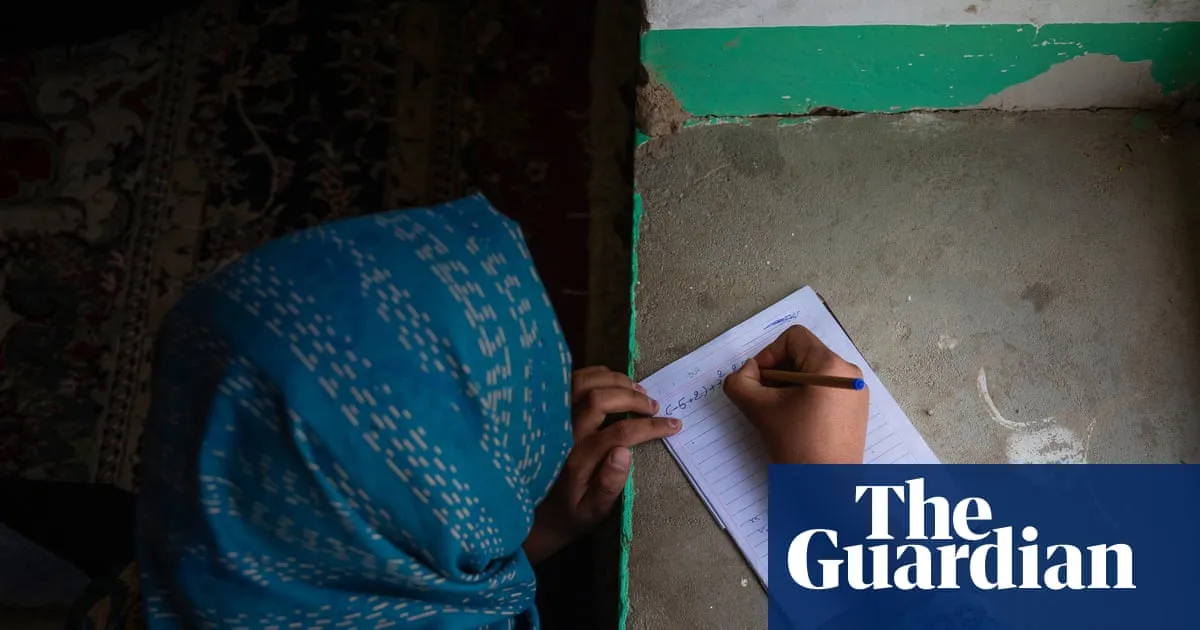
A leading higher education programme, aimed at keeping 1 million girls in school across Africa, Asia and the Middle East, has been axed by the British government just two years after it was announced.The scheme, Strengthening higher education for female empowerment (SHEFE), which was unveiled with some fanfare two years ago by the outgoing Conservative government, had a £45m budget to increase access to higher education for 1 million students worldwide. It has now had its tender withdrawn, the Foreign, Commonwealth and Development Office (FCDO) said.In May, Yvette Cooper, the foreign secretary, stressed her commitment to women and girls, declaring they were a priority at the FCDO and that she was “determined to work across borders to ensure women’s safety is a worldwide priority”.Bambos Charalambous, the Labour MP who chairs the all-party parliamentary group on global education, said he was concerned. “I’m alarmed that a flagship higher education programme designed to empower women and girls and help them achieve their potential appears to have been scrapped because of the aid cuts,” he said.“FCDO has acknowledged how such partnerships can transform lives, while also benefiting institutions here at home. It is vital to start thinking now about how to build back from the aid cuts to save similar projects.”The programme was designed in part because girls who benefit from higher education are up to six times less likely to marry as children and are less likely to experience violence from a partner. Women who have advanced levels of learning also increase their earnings.People working in the international development and education sectors claimed the move to axe SHEFE was the latest decision to severely undermine the UK’s professed commitment to women and girls.The Home Office has blocked new study visas for applicants from Afghanistan, Sudan, Myanmar and Cameroon, meaning many women whose opportunities to study in their own countries were restricted will miss out on life-changing opportunities. British universities earn large amounts of money from foreign students, who pay much higher fees than UK-born students.Joseph Nhan-O’Reilly, co-founder of the International Parliamentary Network for Education, said: “The government talks up its commitment to women and girls but at every turn it denies the world’s most marginalised girls the thing that everyone agrees has the biggest impact on their lives and that of their communities: access to higher education.”Pupils at Bethel primary school in Ifako, Lagos. Photograph: S Heunis/AFP/GettyEarlier this year, the FCDO announced it was cancelling the tender for its planned Education for All programme in South Sudan, Nhan-O’Reilly said. The £150m scheme had been designed to support the education of girls and children with disabilities in one of the world’s poorest countries, with one of the highest rates of children out of education and the world’s fourth-lowest literacy rate.Last year, Charalambous wrote in the Independent that a UK programme in the Democratic Republic of the Congo, which had seen tens of thousands of girls going to school for the first time, was being abandoned. Educational work was also cut in Ethiopia, Sierra Leone, Nigeria and Zimbabwe, and the FCDO Girls’ Education Department lost 51% of its funding.A spokesperson at Bond, a UK network for organisations working in international development and humanitarian aid, said: “Any cuts to programmes that support women and girls, including through education, threaten to reverse hard-won progress on ending gender-based violence and exploitation, and advancing gender equality worldwide.“Last year, polling by More in Common found the majority of the UK public wanted programmes that protect women and girls’ safety to be shielded from cuts to the UK aid budget. We urge the foreign secretary to uphold her commitment to prioritising the safety, human rights and economic opportunity of women and girls around the world.”According to analysis by Unicef, international aid to education is projected to fall by $3.2bn (£2.4bn) by 2026 – a 24% drop. It estimated that 6 million more children risk being out of school by the end of the year, with 30% of them in humanitarian settings. This is equivalent to emptying every primary school in Germany and Italy combined.The UK had previously been one of the champions of global education, said Nhan-O’Reilly, and the cuts announced last year closely followed those in the US. “These cuts can’t be seen on their own; they’ve set the tone and influenced the posture and level of commitment from many other donors,” he said.The prime minister, Keir Starmer, announced last year that the UK aid budget would be cut from 0.5% of gross national income to 0.3% in 2027, its lowest level since records began. The UN target is for countries to give 0.7%, something the Conservative former prime minister David Cameron pledged to do in 2012 despite protests from his own party.The cut in 2025 was a reversal of Labour manifesto pledges and led to the resignation of Anneliese Dodds, the then international development minister.“We’ve been absolutely flabbergasted and devastated by these cuts happening under Labour,” said Nhan-O’Reilly. “They’re clearly a break in the manifesto. This was a huge mistake and betrayal of the sector.”An FCDO spokesperson said the aid cuts were to fund an increase in defence spending. “National security is the first duty of this government,” they said. “This does not mean stepping back from our values – protecting women and girls is now a Foreign Office priority … Funding to tackle violence against women and girls is protected this year.”
SRCThe Guardian - World News
LANGEN
LEANCenter-Left
WORDS895
ENT12
SAT · 2026-07-04 · 08:00 GMTBRIEF NSR-2026-0704-89953
NSR-2026-0704-89953News Report·EN·Social Justice
Overseas education project for women and girls axed by UK after two years
The British government has axed the Strengthening Higher Education for Female Empowerment (SHEFE) program, a £45 million initiative designed to increase higher education access for one million girls across Africa, Asia, and the Middle East. Announced two years ago by the outgoing Conservative government, the program's tender has now been withdrawn by the Foreign, Commonwealth and Development Office (FCDO) due to aid cuts.
Sarah JohnsonThe Guardian - World NewsFiled 2026-07-04 · 08:00 GMTLean · Center-LeftRead · 4 min
The Guardian - World NewsFIG 01
Reading time
4min
Word count
895words
Sources cited
3cited
Entities identified
12entities
Quality score
100%
§ 01
Briefing Summary
AI-generatedNEWSAR · AI
The British government has axed the Strengthening Higher Education for Female Empowerment (SHEFE) program, a £45 million initiative designed to increase higher education access for one million girls across Africa, Asia, and the Middle East. Announced two years ago by the outgoing Conservative government, the program's tender has now been withdrawn by the Foreign, Commonwealth and Development Office (FCDO) due to aid cuts. This decision has drawn concern from MPs and international development organizations, who argue it undermines the UK's commitment to women and girls. Critics highlight that higher education for girls significantly reduces child marriage rates and increases earning potential. This cancellation follows other recent cuts to UK-funded education programs in developing countries.
Confidence 0.90Sources 3Claims 5Entities 12
§ 02
Article analysis
Model · rule-basedFraming
Social Justice
Political Strategy
Tone
Mixed Tone
AI-assessed
CalmNeutralAlarmist
Factuality
0.70 / 1.00
Factual
LowHigh
Sources cited
3
Well sourced
FewMany
§ 03
Key claims
5 extracted01
The Home Office has blocked new study visas for applicants from Afghanistan, Sudan, Myanmar and Cameroon.
factual
Confidence
1.00
02
Bambos Charalambous expressed concern that the program was scrapped due to aid cuts.
quoteBambos Charalambous
Confidence
1.00
03
Yvette Cooper, the foreign secretary, stressed her commitment to women and girls, declaring they were a priority at the FCDO.
quoteYvette Cooper
Confidence
1.00
04
A UK higher education programme, Strengthening higher education for female empowerment (SHEFE), with a £45m budget to increase access to higher education for 1 million students worldwide, has been axed.
factual
Confidence
1.00
05
Girls who benefit from higher education are up to six times less likely to marry as children and are less likely to experience violence from a partner.
statistic
Confidence
0.90
§ 04
Full report
4 min read · 895 words§ 05
Entities
12 identifiedKey playerOppositionContextPositiveNeutralNegative
Organizations4
Locations5
§ 06
Keywords & salience
9 termswomen and girls
1.00
higher education
1.00
overseas education
0.90
aid cuts
0.80
female empowerment
0.70
international development
0.60
foreign, commonwealth and development office
0.50
study visas
0.40
gender equality
0.40
§ 07
Topic connections
Interactive graph Network visualization showing 51 related topics
View Full Graph Person Organization Location Event|Click node to navigate|Edge numbers = shared articles