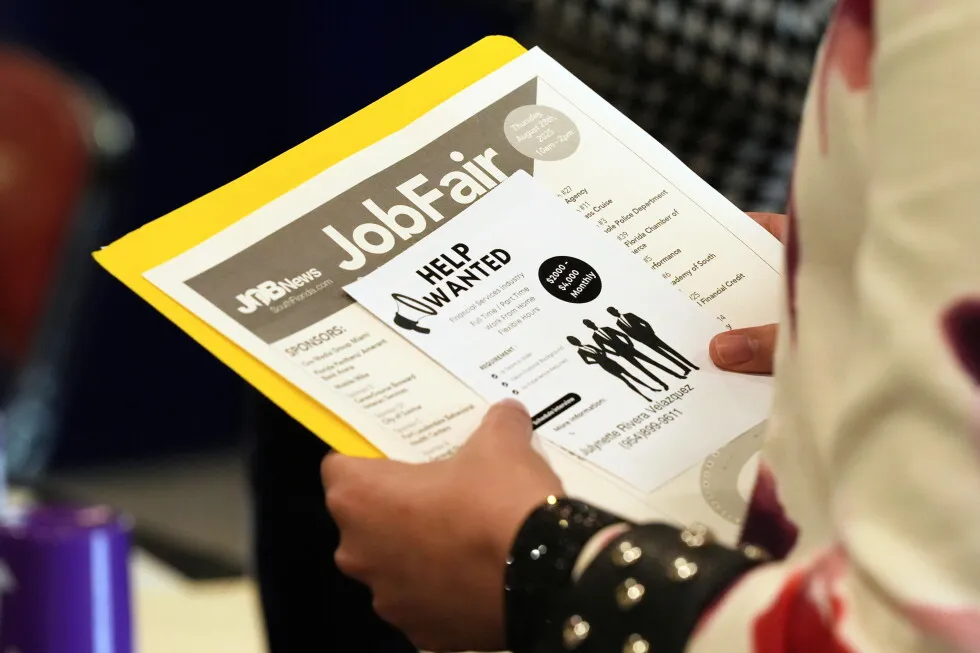
A job seeker waits to talk to a recruiter at a job fair Aug. 28, 2025, in Sunrise, Fla. (AP Photo/Marta Lavandier, File) By Michelle Chapman Updated 4:10 PM MESZ, July 4, 2026 Add AP News on Google Add AP News as your preferred source to see more of our stories on Google. Share Share Facebook Copy Link copied Print Email X LinkedIn Bluesky Flipboard Pinterest Reddit The economy, inflation and how those forces could impact the lives of Americans were front and center over the past week. Trips to the grocery store or gas station are more painful than they were last year, and rising costs are impacting the decisions of both households and businesses. Here’s a snapshot of prominent economic data and news that occurred over the past week and what it potentially means for you. Americans’ attitudes toward the economy improved slightly this month as gas prices declined, but their outlook is still mostly negative by historical standards. The Conference Board said Tuesday that its consumer confidence index rose 0.6 point to 91.2 in June, a figure that is still below its year-ago reading of 95.2. Consumer attitudes worsened after the Iran war caused oil and gas prices to spike, accelerating inflation and causing Americans’ inflation-adjusted incomes to decline. Before the pandemic, the index regularly topped 120. The report suggests that consumer confidence is recovering only slowly from the hit caused by the Iran war. U.S. employers pulled back on hiring last month and added only 57,000 jobs, less than half the previous month’s total and a sign companies still have a cautious economic outlook. The Labor Department said Thursday that the unemployment rate declined to a low 4.2% from 4.3% in May, though the decline mostly occurred because many people out of work gave up looking and were no longer counted as unemployed. The figures suggest companies remain wary of the economy’s health, with inflation at a three-year high and consumer confidence near post-pandemic lows. The solid job gains that were initially reported in April and May were also revised lower. U.S. filings for jobless aid fall to 215,000 as layoffs remain at historically healthy levels 1 MIN READ US employers still reluctant to add many jobs as hiring slows in June 5 MIN READ 301 Job openings stayed at a surprisingly strong 7.6 million in May; U.S. labor market proves resilient 2 MIN READ US filings for jobless aid decline U.S. applications for jobless aid inched down last week as layoffs remain at historically healthy levels. The number of Americans filing for unemployment benefits in the week ending June 27 fell by 1,000 to 215,000, the Labor Department reported Thursday. That’s fewer than the 225,000 new applications forecast by analysts surveyed by the data firm FactSet. Weekly filings for unemployment benefits are considered representative of U.S. layoffs and are close to a real-time indicator of the health of the job market. The four-week moving average of jobless claims, which quiets some of the week-to-week noise, fell by 2,500 to 222,000. Mortgage rate falls to lowest level in seven weeks The average long-term U.S. mortgage rate fell this week to its lowest level since mid-May, easing borrowing costs for prospective homebuyers. The benchmark 30-year fixed rate mortgage rate fell to 6.43% from 6.49% last week, mortgage buyer Freddie Mac said Thursday. One year ago, the average rate was 6.67%. The average rate has been mostly hovering around 6.5% in the months since the war between the U.S. and Iran began in late February, disrupting the flow of crude oil from the Persian Gulf to customers worldwide. That’s sent oil prices sharply higher, helping drive up inflation, bond yields and mortgage rates. U.S. job openings stayed at a surprisingly strong 7.6 million in May as the American labor market remains resilient in the face of the economic shock from the Iran war. Forecasters had expected employers to post just 7 million openings in May. The job market is sturdy but not exactly booming. Layoffs rose in May, and the number of people quitting their jobs — a sign of confidence in their prospects — ticked up only slightly. That’s according to data from the Bureau of Labor Statistics released Tuesday. Employers are advertising openings, but they aren’t actually doing much hiring. Gross hiring — before counting people who lost or quit their jobs — dipped to 5.17 million in May from 5.26 million in April. When the job market was booming from mid-2021 to mid-2023 after COVID-19 lockdowns, gross monthly hiring regularly topped 6 million.
SRCAssociated Press (AP)
LANGEN
LEANCenter
WORDS758
ENT12
SAT · 2026-07-04 · 14:23 GMTBRIEF NSR-2026-0704-90027
NSR-2026-0704-90027News Report·EN·Economic Impact
America In Focus: consumers still gloomy about economy; US hiring falls in June
Consumer confidence in the U.S. economy remains largely negative, despite a slight improvement in June due to declining gas prices.
Associated Press (AP)Filed 2026-07-04 · 14:23 GMTLean · CenterRead · 4 min
Associated Press (AP)FIG 01
Reading time
4min
Word count
758words
Sources cited
3cited
Entities identified
12entities
Quality score
100%
§ 01
Briefing Summary
AI-generatedNEWSAR · AI
Consumer confidence in the U.S. economy remains largely negative, despite a slight improvement in June due to declining gas prices. The Conference Board's consumer confidence index rose to 91.2, still significantly below pre-pandemic levels and last year's reading. This sentiment was impacted by rising inflation following an increase in oil and gas prices. In June, U.S. employers significantly reduced hiring, adding only 57,000 jobs, indicating a cautious economic outlook. While the unemployment rate fell to 4.2%, this was partly due to people leaving the labor force. Despite slower hiring, weekly jobless aid filings decreased to 215,000, suggesting layoffs remain at healthy levels. Separately, the average 30-year fixed mortgage rate dropped to 6.43%, the lowest in seven weeks, offering some relief to homebuyers.
Confidence 0.90Sources 3Claims 4Entities 12
§ 02
Article analysis
Model · rule-basedFraming
Economic Impact
Human Interest
Tone
Measured
AI-assessed
CalmNeutralAlarmist
Factuality
0.80 / 1.00
Factual
LowHigh
Sources cited
3
Well sourced
FewMany
§ 03
Key claims
4 extracted01
U.S. applications for jobless aid fell to 215,000 in the week ending June 27, below the forecast of 225,000.
statisticLabor Department
Confidence
0.95
02
U.S. employers added only 57,000 jobs in June, less than half the previous month's total.
statisticLabor Department
Confidence
0.95
03
The unemployment rate declined to 4.2% in June, partly because people stopped looking for work.
statisticLabor Department
Confidence
0.90
04
Americans' attitudes toward the economy improved slightly in June as gas prices declined, but their outlook remains mostly negative by historical standards.
statisticThe Conference Board
Confidence
0.90
§ 04
Full report
4 min read · 758 words§ 05
Entities
12 identifiedKey playerOppositionContextPositiveNeutralNegative
Organizations3
§ 06
Keywords & salience
10 termseconomy
1.00
consumer confidence
1.00
inflation
0.90
hiring
0.80
job market
0.70
unemployment rate
0.60
gas prices
0.50
economic data
0.40
job openings
0.40
job seeker
0.40
§ 07
Topic connections
Interactive graph Network visualization showing 51 related topics
View Full Graph Person Organization Location Event|Click node to navigate|Edge numbers = shared articles