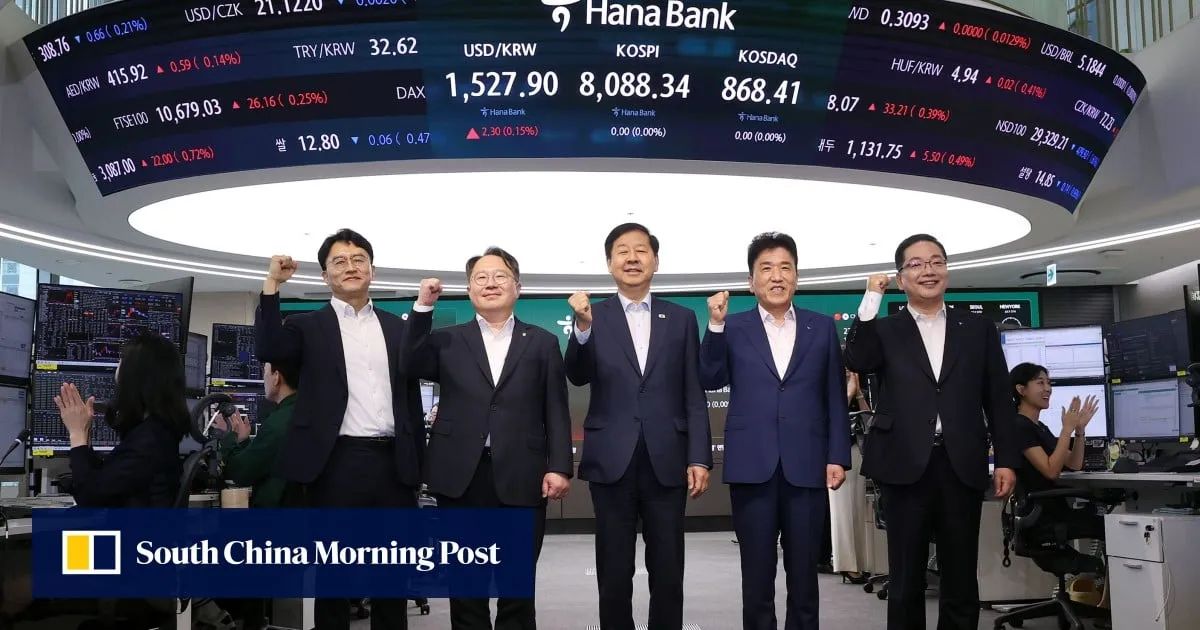
The South Korean won was stable against the dollar after inching higher as the currency began its first day of 24-hour trading, marking a milestone in Seoul’s push to open its financial markets to global investors.The won eased 0.1 per cent to 1,531.40 against the US dollar, after rising as much as 0.2 per cent when it started trading at 6am. Other major currency pairs were little changed.The launch of 24-hour trading is the centrepiece of a years-long effort to improve foreign access to local markets and bolster the case for an upgrade to MSCI’s developed-market index, where accessibility has long been a stumbling block.It also reflects how the economy has evolved to one investing more overseas, making it harder to justify limiting trading to South Korean business hours.This is the starting point for the won’s global leap“This is the starting point for the won’s global leap,” said Finance Minister Koo Yun-cheol during a visit to a local bank’s trading floor on Monday. The move is a core infrastructure designed to provide the level of accessibility and convenience in FX trading comparable to advanced markets, according to Koo.The government would monitor the market seamlessly and support frictionless 24/7 trading, while continuing to push forward with the other FX market reforms, he added.Won-dollar trading will run from 6am on Mondays to 6am on Saturdays during US daylight saving time (DST), effectively extending trading on a near 24-hour schedule and significantly lengthening hours from the previous 9am to 2am weekday regime.Outside the DST period, hours will shift to 7am on Mondays to 7am on Saturdays. Dollar trading will also continue on public holidays unless they fall on weekends. Trading in non-dollar currencies will remain unchanged at 9am to 3.30pm.South Korean Finance Minister Koo Yun-cheol (left) talks to employees of Hana Bank’s London branch during the launch of the won-US dollar 24-hour trading system on Monday. Photo: Yonhap/EPAThe currency last week fell towards its weakest since 2009, before rebounding on a Bloomberg report that officials were preparing for currency flows related to SK Hynix’s US offering of American depositary receipts.Deputy Finance Minister Moon Ji-sung said on Friday authorities would strengthen monitoring of the night trading session before Monday’s opening.The won is one of Asia’s weakest currencies this year as the Iran war led to higher energy prices and foreign investors sold domestic stocks to rebalance portfolios after stellar gains.Despite losses in the past two weeks, the benchmark Kospi index remains the world’s biggest gainer among major equity gauges this year.Risks and rewardsThe move to a 24-hour trading cycle is drawing mixed views from experts, who point to both stabilising benefits and potential risks.Further ReadingPreviously, global developments occurring after the 2am close would hit the domestic market at the 9am opening, often triggering sharp swings in the won. The round-the-clock trading is expected to allow the market to absorb external shocks in real time, smoothing morning volatility.However, some analysts warn that continuous exposure to global markets could backfire during overnight hours. With lower trading volumes expected, thin liquidity could leave the won vulnerable to sudden short-term swings from external shocks.“Real-time exposure to shocks and thin overnight liquidity will require a completely different level of risk management capability from market participants compared to the past,” said Choi Kyu-ho, an analyst at Hanwha Investment & Securities.Currency traders work near a screen showing the Korea Composite Stock Price Index and the won-US dollar exchange rate at the Hana Bank headquarters in Seoul on Friday. Photo: AP,Still, many analysts expect the transition to a 24-hour market to anchor medium- to long-term stability for the won by providing seamless real-time liquidity for global investors and corporate hedgers during overnight hours.They said the expanded trading window could unlock fresh inflows from foreign asset managers and institutional investors previously constrained by time-zone barriers, creating a structural buffer for the currency.“With 24-hour operations, foreign retail investors seeking won liquidity for Korean equity investments can seamlessly enter the market, creating a new and steady source of demand,” said Seo Jeong-hoon, senior research fellow at Hana Bank.Lim Hwan-yeol, senior researcher at Woori Bank, said: “If overnight liquidity provision becomes structurally entrenched, it will significantly enhance medium- to long-term exchange-rate stability.”
SRCSouth China Morning Post
LANGEN
LEANCenter-Right
WORDS696
ENT9
MON · 2026-07-06 · 01:10 GMTBRIEF NSR-2026-0706-90345
NSR-2026-0706-90345News Report·EN·Economic Impact
South Korean won holds steady as historic 24-hour trading begins
South Korea has launched 24-hour trading for the won against the US dollar, a significant step in its efforts to open financial markets and attract global investors. This move aims to improve foreign access to local markets and potentially aid in an upgrade to MSCI's developed-market index.
Bloomberg,The Korea TimesSouth China Morning PostFiled 2026-07-06 · 01:10 GMTLean · Center-RightRead · 3 min
South China Morning PostFIG 01
Reading time
3min
Word count
696words
Sources cited
3cited
Entities identified
9entities
Quality score
100%
§ 01
Briefing Summary
AI-generatedNEWSAR · AI
South Korea has launched 24-hour trading for the won against the US dollar, a significant step in its efforts to open financial markets and attract global investors. This move aims to improve foreign access to local markets and potentially aid in an upgrade to MSCI's developed-market index. The extended trading hours, which now run from Monday morning to Saturday morning (adjusting for daylight saving time), are intended to provide accessibility comparable to advanced markets and allow the market to absorb global shocks in real-time, potentially smoothing volatility. While some analysts caution about risks associated with lower overnight liquidity, many expect the change to foster medium- to long-term stability for the won by attracting new foreign investment.
Confidence 0.90Sources 3Claims 5Entities 9
§ 02
Article analysis
Model · rule-basedFraming
Economic Impact
Diplomatic
Tone
Measured
AI-assessed
CalmNeutralAlarmist
Factuality
0.80 / 1.00
Factual
LowHigh
Sources cited
3
Well sourced
FewMany
§ 03
Key claims
5 extracted01
The move is a core infrastructure designed to provide accessibility and convenience in FX trading comparable to advanced markets.
quoteFinance Minister Koo Yun-cheol
Confidence
1.00
02
Launch of 24-hour trading is a push to open financial markets to global investors and improve foreign access.
factual
Confidence
0.95
03
Despite losses, the benchmark Kospi index remains the world’s biggest gainer among major equity gauges this year.
factual
Confidence
0.90
04
South Korean won stable against the dollar as 24-hour trading begins.
factual
Confidence
0.90
05
The won is one of Asia’s weakest currencies this year due to higher energy prices and foreign investors rebalancing portfolios.
factual
Confidence
0.85
§ 04
Full report
3 min read · 696 words§ 05
Entities
9 identifiedKey playerOppositionContextPositiveNeutralNegative
Organizations5
Locations2
§ 06
Keywords & salience
9 termssouth korean won
1.00
24-hour trading
1.00
financial markets
0.90
global investors
0.80
currency trading
0.70
fx trading
0.60
msci developed-market index
0.50
foreign access
0.40
energy prices
0.40
§ 07
Topic connections
Interactive graph Network visualization showing 16 related topics
View Full Graph Person Organization Location Event|Click node to navigate|Edge numbers = shared articles