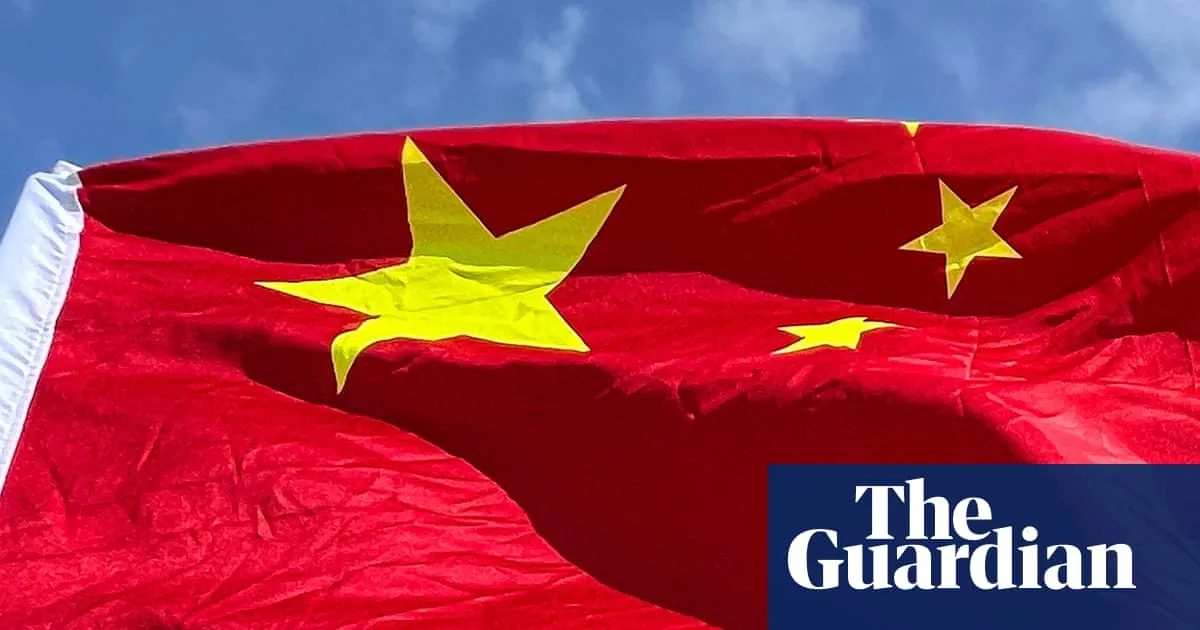
China has conducted a missile test in the South Pacific. Photograph: AFP/Getty Images View image in fullscreen China has conducted a missile test in the South Pacific. Photograph: AFP/Getty Images China tests long-range missile in South Pacific in move Australia condemns as ‘destabilising to region’ Launch comes just hours after Australia and Fiji sign defence agreement as expert says timing not a coincidence China has conducted a long-range missile test in the South Pacific just hours after Australia signed a defence agreement with Fiji, sparking condemnation from Canberra and regional leaders. The Australian foreign minister, Penny Wong, said the missile test was “destabilising” to the region while her New Zealand counterpart, Winston Peters, described it as “deeply concerning”. A test missile topped with a dummy warhead landed in “designated waters” of the Pacific, China’s state news agency Xinhua reported on Monday. The missile test was a “routine arrangement” of China’s annual military training, with prior notification to relevant countries, Xinhua said. The exact location of the test was unknown. The New Zealand government said it was informed of the planned launch hours beforehand, and noted that it was fired into the South Pacific Nuclear Free Zone. The test came just hours after Australia and Fiji signed a major defence alliance, committing each country to come to the other’s aid in the event of an attack. The so-called Ocean of Peace alliance, which is open to other countries to join in the future, is part of Australia’s efforts to deepen ties in the Pacific and push back at Beijing’s attempts to expand its influence in the region. Malcolm Davis, a senior defence analyst at the Australian Strategic Policy Institute, was certain the timing of the test was not a coincidence. “[The test] is clearly an indication that China will use military force, or the threat of military force, to try to intimidate and coerce small Pacific states into not seeking closer relations with Australia,” he said. Australia’s assistant foreign minister, Matt Thistlethwaite, told the ABC the government did not believe there was a link between the alliance announcement and the test. However, another federal government source told the Guardian they believed the events were linked. The Chinese embassy in Australia did not immediately respond to a request for comment. Australia’s acting prime minister, Richard Marles, said China had only informed his country on Monday of its plans to conduct a long-range missile test in the Pacific region, with reports that it was a nuclear-capable device with a dummy warhead. “We were informed by China today of its intention to do this test,” Marles told a press conference on Monday afternoon. “This is a long-range missile test, and we are very concerned about any actions which undermine the stability, the peace, and security of the Pacific,” he said. Xinhua reported soon after that the test had been conducted. “The PLA Navy said that one strategic nuclear submarine of the navy on Monday noon (sic) successfully launched a strategic missile carrying a dummy warhead toward relevant high seas of the Pacific Ocean, which landed precisely within the designated waters,” Xinhua reported online. Thistlethwaite said Australia was “deeply concerned” and had already “conveyed those concerns to the Chinese government, both in Beijing and in Canberra as well”. “The motivations behind it, I think, are a question for the Chinese government. I think the Australian people, and indeed the people of the Pacific, would like to know the motivation behind it,” Thistlethwaite said. Peters also described the test as “deeply concerning”, and was critical that “China carried out the test within hours of informing us”. “The Pacific is an Ocean of Peace and we are deeply concerned by China’s testing of nuclear-capable weapons into the South Pacific.” A statement from the Japanese government said it had tried to convince China not to fire the test missile, and had “expressed serious concerns over China’s increasing military activity”. The Australian foreign minister, Penny Wong, said she would “leave it to China to speak to its intent” but that Australia had been aware of a Chinese task group in the region “for some time”. “I can confirm that the Australian government has been advised by the government of the People’s Republic of China of their intent to conduct a sea-based missile test into the Pacific. Australia has been clear with China that we regard this as destabilising to the region,” Wong said from Fiji, where she was travelling with the prime minister, Anthony Albanese. “Australia has been clear that this proposal, this proposed test, is in the context of a rapid military build-up by China, which is lacking in the transparency and reassurance as to intent, that the region expects. I would make this point, the Pacific Islands Forum leaders have made clear that they want the Pacific to be an Ocean of Peace. We believe this test is inconsistent with that objective.” Wong would not confirm whether Australia had been informed about the missile’s potential nuclear capability. On Monday afternoon she said Australia had been informed the test would be “within the next 24 hours”. The test reportedly occurred at about the same time. China last tested an intercontinental ballistic missile in 2024, a rare event that highlighted the country’s increasing military capabilities. Data from Starboard Maritime Intelligence, a New Zealand ship-tracking company, showed three Chinese satellite-tracking vessels positioned throughout the Pacific. Two vessels departed China on about 25 June and now sit near the Federated States of Micronesia. The third departed China in early May and is now at harbour in Fiji’s capital, Suva. “These vessels carry large satellite dishes used to track missile launches and other space activity and are likely in the Pacific to collect data from the missile test China has reportedly notified regional governments to expect within 24 hours,” said Mark Douglas, an analyst for Starboard. Noting the departure times of the Chinese vessels, he added: “This test has been planned well in advance. That said, the notification landing the day after Australia and Fiji signed the Ocean of Peace Alliance is interesting, to say the least.” Explore more on these topics China Asia Pacific Penny Wong Anthony Albanese Richard Marles Australian foreign policy Australian politics news Share Reuse this content
SRCThe Guardian - World News
LANGEN
LEANCenter-Left
WORDS1 039
ENT12
MON · 2026-07-06 · 07:43 GMTBRIEF NSR-2026-0706-90401
NSR-2026-0706-90401News Report·EN·National Security
China tests long-range missile in South Pacific in move Australia condemns as ‘destabilising to region’
China conducted a long-range missile test in the South Pacific, launching a missile with a dummy warhead into designated waters. This occurred just hours after Australia and Fiji signed a defense agreement.
Josh Butler and Dan Jervis-Bardy with agenciesThe Guardian - World NewsFiled 2026-07-06 · 07:43 GMTLean · Center-LeftRead · 5 min
The Guardian - World NewsFIG 01
Reading time
5min
Word count
1 039words
Sources cited
4cited
Entities identified
12entities
Quality score
100%
§ 01
Briefing Summary
AI-generatedNEWSAR · AI
China conducted a long-range missile test in the South Pacific, launching a missile with a dummy warhead into designated waters. This occurred just hours after Australia and Fiji signed a defense agreement. Australia's Foreign Minister Penny Wong described the test as "destabilizing" to the region, a sentiment echoed by New Zealand's counterpart, Winston Peters, who called it "deeply concerning." China's state news agency Xinhua reported the test as a routine military training exercise, with prior notification given to relevant countries. Analysts suggest the timing was not coincidental and intended to deter Pacific states from closer ties with Australia. Australia's government stated it was informed of the test on the day it occurred and expressed concern over actions undermining regional peace and security.
Confidence 0.90Sources 4Claims 5Entities 12
§ 02
Article analysis
Model · rule-basedFraming
National Security
Diplomatic
Tone
Mixed Tone
AI-assessed
CalmNeutralAlarmist
Factuality
0.60 / 1.00
Mixed
LowHigh
Sources cited
4
Well sourced
FewMany
§ 03
Key claims
5 extracted01
Australia and Fiji signed a major defence alliance just hours before the missile test.
factualArticle
Confidence
1.00
02
Australia condemns the missile test as ‘destabilising to the region’.
quotePenny Wong (Australian Foreign Minister)
Confidence
1.00
03
China conducted a long-range missile test in the South Pacific.
factualChina (via Xinhua)
Confidence
1.00
04
The timing of the missile test was not a coincidence, likely intended to intimidate Pacific states.
quoteMalcolm Davis (Australian Strategic Policy Institute)
Confidence
0.90
05
The missile test was a ‘routine arrangement’ of China’s annual military training.
quoteChina (via Xinhua)
Confidence
0.80
§ 04
Full report
5 min read · 1 039 words§ 05
Entities
12 identifiedKey playerOppositionContextPositiveNeutralNegative
People4
§ 06
Keywords & salience
10 termsmissile test
1.00
south pacific
0.90
australia
0.80
china
0.80
destabilising
0.70
defence agreement
0.60
regional influence
0.50
military training
0.50
fiji
0.40
new zealand
0.40
§ 07
Topic connections
Interactive graph No topic relationship data available yet. This graph will appear once topic relationships have been computed.