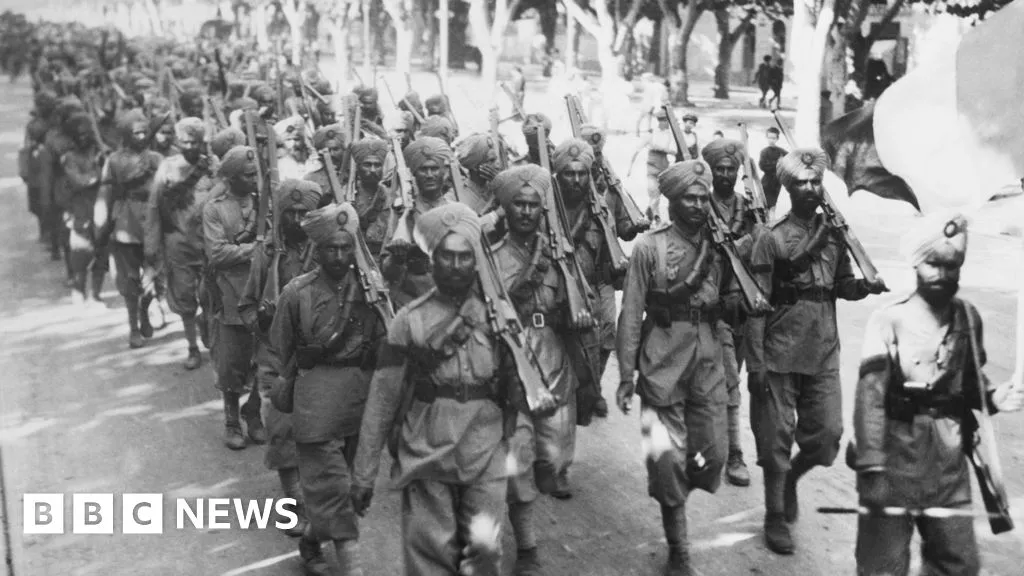
"As a Punjabi myself I feel really proud that I can do this part for the community," says Jasmin Basra, a PhD student at the University of Greenwich, who participated in the pain-staking research.During the process, Basra unexpectedly stumbled across the names of two of her own relatives, a great-great-grandfather and his brother, who also served in WW1 fighting for the British Indian Army."That connection was emotional. As a second-generation British Punjabi, there is almost a disconnect from Punjab as well as not being fully connected to British history, but I think this is a tangible link to all of it," she says.Books that make up the Punjab Registers in the Lahore Museum, PakistanThe work done by volunteers has been gratefully received, and built on, by the Commonwealth War Graves Commission, which has now issued the largest update to its records since World War Two.Historians at the Commission say most of the 9,909 men previously omitted from commemoration records were casualties who died of injuries away from the battlefield.Rulings made by the British Indian Government at the time meant they were not afforded war graves status, but that decision has been overturned.Of the thousands of newly recognised dead, around 25% are Sikhs, another 25% Hindus, with around 40% having been Muslim.
SRCBBC News - World
LANGEN
LEANCenter
WORDS211
ENT10
MON · 2026-07-06 · 05:04 GMTBRIEF NSR-2026-0706-90511
NSR-2026-0706-90511News Report·EN·Human Interest
Thousands of forgotten WW1 soldiers recognised for first time
Nearly 10,000 soldiers who fought for the British Indian Army in World War I are being officially recognized for the first time, with their names added to the Commonwealth War Graves Commission's database. This significant update, the largest since World War Two, rectifies a historical decision by the British Indian Government that previously denied war graves status to casualties who died of injuries away from the battlefield.
9 hours agoShareSaveAdd as preferred on GoogleAleem MaqboolReligion EditorBBC News - WorldFiled 2026-07-06 · 05:04 GMTLean · CenterRead · 1 min
BBC News - WorldFIG 01
Reading time
1min
Word count
211words
Sources cited
2cited
Entities identified
10entities
Quality score
100%
§ 01
Briefing Summary
AI-generatedNEWSAR · AI
Nearly 10,000 soldiers who fought for the British Indian Army in World War I are being officially recognized for the first time, with their names added to the Commonwealth War Graves Commission's database. This significant update, the largest since World War Two, rectifies a historical decision by the British Indian Government that previously denied war graves status to casualties who died of injuries away from the battlefield. The research, conducted by volunteers including PhD student Jasmin Basra, has brought a tangible connection to history for descendants, with many of the newly recognized dead being Sikh, Hindu, and Muslim soldiers. This recognition is a cherished step for thousands of families, acknowledging the sacrifices of these previously forgotten servicemen.
Confidence 0.90Sources 2Claims 5Entities 10
§ 02
Article analysis
Model · rule-basedFraming
Human Interest
Social Justice
Tone
Measured
AI-assessed
CalmNeutralAlarmist
Factuality
0.80 / 1.00
Factual
LowHigh
Sources cited
2
Limited
FewMany
§ 03
Key claims
5 extracted01
Jasmin Basra, a PhD student, found personal connections to the research, identifying two of her own relatives who served in WW1.
quoteJasmin Basra
Confidence
1.00
02
Of the newly recognised dead, around 25% are Sikhs, 25% Hindus, and 40% Muslim.
statistic
Confidence
1.00
03
Most of the newly recognised casualties died of injuries away from the battlefield and were previously denied war graves status by the British Indian Government.
factualHistorians at the Commonwealth War Graves Commission
Confidence
1.00
04
The Commonwealth War Graves Commission has issued its largest update to records since World War Two, adding 9,909 men.
factualCommonwealth War Graves Commission
Confidence
1.00
05
Thousands of WW1 soldiers previously omitted from commemoration records are now being recognised for the first time.
factual
Confidence
1.00
§ 04
Full report
1 min read · 211 words§ 05
Entities
10 identifiedKey playerOppositionContextPositiveNeutralNegative
Organizations5
§ 06
Keywords & salience
9 termsww1 soldiers
1.00
british indian army
0.90
commonwealth war graves commission
0.80
punjabi community
0.70
forgotten soldiers
0.70
war graves status
0.60
historical recognition
0.60
lahore museum
0.50
religious demographics
0.40
§ 07
Topic connections
Interactive graph No topic relationship data available yet. This graph will appear once topic relationships have been computed.