Canada has selected a German consortium to build a dozen cutting-edge submarines in one of the country’s largest-ever defence contracts that will further deepen its Nato ties before a crucial summit this week.On Monday the prime minister, Mark Carney, announced the winner of a tightly contested battle for the lucrative government contract to replace its fleet of ageing, secondhand subs, most of which are undergoing maintenance.For months both ThyssenKrupp Marine Systems (TKMS) and the South Korean shipbuilder Hanwha Ocean have promised tech-heavy submarines and spillover economic benefits to Canada.The winner, TKMS, is the largest manufacturer of non-nuclear submarines and a key supplier of Nato’s fleet. Canada had previously indicated that both firms’ diesel-electric offerings – the 212CD model sub from TKMS and Hanwha’s KSS-III Batch-II submarine – suited its military needs.The order for 12 submarines marks the first time Canada has bought brand-new vessels. The Royal Canadian Navy now has four submarines that were bought secondhand from Britain in 1998. Of the four Victoria-class subs, three are undergoing maintenance.The new subs will probably be used to help give Canada a stronger foothold in the Arctic. The TKMS vessels are designed to use modern stealth technology to operate in contested areas with minimal detection, and will be able to conduct lengthy surveillance missions in key Arctic routes, including the Northwest Passage. Hanwha’s vessels are substantially larger than the German one, and the company and industry analysts said they would have given Canada a greater ability to deploy powerful weapons and conduct lengthy patrols deep in the ocean.The submarine order itself is estimated to be worth more than US$12bn (£9bn) but the contract also includes roughly half a century of maintenance, meaning the total bill could exceed US$70bn.Canada’s federal government and TKMS will still have to enter into negotiations to finalise the contract, a process that could take years.Carney took a delegation of senior cabinet ministers to visit TKMS’s building facility in Kiel, Germany, last year, and toured a newly built sub at Hanwha’s facility in Geoje, South Korea.The ROKS Jang Yeong-sil, a KSS-III Batch-II submarine launched late 2025 from the Hanwha Ocean shipyard in Geoje. Photograph: ROK Navy PhotoSenior officials from both countries also made visits to Canada to sell the broader economic benefits of their respective pitches. German officials made repeated references to a broader compatibility with Nato, and it has been reported that TKMS was hoping to expand the scope of the contract to include possible investments in rare earths, mining, artificial intelligence and battery production for the automotive sector.South Korea is not a Nato member, but Hanwha representatives said the company would use steel from Algoma’s plant in Sault Ste Marie, Ontario, to build armoured weaponised military vehicles in Canada. Hanwha also spent millions on a wide-ranging ad campaign, including a voiceover from the prominent Canadian journalist Peter Mansbridge, touting the benefits of its KSS-III.Carney’s Liberal party has committed to dramatically increasing government defence spending, with a pledge to allocate 5% of gross domestic product by 2035. Canada recently announced it hit 2% of GDP, a longstanding target for Nato members.Canada has also suggested it is open to making larger purchases from European contractors, part of a larger push to lessen its reliance on the US. It has already committed to buying 18 American-made Lockheed Martin F-35 Lightning II jets – a fighter plane long favoured by the Royal Canadian air force for interoperability with the North American Aerospace Defense Command, the binational military organisation shared between Canada and the US. Recent political tensions between the two nations, however, have pushed Ottawa to look at other vendors to help modernise its air force.Canada is weighing the purchase of 72 Saab-made Gripen war planes. The Sweden-based company has said that if Canada buys its latest-generation fighter plane, in addition to six GlobalEye surveillance aircraft the country had already agreed to buy, the deal would create up to 12,600 jobs in Canada, marking another immense defence industrial project for the country.On Monday the secretary general of Nato, Mark Rutte, told reporters that the members of the alliance were about to announce billions in new contracts, calling it the “crucial kit we need to deter and defend”.
SRCThe Guardian - World News
LANGEN
LEANCenter-Left
WORDS696
ENT12
MON · 2026-07-06 · 16:41 GMTBRIEF NSR-2026-0706-90556
NSR-2026-0706-90556News Report·EN·National Security
Canada to buy 12 hi-tech German submarines after bidding war
Canada has selected a German consortium, ThyssenKrupp Marine Systems (TKMS), to build twelve new submarines. This multibillion-dollar contract, potentially exceeding $70 billion with maintenance, aims to replace Canada's aging fleet and deepen its NATO ties.
Leyland Cecco in TorontoThe Guardian - World NewsFiled 2026-07-06 · 16:41 GMTLean · Center-LeftRead · 3 min
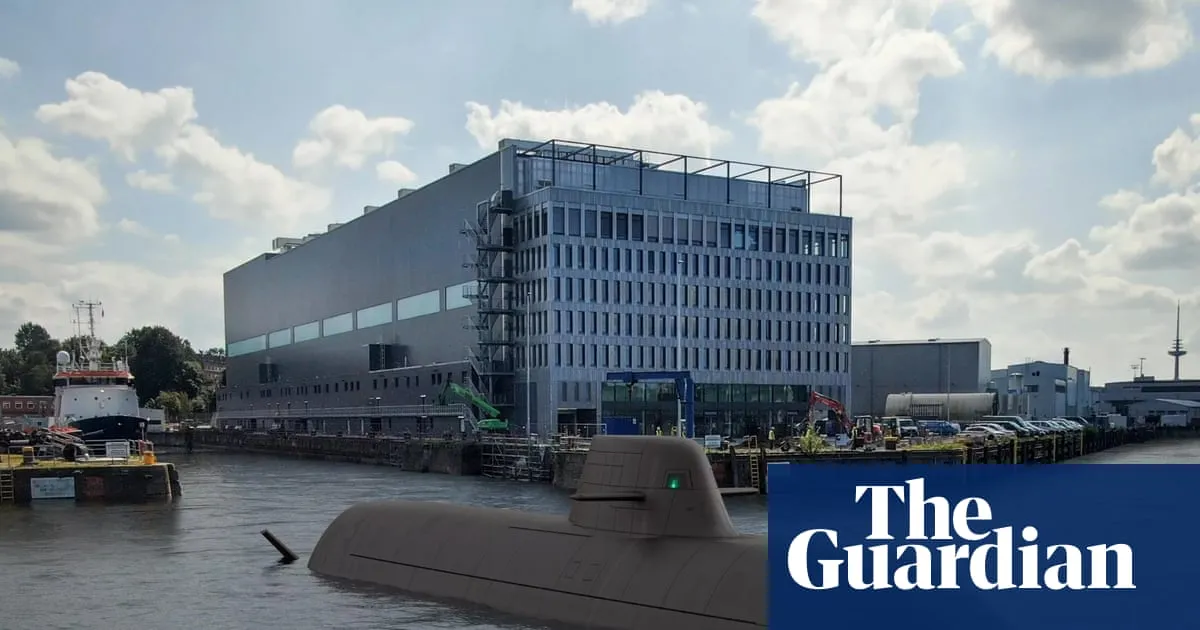
The Guardian - World NewsFIG 01
Reading time
3min
Word count
696words
Sources cited
3cited
Entities identified
12entities
Quality score
100%
§ 01
Briefing Summary
AI-generatedNEWSAR · AI
Canada has selected a German consortium, ThyssenKrupp Marine Systems (TKMS), to build twelve new submarines. This multibillion-dollar contract, potentially exceeding $70 billion with maintenance, aims to replace Canada's aging fleet and deepen its NATO ties. TKMS beat out South Korean rival Hanwha Ocean in a competitive bidding process. The new submarines are expected to enhance Canada's presence in the Arctic through advanced stealth technology. This significant defense procurement aligns with Canada's commitment to increasing defense spending and diversifying its military suppliers. Final contract negotiations with TKMS are expected to take several years.
Confidence 0.90Sources 3Claims 5Entities 12
§ 02
Article analysis
Model · rule-basedFraming
National Security
Technology
Tone
Measured
AI-assessed
CalmNeutralAlarmist
Factuality
0.80 / 1.00
Factual
LowHigh
Sources cited
3
Well sourced
FewMany
§ 03
Key claims
5 extracted01
Canada's current submarine fleet consists of four secondhand Victoria-class subs, with three undergoing maintenance.
factual
Confidence
1.00
02
ThyssenKrupp Marine Systems (TKMS) was selected over South Korean competitor Hanwha Ocean.
factual
Confidence
1.00
03
The contract is one of Canada's largest-ever defence contracts and could exceed US$70bn.
statistic
Confidence
1.00
04
Canada will purchase 12 hi-tech submarines from a German consortium.
factual
Confidence
1.00
05
The new submarines will likely be used to enhance Canada's presence in the Arctic.
prediction
Confidence
0.80
§ 04
Full report
3 min read · 696 words§ 05
Entities
12 identifiedKey playerOppositionContextPositiveNeutralNegative
People1
Organizations4
Locations5
§ 06
Keywords & salience
9 termssubmarines
1.00
defence contract
0.90
nato ties
0.80
arctic
0.70
thyssenkrupp marine systems
0.60
surveillance missions
0.50
stealth technology
0.50
diesel-electric
0.40
economic benefits
0.40
§ 07
Topic connections
Interactive graph Network visualization showing 51 related topics
View Full Graph Person Organization Location Event|Click node to navigate|Edge numbers = shared articles