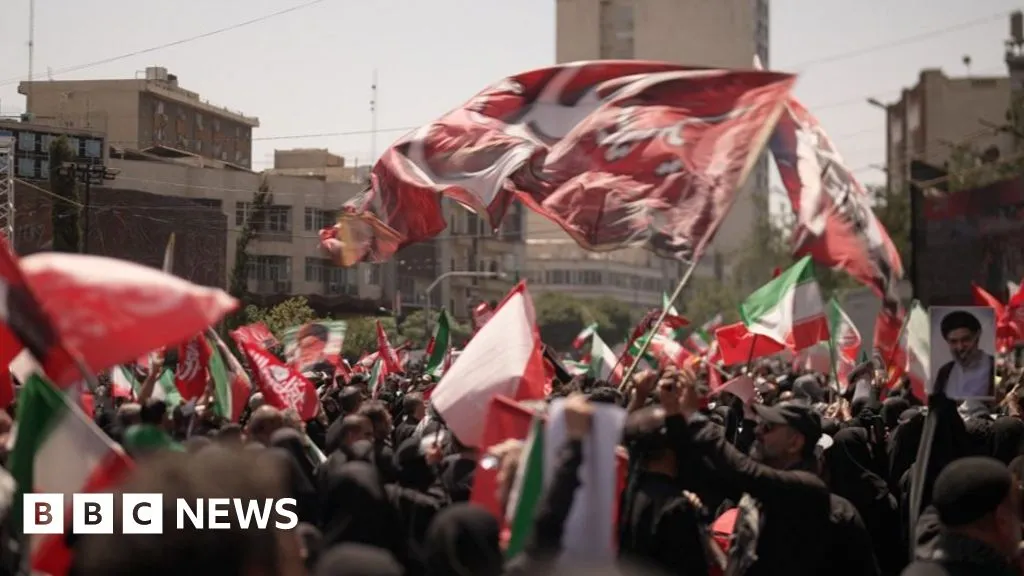
"Tears arise from the pain and sorrow that surges within a person, and the world sees this truth," declared Iran's President Masoud Pezeshkian, rebutting US President Donald Trump's claim that these were "fake tears".The commemorations now move to some of the most sacred sites for Shia Muslims, including in Qom, south of Tehran, on Tuesday, and then to Najaf and Karbala in neighbouring Iraq. The final burial is on Thursday at the sprawling Imam Reza Shrine in Mashhad, the ayatollah's birthplace and Iran's holiest city."The funeral proceedings are designed to frame him as more than a national leader but a transcendent religious and political figure whose authority extended across the Muslim world, and particularly Shia Islam," observed Mohammad Eslami, research fellow at Tehran-university" class="entity-link entity-organization" data-entity-id="21929" data-entity-type="organization">Tehran University.There's a harsher view of his legacy. "The revolution he preserved was for a world which no longer exists," assesses Karim Sadjadpour, author of Reading Khamenei: the World View of Iran's Most Powerful Leader.EPA/ShutterstockThe coffins of Khamenei and four family members were carried in a hulking funeral cortegeIn Tehran, a flatbed truck, decorated with intricate latticework and Arabic Islamic script, carried five caskets, painted in the green, red and white of Iran's flag, including the smallest for Khamenei's 14-month-old granddaughter Zara.
SRCBBC News - World
LANGEN
LeanCenter
WORDS204
ENT12
TUE · 2026-07-07 · 00:46 GMTBRIEF NSR-2026-0707-90690
NSR-2026-0707-90690News Report·EN·Political Strategy
Resistance and revenge - Iran wanted to send a message with its farewell to Khamenei
Iran is holding three days of public mourning following the death of Supreme Leader Ayatollah Ali Khamenei, a political spectacle intended to convey a message to the world. President Masoud Pezeshkian stated that the tears seen are genuine, countering claims of them being "fake." The commemorations are moving to sacred Shia Muslim sites in Qom, Najaf, and Karbala, with the final burial scheduled for Thursday at the Imam Reza Shrine in Mashhad.
1 hour agoShareSaveAdd as preferred on GoogleLyse DoucetChief international correspondent, TehranBBC News - WorldFiled 2026-07-07 · 00:46 GMTLean · CenterRead · 1 min
BBC News - WorldFIG 01
Reading time
1min
Word count
204words
Sources cited
2cited
Entities identified
12entities
NEWSAR · AI
Iran is holding three days of public mourning following the death of Supreme Leader Ayatollah Ali Khamenei, a political spectacle intended to convey a message to the world. President Masoud Pezeshkian stated that the tears seen are genuine, countering claims of them being "fake." The commemorations are moving to sacred Shia Muslim sites in Qom, Najaf, and Karbala, with the final burial scheduled for Thursday at the Imam Reza Shrine in Mashhad. These proceedings aim to portray Khamenei as a transcendent religious and political figure with authority extending across the Muslim world, particularly Shia Islam. However, some view his legacy as preserving a revolution for a world that no longer exists. The funeral cortege in Tehran carried five caskets, including one for Khamenei's granddaughter.
Confidence 0.90Sources 2Claims 5Entities 12
Framing
Political Strategy
Human Interest
Tone
Measured
AI-assessed
CalmNeutralAlarmist
Factuality
0.60 / 1.00
Mixed
LowHigh
Sources cited
2
Limited
FewMany
01
Five caskets, including one for Khamenei's granddaughter, were carried in a funeral cortege.
factual
Confidence
1.00
02
Khamenei's legacy is viewed by some as preserving a revolution for a world that no longer exists.
quoteKarim Sadjadpour
Confidence
1.00
03
The funeral proceedings are designed to frame Khamenei as a transcendent religious and political figure.
quoteMohammad Eslami
Confidence
1.00
04
Funeral commemorations are moving to sacred Shia Muslim sites in Qom, Najaf, and Karbala.
factual
Confidence
1.00
05
Iran's President Masoud Pezeshkian rebutted US President Donald Trump's claim about 'fake tears'.
quoteMasoud Pezeshkian
Confidence
1.00
§ 04
Full report
1 min read · 204 wordsKey playerOppositionContextPositiveNeutralNegative
Organizations1
Locations8
ayatollah khamenei
1.00
iran
0.90
funeral proceedings
0.80
shia islam
0.70
religious and political figure
0.70
legacy
0.60
resistance and revenge
0.50
qom
0.40
najaf and karbala
0.40
imam reza shrine
0.40
§ 07
Connections
Who appears together in the newsIn this articleWider coverageLine weight = articles in common
Laying out network…
Strongest ties articles in common
- 7,769
- 2,643
- 1,483
- 700
- 373
- 355
Recurring context not named in this article
- LUnited Stateslinks 11
- PMojtaba Khameneilinks 10
- LIsraellinks 10
- PAyatollah Ali Khameneilinks 10
- PAli Khameneilinks 9
- OIslamic Republiclinks 8
- OHezbollahlinks 8
- LStrait of Hormuzlinks 8