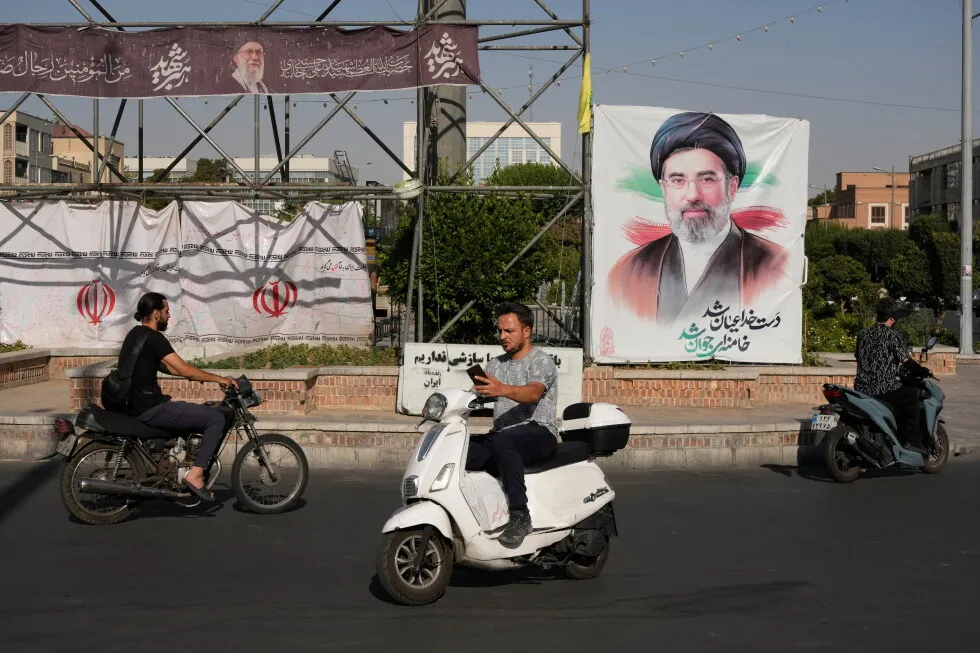
Iran says this. The US says that. A look at the trickiest issues in the unresolved conflict 0 seconds of 1 minute, 27 secondsVolume 0% Press shift question mark to access a list of keyboard shortcuts Keyboard ShortcutsEnabledDisabled Shortcuts Open/Close/ or ? Play/PauseSPACE Increase Volume↑ Decrease Volume↓ Seek Forward→ Seek Backward← Captions On/Offc Fullscreen/Exit Fullscreenf Mute/Unmutem Decrease Caption Size- Increase Caption Size+ or = Seek %0-9 Next Up Maine couple snaps photo of a bear chasing a moose calf 00:28 Subtitle Settings OffEnglish(US)_v Font Color White Font Opacity 100% Font Size 100% Font Family Arial Character Edge None Edge Color Black Background Color Black Background Opacity 50% Window Color Black Window Opacity 0% Reset WhiteBlackRedGreenBlueYellowMagentaCyan 100%75%50%25% 200%175%150%125%100%75%50% ArialCourierGeorgiaImpactLucida ConsoleTahomaTimes New RomanTrebuchet MSVerdana NoneRaisedDepressedUniformDrop Shadow WhiteBlackRedGreenBlueYellowMagentaCyan WhiteBlackRedGreenBlueYellowMagentaCyan 100%75%50%25%0% WhiteBlackRedGreenBlueYellowMagentaCyan 100%75%50%25%0% 00:00 01:27 01:27 More Videos 00:28 Maine couple snaps photo of a bear chasing a moose calf 00:59 Australian officials ask fans to respect the privacy of Neil, a 1-ton seal who respects nothing 01:02 Defying Pope Leo XIV and risking schism, traditionalists go ahead with Latin Mass consecrations 00:43 Sons of late Iran Supreme Leader Khamenei among mourners at his funeral 01:00 FIFA lifts US star striker red card suspension at World Cup after Trump calls Infantino 01:17 Trump repeats his insistence that the US should control Greenland 00:56 Ukrainian drone attacks on oil refineries plunge Russia into a summer fuel crisis 01:19 Trump says US considering selling F-35 jets to Turkey despite ban Close 1 of 3 | Iran again launched drone and missile attacks Sunday targeting Bahrain and Kuwait in response to new U.S. airstrikes against the Islamic Republic, and threatened a “complete halt” in negotiations to end the war if Washington continues its attacks. 2 of 3 | Motorbikes drive past a banner showing a portrait of the Iranian Supreme Leader Ayatollah Mojtaba Khamenei in downtown Tehran, Iran, Monday, June 29, 2026. (AP Photo/Vahid Salemi) 3 of 3 | People walk past banners showing portraits of the Iranian Supreme Leader Ayatollah Mojtaba Khamenei in downtown Tehran, Iran, Monday, June 29, 2026. (AP Photo/Vahid Salemi) By Cara Anna Updated 3:07 AM MESZ, June 30, 2026 Add AP News on Google Add AP News as your preferred source to see more of our stories on Google. Share Share Facebook Copy Link copied Print Email X LinkedIn Bluesky Flipboard Pinterest Reddit The United States and Iran have less than 60 days to negotiate a permanent end to the war, but they still seem to be at odds over the interim deal they reached this month. It’s not even clear when the two sides will meet again. “The situation is sensitive and complex,” a senior Iranian negotiator, Kazem Gharibabadi, posted Monday on X. Talks are just one of the pressing questions. Others include the Strait of Hormuz, which the U.S. says is open while Iran insists on a measure of control. The issue led both sides to carry out days of military strikes that appeared on Monday to have ended. Here’s a look at what both sides have said about key sticking points, including the ongoing fighting in Lebanon, and why the conflict is still far from resolved. “Iran HAS REQUESTED A MEETING. IT WILL TAKE PLACE TOMORROW IN DOHA!” U.S. President Donald Trump posted on social media Monday. “There are no negotiation meetings with the U.S. side at any level scheduled in the coming days,” Iranian Foreign Ministry spokesperson Esmail Baghaei said Monday. The U.S. and Iran have a roughly mid-August deadline to reach a permanent peace deal including an agreement on Iran’s disputed nuclear program. Democratic-led states face backlash over National Guard deployments in Washington 4 MIN READ Judge rejects Justice Department attempt to get names of 2020 election workers in Fulton County 3 MIN READ 118 Democrats’ narrow path to Senate majority gets rockier as Platner faces sexual assault allegation 6 MIN READ 176 What’s ahead are technical talks involving lower-level diplomats before any return to the table by top negotiators. Mediators are eager to get going. Pakistan, a key mediator along with Qatar, has said talks would resume Tuesday. White House press secretary Karoline Leavitt told Fox News on Monday that envoys Steve Witkoff and Jared Kushner, Trump’s son-in-law, were flying to Qatar to meet with the Iranians and that technical negotiations would occur on the sidelines. Later, Iranian state media cited Baghaei as saying an expert delegation will travel to Qatar this week but with no planned U.S. meetings. There’s plenty to discuss, including arrangements around the Strait of Hormuz, sanctions waivers on Iran and the future of Iran’s stockpile of highly enriched uranium. But the deal says fighting must stop before further negotiations. After the exchange of fire over the weekend, Iran on Sunday threatened a “complete halt” in talks. On Monday, both sides appeared to pause their attacks. Tehran may be waiting to see if that holds. The Strait of Hormuz is open for shipping, in theory The Strait of Hormuz is open, according to the interim deal. Iran insists it must govern the strait. “Any attempt to establish new or separate arrangements from those currently being carried out by the Islamic Republic of Iran will only lead to further complications, delay the reopening of the Strait of Hormuz and increase the level of tension,” Iranian Foreign Minister Abbas Araghchi said Sunday. This AP explainer is a good start. But in short, Iran during the war discovered a powerful new source of leverage in the waterway that carried a fifth of the world’s oil and gas before the conflict. The interim deal says Iran should immediately facilitate commercial shipping through the strait that lies between it and Oman. It says Iran can work with Oman and other Persian Gulf countries to administer the waterway in line with international laws ensuring freedom of navigation. Iran says shippers must use its designated routes and coordinate with its authorities. It has objected to a new route overseen by the U.S. that runs along Oman. That sparked the fighting over the weekend. The Trump administration is operating on the understanding that the U.S. and Iran are standing down and vessels can move freely through the strait, a U.S. official said Monday on condition of anonymity to discuss the closed-door negotiations. Ships have begun transiting again, but traffic is still below prewar levels. Fighting must stop everywhere and Israel must withdraw from Lebanon before moving ahead on other issues. The Iranian-backed militant group will resist Israel’s occupation of large parts of southern Lebanon, and linking Israel’s withdrawal to Hezbollah’s disarmament is a “very dangerous suggestion,” Hezbollah leader Naim Kassem said Saturday. Israeli forces will remain in southern Lebanon “until Hezbollah and the rest of the terrorist organizations are disarmed, and until no further threat to Israel is posed from Lebanon,” Israeli Prime Minister Benjamin Netanyahu said. A separate set of U.S.-brokered talks have been held between Israel and Lebanon’s government. Iran says its interim deal with the U.S., which calls for a complete ceasefire in Lebanon, requires Israel to withdraw. But a separate U.S.-brokered agreement between Lebanon and Israel allows Israeli forces to stay in southern Lebanon until Hezbollah has been disarmed. Hezbollah was not part of those talks and has rejected that deal. Hezbollah attacked Israel two days after it and the United States attacked Iran on Feb. 28. Israel responded with aerial bombardment and a ground invasion. Israel has vowed to keep forces in southern Lebanon until Hezbollah’s threat is eliminated. Lebanon’s government does not have the capacity to disarm Hezbollah by force. Sporadic clashes continued in Lebanon over the weekend. That could delay Iran’s return to the negotiating table. Associated Press writer Josh Boak in Washington contributed. Cara Anna Anna is an editor on the AP’s Global Desk. She has reported from Africa, China, Ukraine, Afghanistan and the United Nations. mailto
SRCAssociated Press (AP)
LANGEN
LEANCenter
WORDS1 305
ENT10
TUE · 2026-07-07 · 21:53 GMTBRIEF NSR-2026-0707-90998
NSR-2026-0707-90998News Report·EN·Conflict
Iran says this. The US says that. A look at the trickiest issues in the unresolved conflict
The United States and Iran face a mid-August deadline to negotiate a permanent end to their conflict, but remain at odds over an interim deal. Key sticking points include control of the Strait of Hormuz, with the U.S.
Associated Press (AP)Filed 2026-07-07 · 21:53 GMTLean · CenterRead · 6 min
Associated Press (AP)FIG 01
Reading time
6min
Word count
1 305words
Sources cited
1cited
Entities identified
10entities
Quality score
100%
§ 01
Briefing Summary
AI-generatedNEWSAR · AI
The United States and Iran face a mid-August deadline to negotiate a permanent end to their conflict, but remain at odds over an interim deal. Key sticking points include control of the Strait of Hormuz, with the U.S. asserting it is open for shipping and Iran insisting on governing the waterway. Disagreements also persist regarding the ongoing fighting in Lebanon, with Iran demanding a complete ceasefire and Israeli withdrawal before further negotiations, while Israel states its forces will remain until Hezbollah is disarmed. Despite conflicting statements on meeting schedules, technical talks involving lower-level diplomats are expected to resume, with mediators like Pakistan and Qatar actively involved. The conflict's resolution is complicated by these differing stances on critical issues.
Confidence 0.90Sources 1Claims 4Entities 10
§ 02
Article analysis
Model · rule-basedFraming
Conflict
Diplomatic
Tone
Measured
AI-assessed
CalmNeutralAlarmist
Factuality
0.70 / 1.00
Factual
LowHigh
Sources cited
1
Limited
FewMany
§ 03
Key claims
4 extracted01
The situation is sensitive and complex.
quoteKazem Gharibabad
Confidence
1.00
02
Iran threatened a complete halt in negotiations to end the war if Washington continues its attacks.
factualIran
Confidence
0.90
03
Iran launched drone and missile attacks targeting Bahrain and Kuwait in response to U.S. airstrikes.
factualIran
Confidence
0.90
04
The United States and Iran have less than 60 days to negotiate a permanent end to the war.
factual
Confidence
0.80
§ 04
Full report
6 min read · 1 305 words§ 05
Entities
10 identifiedKey playerOppositionContextPositiveNeutralNegative
People3
Organizations2
§ 06
Keywords & salience
8 termsiran us conflict
1.00
drone and missile attacks
0.90
negotiations
0.80
us airstrikes
0.70
islamic republic
0.60
ayatollah mojtaba khamenei
0.50
bahrain
0.40
kuwait
0.40
§ 07
Topic connections
Interactive graph Network visualization showing 51 related topics
View Full Graph Person Organization Location Event|Click node to navigate|Edge numbers = shared articles