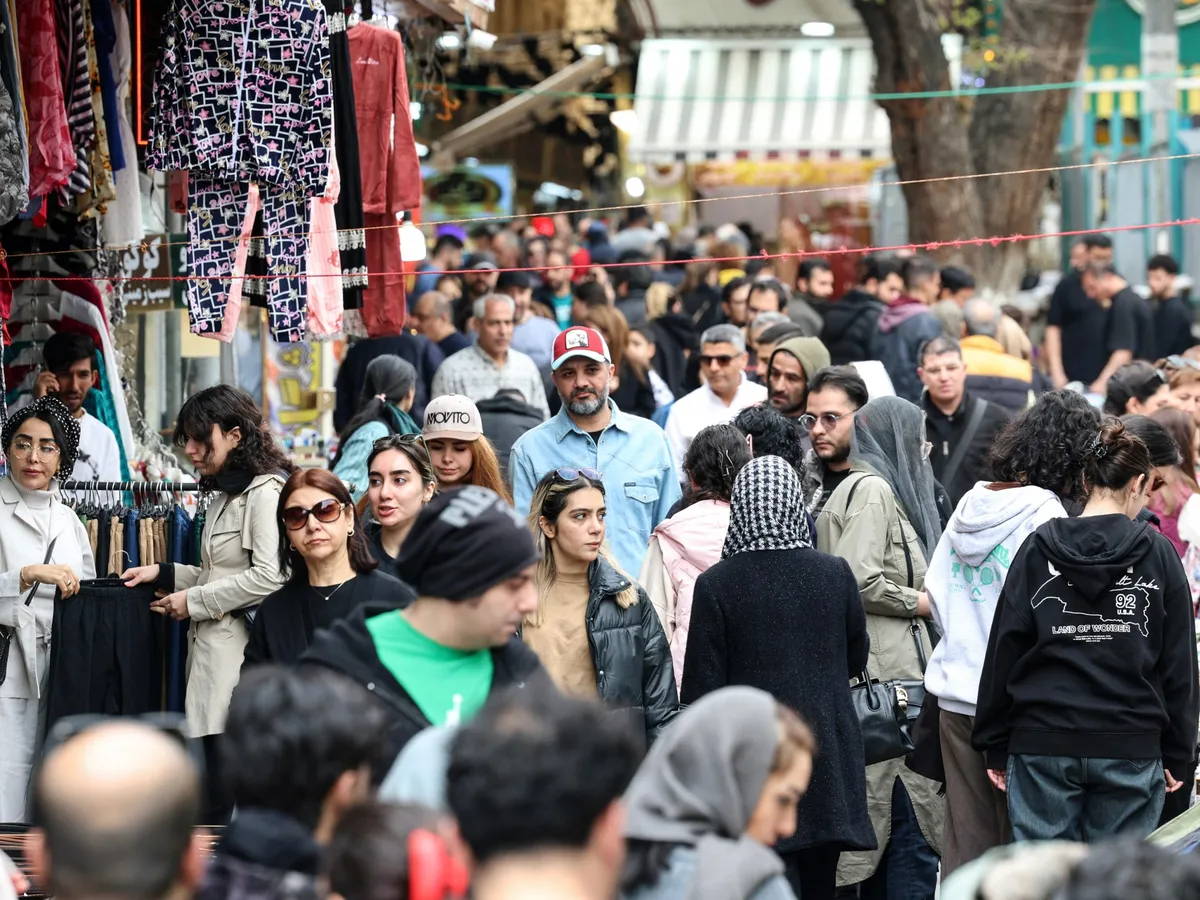
The devastation that many industrial facilities have taken from two wars in a year might take years to reverse, say analysts.People shop at Tajrish Bazaar in northern Tehran [File: AFP]Published On 8 Jul 2026Tehran, Iran – Three weeks after Iran and the United States signed a memorandum of understanding to extend their ceasefire, their truce remains fragile.Three tankers have been hit in the Strait of Hormuz over the past two days, even as Iran and the US are expected to restart mediated negotiations to end the war next week, after the funeral of Iran’s Supreme Leader Ayatollah Ali Khamenei.The US military on Wednesday launched large air attacks on Iran’s southern provinces, which prompted the Islamic Revolutionary Guard Corps (IRGC) and Iran’s regular army to fire missiles and drones on US interests in Bahrain and Kuwait. Both sides accused each other of violating the understanding signed last month.But even if a long-term resolution is eventually reached and Western sanctions on Iran are lifted, analysts say that it will take time for the country’s economy to recover.The economy has been strained by years of local mismanagement and corruption; stringent Western and United Nations sanctions; and, more recently, damage sustained from two wars in a year with the US and Israel, deadly nationwide protests in January, and internet shutdowns.When numbers tell a storyA falling purchasing power has pushed millions into poverty. Inflation has recently climbed to levels not seen since World War II, when Allied forces occupied Iran, took over railways and food supplies, and contributed to a deadly famine.The latest report by the Statistical Center of Iran for Khordad, the third month of the Persian calendar that ended on June 21, showed inflation increasing by 88.6 percent compared to the same month of the year before. Inflation was up by nearly 6 percent compared to the second month of the current year.Food inflation was skyrocketing at almost 134 percent in Khordad compared to the corresponding month a year earlier, with oils and fats surging by more than 278 percent, red meat and poultry by over 178 percent, and bread and cereals by nearly 139 percent.Unemployment is at 7.5 percent during the current calendar year, according to the latest report by the statistical centre released at the end of June. But labour participation is at just 40 percent, meaning that most working-age people are operating outside the official labour force – including students, retirees, those engaged in irregular informal work, and those not seeking paid work.The job-quality picture is also grim, as salaries are perennially falling behind expenses, as over 38 percent of officially employed people work more than 49 hours a week, and as youth unemployment is at over 20 percent, the centre reports.The base monthly minimum wage equals only about $95 using the current open market exchange rate of the US dollar in Tehran. The rate has climbed to 1.75 million rials per greenback over recent days, not far from its all-time low of 1.9 million in May.The damage — and the road to recoveryDue to a heavy budget crunch, the only relief the government is able to offer amounts to a few dollars’ worth of monthly cash subsidy and electronic coupons for purchasing essential goods.A late June report by the Central Bank of Iran for the previous calendar year that ended on March 20 showed that gross domestic product (GDP) growth for the year stood at minus 0.7 percent, and gross fixed capital formation, a primary indicator of productive capacity and economic growth, was at nearly minus 12 percent. Imports were down 16.6 percent, as were exports by close to 5 percent.The damage from nearly 40 days of heavy bombardment during the war, the longest nationwide state-imposed internet shutdown in any country, and a US naval blockade of Iran’s southern ports — the full extent of which remains undisclosed to the public — has only exacerbated Iran’s economic woes. The International Monetary Fund has projected that Iran’s real GDP will shrink by 6.1 percent in 2026.Still, Mahdi Ghodsi, a senior economist at the Vienna Institute for International Economic Studies, said that part of the recent job losses could be recoverable if there is a credible halt to military escalation, restoration of transport and logistics links, more predictable access to energy and fuel, and functioning internet and payment systems.“In that case, some temporary layoffs in services, retail, transport, construction and small businesses could be reversed relatively quickly, because these activities are highly sensitive to uncertainty and disruptions rather than necessarily destroyed productive capacity,” he told Al Jazeera.Longer-term challengesBut Ghodsi cautioned that part of the damage is likely to be more persistent.“Where factories have lost machinery, inventories, imported inputs, workers, working capital, or access to energy, reopening is not simply a matter of returning to normal,” he said, adding that in some cases, full recovery may take years and require large investments, including foreign financing.Last week, leading satellite imaging provider Planet Labs restored access to imagery for nearly 800 sites across Iran impacted during the war, after lifting earlier restrictions it had placed in response to a US government request to delay or suspend access.Some Iranians on social media highlighted massive damage done to Iran Electronics Industries (SAIran), a state-owned defence industry heavyweight specialising in optics, communications, semiconductors and medical equipment, among other things.But along with numerous military-linked sites and assets, and nuclear facilities built over decades now reduced to rubble, Iran’s industrial capacity and civilian infrastructure were also extensively targeted by US and Israeli warplanes and vessels during the war.Oil and gas facilities, petrochemical and steel giants, electricity outposts, as well as maritime ports, airports, roads, bridges and residential units were significantly damaged.Work on rebuilding facilities and recovering lost capacities has begun during the period of reduced military hostility over recent weeks, with some airports and industrial units restarting operations.But a full recovery still appears distant and more destruction could still lay ahead. US President Donald Trump has repeatedly threatened extensive attacks against Iran’s electricity grid and infrastructure like bridges if the war resumes.Economist Ghodsi said the government’s limited fiscal capacity remains one of the central problems, since the state has already faced struggles in financing not only regular expenditures and salaries, but also obligations across public and semi-public sectors. “This fiscal weakness has been one of the drivers of inflation, as budgetary pressures are partly shifted onto the banking system and the central bank through monetary financing,” he said.Domestic fissuresSpeaking at a state-organised event in Tehran last month, Iran’s President Masoud Pezeshkian expressed concerns about another nationwide protest as public discontent remains high.“Our most important strength is our unity, and the unity of our people. What I fear is that we fail to serve the people right and they are dissatisfied and come to the streets to protest. Then our might collapses,” he said.Senior officials spearheading the mediated talks with Washington have backed the process as the viable path to delivering a better economy to the suffering Iranian population.But hardliners within the system, who perceive Iran to have attained a major victory against superior military powers during the war, continue to vociferously reject giving any concessions.
SRCAl Jazeera
LANGEN
LEANCenter
WORDS1 186
ENT12
WED · 2026-07-08 · 06:03 GMTBRIEF NSR-2026-0708-91119
NSR-2026-0708-91119News Report·EN·Economic Impact
Iran’s economy faces long road to recovery as fragile truce tested
Iran's economy faces a protracted recovery following recent conflicts and internal challenges. Despite a fragile truce with the US, tensions remain high with recent attacks on tankers and retaliatory strikes.
Maziar MotamediAl JazeeraFiled 2026-07-08 · 06:03 GMTLean · CenterRead · 5 min
Al JazeeraFIG 01
Reading time
5min
Word count
1 186words
Sources cited
2cited
Entities identified
12entities
Quality score
100%
§ 01
Briefing Summary
AI-generatedNEWSAR · AI
Iran's economy faces a protracted recovery following recent conflicts and internal challenges. Despite a fragile truce with the US, tensions remain high with recent attacks on tankers and retaliatory strikes. Analysts indicate that the devastation to industrial facilities from two wars in a year will take years to reverse. The economy is burdened by years of mismanagement, sanctions, war damage, protests, and internet shutdowns, leading to soaring inflation, particularly in food prices, and a low purchasing power. While some job losses in sectors sensitive to uncertainty may be reversible with a halt to escalation and restored infrastructure, damage to factories and productive capacity presents more persistent challenges, with the IMF projecting a significant GDP shrinkage.
Confidence 0.90Sources 2Claims 5Entities 12
§ 02
Article analysis
Model · rule-basedFraming
Economic Impact
Conflict
Tone
Measured
AI-assessed
CalmNeutralAlarmist
Factuality
0.70 / 1.00
Factual
LowHigh
Sources cited
2
Limited
FewMany
§ 03
Key claims
5 extracted01
Inflation in Iran has climbed to levels not seen since World War II, with food inflation at almost 134% in Khordad.
statisticStatistical Center of Iran
Confidence
0.95
02
Unemployment is at 7.5 percent, but labor participation is only 40 percent.
statisticStatistical Center of Iran
Confidence
0.90
03
The base monthly minimum wage in Iran equals only about $95 USD at the current open market exchange rate.
statisticarticle
Confidence
0.90
04
Iran's economy faces a long road to recovery due to damage from wars, mismanagement, corruption, sanctions, protests, and internet shutdowns.
factualanalysts
Confidence
0.90
05
Three tankers have been hit in the Strait of Hormuz over the past two days.
factualarticle
Confidence
0.85
§ 04
Full report
5 min read · 1 186 words§ 05
Entities
12 identifiedKey playerOppositionContextPositiveNeutralNegative
Locations7
§ 06
Keywords & salience
10 termsiran economy
1.00
fragile truce
0.90
economic recovery
0.80
inflation
0.70
western sanctions
0.70
us-iran relations
0.60
strait of hormuz
0.60
purchasing power
0.50
ayatollah ali khamenei
0.40
islamic revolutionary guard corps
0.40
§ 07
Topic connections
Interactive graph Network visualization showing 51 related topics
View Full Graph Person Organization Location Event|Click node to navigate|Edge numbers = shared articles