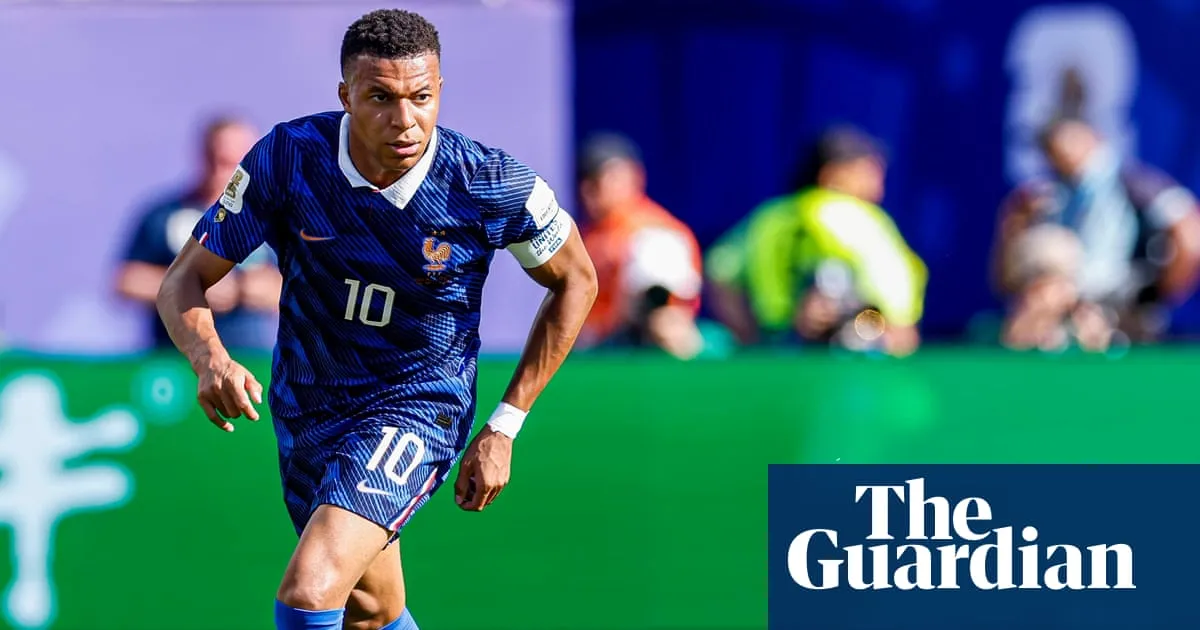
As players in the World Cup shore up their tactics and hone their teamwork skills ahead of the quarter-finals, a chorus of voices have warned that the rise of divisive political rhetoric is translating into an intensifying challenge for players on the pitch: a surge in racism.“There’s a huge issue,” said Samuel Okafor, the chief executive of Kick It Out, a UK-based organisation that seeks to tackle discrimination in football. “The political climate that we’re facing is clearly finding its way into football. And it’s making a huge difference in the levels of abuse we’re seeing – people are certainly being emboldened now more than ever.”The abuse is heightened by the fact that social media firms, for the most part, remain unaccountable for ensuring that their platforms are free from discrimination, he said. “What should be a moment of celebration is clearly being marred by the abuse that’s happening online but also in stadiums.”Among the first to sound the alarm during the tournament was the global players’ union Fifpro, which said this week that players were facing “a growing pattern of abuse” as it called for collective action to protect them.“In recent weeks, players have faced abuse online and in person, much of it racist and discriminatory,” it said in a statement. “There has been intimidation and hostility beyond the pitch. These incidents are not isolated; they point to a systemic pattern that cannot remain an accepted part of football or society.”The tournament has been punctuated by a spate of incidents, from the Dutch football association, the KNVB, saying it had filed an official complaint after players were targeted online with racist abuse following the Netherland’s loss against Morocco, to the Paris prosecutor this week launching an investigation into the alleged racist attack on Kylian Mbappé by a Paraguayan senator.Earlier this month, the mayor of London, Sadiq Khan, called on the media regulator, Ofcom, to investigate what he described as the “out of control” online racism directed at World Cup players, including the England squad. “We can’t allow a vile minority to divide us,” he said on social media, while the former Yugoslavia and Atlético Madrid striker Rade Bogdanović caused outrage by making a racist comment on Serbian TV about Black players.Data collected by Fifa’s social media protection service suggested the incidents were just the tip of the iceberg. The service said it had seen a 13-fold increase in online abuse during the group stage of the World Cup.Racially motivated abuse was the single largest category, making up 11% of flagged posts – up from 8% during the 2022 World Cup in Qatar – leading Fifa to note: “the data trends show a concerning direction of travel in terms of racially aggravated abuse”. More than 100 posts had been referred to law enforcement officials, it added.While some of the increased social media activity could be owing to the tournament’s expanded format or better detection systems, Okafor said the data was broadly in line with what Kick It Out was hearing on the ground.“What we’ve seen in English football is a week-on-week increase in discrimination towards players, match officials and their families,” he said. “I think it’s no surprise that we’re seeing the Dutch players, the German players, the French players, the English players all facing racial abuse because that’s been the picture we’ve seen this season in domestic football, but also in seasons before that.”As a growing number of political leaders express racist thoughts and views, the window of what had become normalised had shifted, said Jacco van Sterkenburg, a professor who studies racism in sports at Erasmus University, in Rotterdam, the Netherlands.“Most people would dismiss explicit racism, but the more implicit, subtle forms of racism have become almost more acceptable, or they are not easily detected any more because of the broader atmosphere,” he said. “And that subtle form of racism is the breeding ground, one could say, for the more explicit forms of racism to occur.”Researchers have long documented the use of racially coded language in football, from commentators who are more likely to describe Black players using references to athleticism, speed and power, to those who minimise their tactical intelligence, technique or decision-making.Van Sterkenburg drew a direct link between these coded forms of racism and the overt discrimination that was now making headlines. “These subtle forms of racism create a context in which other explicit forms of racism become more possible.”For Human Rights Watch, it was impossible to untangle the surge in racism with the fact that much of the World Cup was taking place in the US, under the watch of an administration that had long embraced xenophobic language while carrying out an unprecedented immigration crackdown.“If they’re deporting hundreds of thousands of people, often people of colour, then that is the backdrop for this World Cup,” said Minky Worden of the organisation. “And it has to be affecting the uptick in racist attacks.”Fifa had done little to address this wider context, despite the existence of statutes governing human rights and non-discrimination, she said.Donald Trump with Fifa’s Gianni Infantino in August. Photograph: Jacquelyn Martin/APInstead, the global football body had seemingly sought to present itself as being in lockstep with the US administration, from reportedly reducing the prominence of its anti-racism campaigning during last year’s Club World Cup in the US to naming Donald Trump as the first winner of the newly created Fifa peace prize.“I think it is highly correlated,” said Worden. “So if communities of colour are under constant attack by the Trump administration, and [Fifa president] Gianni Infantino has been constantly pictured with Donald Trump in the White House, it sends the message that even if there are (anti-racism) initiatives at Fifa, they’re not very serious.”The organisation has long expressed concerns that – much like in Russia and Qatar – the World Cup in the US could become a “sportswashing bonanza” for the Trump administration.“Fifa partnering with autocrats everywhere has sent a signal,” said Worden. “Fifa’s failure to implement its own rules on non-discrimination in Russia and Qatar and the United States has absolutely sent a green light to communities of hate that it will be OK to attack players.”
SRCThe Guardian - World News
LANGEN
LEANCenter-Left
WORDS1 025
ENT12
THU · 2026-07-09 · 09:36 GMTBRIEF NSR-2026-0709-91530
NSR-2026-0709-91530News Report·EN·Social Justice
Increase in racism during World Cup reflects ‘growing pattern of abuse’
Experts and organizations like Kick It Out and Fifpro are warning of a significant increase in racism directed at World Cup players, attributing it to a broader pattern of divisive political rhetoric and emboldened online abuse. Data from Fifa's social media protection service shows an alarming 13-fold rise in online abuse during the tournament's group stage, with racially motivated attacks being the largest category.
Ashifa Kassam, European Community affairs correspondentThe Guardian - World NewsFiled 2026-07-09 · 09:36 GMTLean · Center-LeftRead · 5 min
The Guardian - World NewsFIG 01
Reading time
5min
Word count
1 025words
Sources cited
5cited
Entities identified
12entities
Quality score
100%
§ 01
Briefing Summary
AI-generatedNEWSAR · AI
Experts and organizations like Kick It Out and Fifpro are warning of a significant increase in racism directed at World Cup players, attributing it to a broader pattern of divisive political rhetoric and emboldened online abuse. Data from Fifa's social media protection service shows an alarming 13-fold rise in online abuse during the tournament's group stage, with racially motivated attacks being the largest category. This surge is seen as a continuation of trends observed in domestic football, exacerbated by social media platforms' perceived lack of accountability. Incidents include racist abuse targeting Dutch players after their loss to Morocco and an investigation into alleged racist attacks on Kylian Mbappé. Researchers suggest that increasingly normalized, subtle forms of racism create a breeding ground for more explicit discrimination.
Confidence 0.90Sources 5Claims 5Entities 12
§ 02
Article analysis
Model · rule-basedFraming
Social Justice
Human Interest
Tone
Mixed Tone
AI-assessed
CalmNeutralAlarmist
Factuality
0.70 / 1.00
Factual
LowHigh
Sources cited
5
Well sourced
FewMany
§ 03
Key claims
5 extracted01
The Dutch football association filed a complaint after players were targeted with racist abuse online.
factualKNVB
Confidence
1.00
02
Racially motivated abuse constituted 11% of flagged posts, an increase from 8% in the 2022 World Cup.
statisticFifa's social media protection service
Confidence
1.00
03
Fifa's social media protection service reported a 13-fold increase in online abuse during the World Cup group stage.
statisticFifa's social media protection service
Confidence
1.00
04
Players are facing a growing pattern of abuse, much of it racist and discriminatory, both online and in person.
quoteFifpro
Confidence
1.00
05
The political climate is contributing to an increase in racism within football.
quoteSamuel Okafor
Confidence
1.00
§ 04
Full report
5 min read · 1 025 words§ 05
Entities
12 identifiedKey playerOppositionContextPositiveNeutralNegative
People4
Organizations4
§ 06
Keywords & salience
10 termsracism
1.00
world cup
0.90
abuse
0.90
discrimination
0.80
football
0.70
social media
0.70
online abuse
0.60
political climate
0.60
players
0.50
kick it out
0.40
§ 07
Topic connections
Interactive graph Network visualization showing 51 related topics
View Full Graph Person Organization Location Event|Click node to navigate|Edge numbers = shared articles