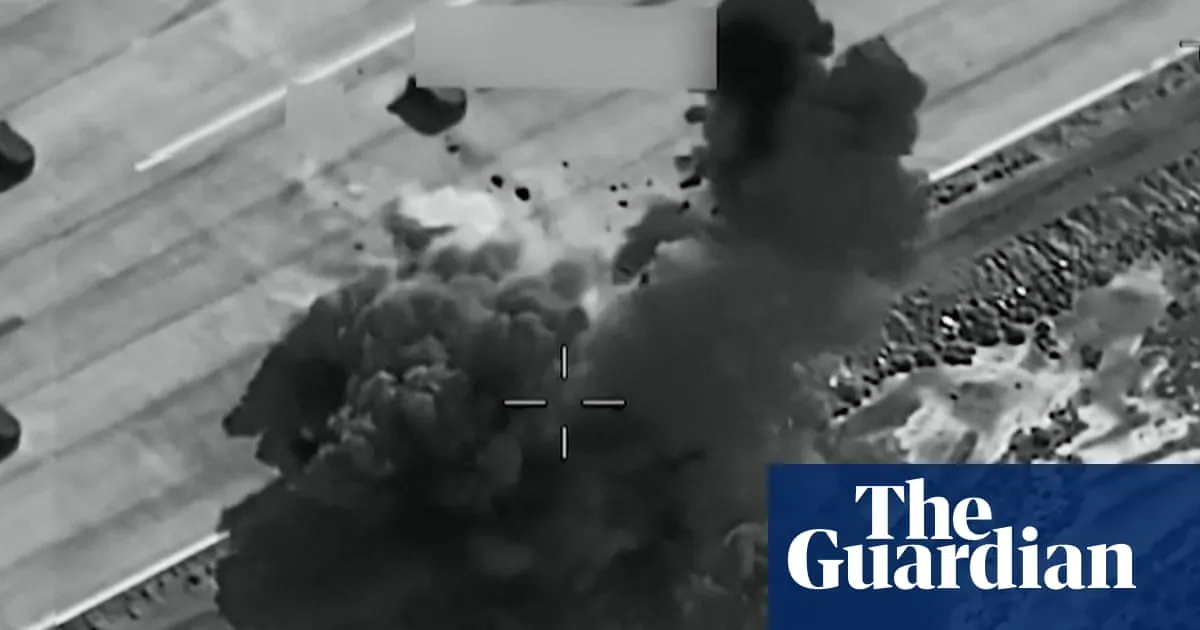
Residents in southern Iran have described two nights of fear this week after explosions shook coastal communities as the US launched fresh strikes on targets including the port cities of Bandar Abbas and Sirik.US Central Command confirmed the attacks, saying they were carried out to “further degrade their ability to threaten freedom of navigation in the Strait of Hormuz”.For residents in Posht-e Shahr, Bandar Abbas, back-to-back explosions marked another night of terror as they scrambled to check on friends and family. Noor, a teacher who lives near the fishing pier, said this week’s strikes were stronger than most in recent months.“Right now there’s calm, but last night and the night before were terrifying. It was around 1am or so that I heard back-to-back explosions – at least 10. There were perhaps also the sounds of the air defences. We have a little cat at home. He was so scared and hid under the bed,” said Noor, who like the other residents, asked to use a pseudonym.The 40-year-old said fear is growing that the attacks may continue. At sunset, she feels increasingly unsettled about what the night may bring. “My biggest fear is for the fishermen. I live very close to the pier, and I know there were so many boats there with just fishermen trying to start early because it’s getting hot early in the morning.”“I found out that many more have been injured in last night’s strikes, and several are dead. I am really worried that this time the impact will be worse for civilians,” she said.US and Iran exchange strikes: is Trump’s peace deal over? | The LatestIranian authorities say at least 14 people have been killed in attacks over the past two days, with more than 78 injured. The fresh strikes also hit Sirik, another port city about 180km from Bandar Abbas.For those living in villages around Sirik, this week’s strikes have compounded existing challenges, including water shortages – which were exacerbated by US attacks on two water storage facilities. Those strikes have reportedly affected more than 20,000 civilians.Mina, 41, a mother of two, has been rationing water and paying for water cans for daily chores in the days since June’s attacks. She says further strikes would worsen already dire living conditions as temperatures rise above 45C.“We have a water shortage every year, but last month’s attacks on the drinking water plants mean we need to not only prepare for yearly water crises during summer but also for any new attacks like the one last night. Everyone is fearful, especially since we have been regularly targeted,” she adds.US launches retaliatory strikes on Iran after Hormuz ship attacks – videoMany families rely on fishing and maritime work, and leaving in the face of a full-blown war would be a difficult decision, Mina says. “We can afford to leave for a few days, but not for a long time, and at this point we have no idea what to prepare for. We feel abandoned and in the dark.”Asked what her friends and family intend to do if the conflict escalates, Noor says: “We have to stay here because our livelihoods depend on it. I am afraid they [the regime] will once again shut down the internet completely if the war begins.”After an 88-day internet blackout imposed by Iranian authorities, connectivity was partially restored in May, but many people had by then already lost their income.Ahead of another night of anxiety, the residents said there was little hope the ceasefire will hold.Mohsen, another resident of Bandar Abbas, saidhe felt hopeless and insecure. “When the ceasefire happened, I felt that perhaps peace and calm could return to our lives, and we had started working on healing our psychological trauma. But then the bombings have started again, and the feelings of despair, hopelessness and insecurity have become stronger,” he wrote.Mohsen described being trapped in a cycle of endless unanswered questions. “What will happen after this? How are we supposed to plan for the continuation of our lives? How long are we going to remain in this terrifying state of limbo?”
SRCThe Guardian - World News
LANGEN
LEANCenter-Left
WORDS678
ENT12
THU · 2026-07-09 · 15:02 GMTBRIEF NSR-2026-0709-91648
NSR-2026-0709-91648News Report·EN·Human Interest
‘It was back-to-back explosions’: Iranians recall 48 hours of terror after US attack on port cities
Residents in southern Iran, specifically in Bandar Abbas and Sirik, have described two nights of fear following US strikes on port cities. US Central Command confirmed these attacks, stating they were conducted to "further degrade their ability to threaten freedom of navigation in the strait of Hormuz." The strikes reportedly caused back-to-back explosions, leading to civilian casualties and injuries, with Iranian authorities reporting at least 14 deaths and over 78 injured.
Deepa ParentThe Guardian - World NewsFiled 2026-07-09 · 15:02 GMTLean · Center-LeftRead · 3 min
The Guardian - World NewsFIG 01
Reading time
3min
Word count
678words
Sources cited
2cited
Entities identified
12entities
Quality score
100%
§ 01
Briefing Summary
AI-generatedNEWSAR · AI
Residents in southern Iran, specifically in Bandar Abbas and Sirik, have described two nights of fear following US strikes on port cities. US Central Command confirmed these attacks, stating they were conducted to "further degrade their ability to threaten freedom of navigation in the strait of Hormuz." The strikes reportedly caused back-to-back explosions, leading to civilian casualties and injuries, with Iranian authorities reporting at least 14 deaths and over 78 injured. Residents expressed fear for their safety, livelihoods, and existing challenges like water shortages, which have been exacerbated by previous attacks on water facilities. They feel abandoned and uncertain about the future, with concerns about potential internet shutdowns and the impact on their ability to plan their lives.
Confidence 0.90Sources 2Claims 5Entities 12
§ 02
Article analysis
Model · rule-basedFraming
Human Interest
Conflict
Tone
Sensational
AI-assessed
CalmNeutralAlarmist
Factuality
0.60 / 1.00
Mixed
LowHigh
Sources cited
2
Limited
FewMany
§ 03
Key claims
5 extracted01
US Central Command confirmed carrying out strikes to degrade Iran's ability to threaten freedom of navigation in the Strait of Hormuz.
factualUS Central Command
Confidence
1.00
02
Residents described hearing 'back-to-back explosions' for two consecutive nights.
quoteResidents
Confidence
0.95
03
Fear is growing among residents about the continuation of attacks and their impact on civilians, fishermen, and water shortages.
quoteResidents
Confidence
0.90
04
Iranian authorities report at least 14 people killed and over 78 injured in recent attacks.
statisticIranian authorities
Confidence
0.90
05
US attacks on water storage facilities reportedly affected more than 20,000 civilians.
factualarticle
Confidence
0.85
§ 04
Full report
3 min read · 678 words§ 05
Entities
12 identifiedKey playerOppositionContextPositiveNeutralNegative
People1
Locations6
§ 06
Keywords & salience
10 termsiran
1.00
us attacks
1.00
port cities
0.90
bandar abbas
0.80
strait of hormuz
0.70
civilian impact
0.60
freedom of navigation
0.60
water shortages
0.50
terror
0.40
air defenses
0.40
§ 07
Topic connections
Interactive graph Network visualization showing 51 related topics
View Full Graph Person Organization Location Event|Click node to navigate|Edge numbers = shared articles