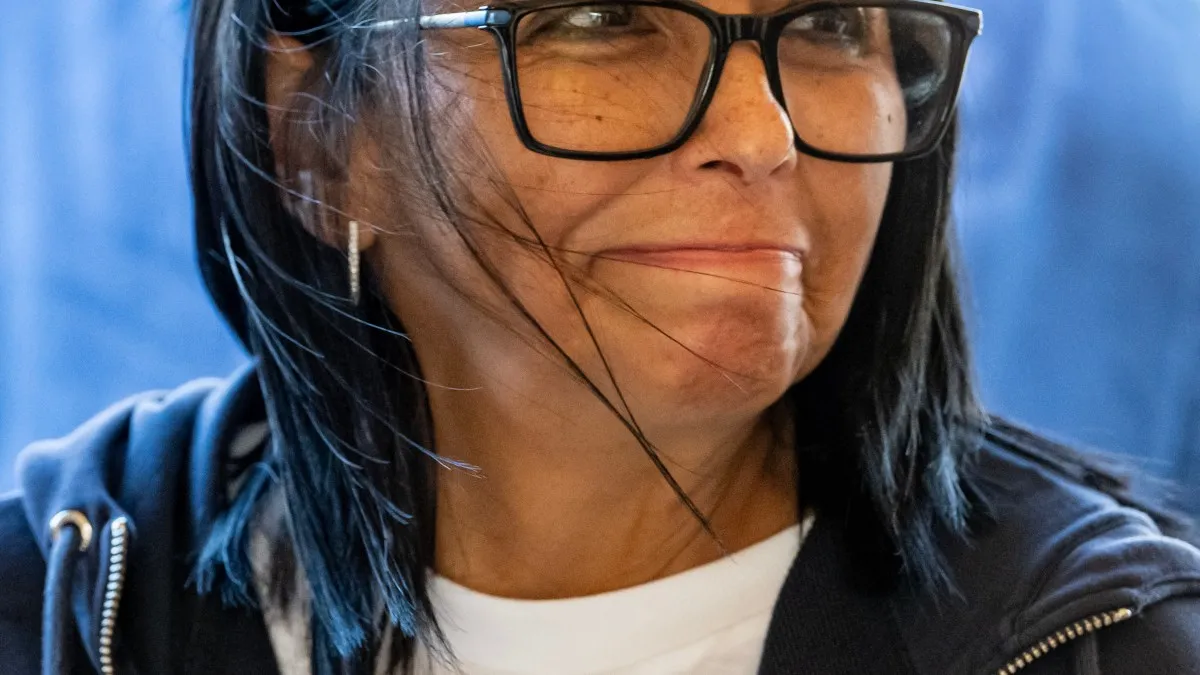
Delcy Rodriguez is courting Israel only to secure Washington’s support and undercut her main rival.Venezuelan political scientist.Published On 10 Jul 2026Venezuela's interim President Delcy Rodriguez gestures as she visits a temporary camp of the French Civil Security in La Guaira, La Guaira state, on July 1, 2026, following the June 24 twin earthquakes in Venezuela [AFP]Six months after United States forces ousted Venezuelan leader Nicolas Maduro, the balance of power in Latin America and the Caribbean has shifted in Washington’s favour. In Maduro’s place stands Delcy Rodriguez, his former vice president, now acting president and a far more manageable partner for Washington. Her rise has given the administration of US President Donald Trump a de facto ally in its effort to revive US dominance over the Western Hemisphere under what has become known as the “Donroe Doctrine”.Rodriguez’s challenge is to satisfy Washington without losing control at home. To do so, her advisers are recasting a movement once rooted in the socialist politics of the Hugo Chavez-Nicolas Maduro era as something more pragmatic, transactional and suited to the new hemispheric order. The former “comrades” are now moving closer than ever to open alignment with Trumpism in Latin America.Nowhere is the scale of Rodriguez’s shift clearer than in her approach to Israel. Under her government, Caracas has begun moving towards a state long treated as an enemy by the “21st-century socialists” who have ruled Venezuela for the past 27 years.From hostility to rapprochementThroughout the Chavez-Maduro era, successive Venezuelan governments considered Israel a “genocidal” state and an “enemy of peace”, condemned almost every Israeli military action in the Middle East, and denounced its very existence. Chavez broke diplomatic relations with Israel in 2009 and deepened cooperation with the Iran" class="entity-link entity-organization" data-entity-id="8614" data-entity-type="organization">Islamic Republic of Iran, Israel’s principal regional rival, as well as with its regional non-state allies.Rodriguez, however, has chosen to pursue her own agenda with Israel. Despite initially saying the US military intervention that removed Maduro had “Zionist overtones”, the acting president has since been paving the way to re-establish relations with Israeli Prime Minister Benjamin Netanyahu’s government.In late February, her government took the surprising step of avoiding any direct condemnation of Washington or Tel Aviv over the US-Israeli attacks on Iran. Instead, the Venezuelan Ministry of Foreign Affairs issued a statement calling for “dialogue” and criticising Iran’s retaliation against countries in the region hosting US military assets. The statement distanced Caracas from Tehran and signalled that Rodriguez’s government would not automatically support Iran in its confrontation with the United States and its regional allies.In April, the interim president made a direct overture to Venezuela’s Jewish community, a gesture clearly intended to signal her openness to rapprochement with Israel.She sent the Venezuelan Jewish community and Venezuelan Chief Rabbi Isaac Cohen a warm Passover greeting on social media, praising the Jewish people and advocating for peace and intercultural and interreligious respect. A few days later, she addressed Rabbi Cohen and Jewish Venezuelans again in a televised speech, reassuring them that Venezuela held “no anti-Semitic positions”.The devastating earthquakes that struck Venezuela in June gave the Rodriguez administration another opportunity to advance its rapprochement with Israel. After 17 years without diplomatic relations, Venezuela publicly thanked Israel for sending a disaster-response team. The interim president also personally praised the Israeli delegation’s expertise in search and rescue and infrastructure assessment. The mission led to the first known high-level contact between Israeli and Venezuelan officials in years, raising the possibility of the formal re-establishment of bilateral ties between the two countries.A new ally in a struggle for survivalThese moves are part of a calculated strategy by Venezuela’s acting government to secure its hold on power. The pragmatism behind them is driven by several pressures.First, Rodriguez’s plan involves demonstrating strong alignment with US foreign policy in Latin America and beyond in order to secure Trump’s support and remain in power. Alongside her efforts at rapprochement with Israel, the acting president has reached out to Trump’s regional allies, including President Javier Milei in Argentina and President Nayib Bukele in El Salvador. She has accepted US demands to open up Venezuela’s oil, mining and electricity sectors, and has permitted the deployment of US military forces to assist with the earthquake relief effort.A second element of this strategy is to distance the current Venezuelan government from long-standing adversaries of Washington, such as Iran and its regional non-state allies, including Lebanon’s Hezbollah. Over the years, Venezuelan leaders, including the acting president, have been accused by Washington of involvement in networks of money laundering and “terrorist” activity linked to such groups.Weeks after Maduro was ousted from power, US Secretary of State Marco Rubio warned of links between Maduro’s regime and the Lebanese organisation. In response, the Rodriguez administration has moved to extradite two alleged Hezbollah collaborators from Venezuela: Ali Zaki Hage Jalil to Panama and Alex Saab to the United States. Hage Jalil has been accused of “terrorism” by the Panamanian government, while Saab has been indicted in the US on money laundering and other charges.Another driver of the Venezuelan government’s current approach to Israel is domestic politics. Maria Corina Machado, the leading opposition figure and Rodriguez’s main rival, has built a strong alliance with Israel over the years, especially with Prime Minister Netanyahu. If Rodriguez can win Netanyahu over at Machado’s expense, Machado could lose one of her most important sources of support, both internationally and in Washington, where pro-Israel lobbying networks hold significant influence. To this end, Rodriguez has adopted increasingly Israel-friendly positions while courting sectors of Venezuela’s Jewish community with strong ties to Israel.The rapprochement between Venezuela and Israel is therefore part of a calculated strategy by the Venezuelan government to consolidate its power, weaken its main domestic opponent and reassure Washington that Caracas is distancing itself from actors Washington considers enemies, such as Iran and Hezbollah.Rodriguez’s government appears to be driven less by conviction than by survival. So far, that strategy has served its purpose. But whether this bargain can survive the weight of 27 years of anti-Israel rhetoric and produce a durable alliance with a state the ruling party long treated as an enemy remains far from certain.The views expressed in this article are the author’s own and do not necessarily reflect Al Jazeera’s editorial policy.
SRCAl Jazeera
LANGEN
LEANCenter
WORDS1 034
ENT12
FRI · 2026-07-10 · 04:36 GMTBRIEF NSR-2026-0710-91833
NSR-2026-0710-91833Analysis·EN·Political Strategy
Venezuela’s turn to Israel is about survival, not conviction
Following the ousting of Nicolas Maduro, interim President Delcy Rodriguez is strategically shifting Venezuela's foreign policy to secure U.S. support and consolidate her power.
Carlos Eduardo PinaAl JazeeraFiled 2026-07-10 · 04:36 GMTLean · CenterRead · 5 min
Al JazeeraFIG 01
Reading time
5min
Word count
1 034words
Sources cited
0cited
Entities identified
12entities
Quality score
100%
§ 01
Briefing Summary
AI-generatedNEWSAR · AI
Following the ousting of Nicolas Maduro, interim President Delcy Rodriguez is strategically shifting Venezuela's foreign policy to secure U.S. support and consolidate her power. This includes a significant rapprochement with Israel, a nation previously condemned by Venezuelan socialist governments. Rodriguez has signaled this change by avoiding condemnation of U.S.-Israeli actions against Iran, reaching out to Venezuela's Jewish community, and publicly thanking Israel for disaster relief following recent earthquakes. These overtures are part of a calculated strategy to align with U.S. foreign policy, distance Venezuela from adversaries like Iran, and demonstrate pragmatism to the Trump administration, thereby ensuring her government's survival.
Confidence 0.90Claims 5Entities 12
§ 02
Article analysis
Model · rule-basedFraming
Political Strategy
Diplomatic
Tone
Mixed Tone
AI-assessed
CalmNeutralAlarmist
Factuality
0.30 / 1.00
Opinion-Heavy
LowHigh
Sources cited
0
No named sources
FewMany
§ 03
Key claims
5 extracted01
Chavez broke diplomatic relations with Israel in 2009 and deepened cooperation with Iran.
factual
Confidence
0.90
02
Caracas has begun moving towards a state long treated as an enemy by the '21st-century socialists'.
factual
Confidence
0.90
03
Rodriguez's government has signaled it will not automatically support Iran in its confrontation with the United States and its regional allies.
factual
Confidence
0.80
04
Delcy Rodriguez is a more manageable partner for Washington than Nicolas Maduro.
factual
Confidence
0.80
05
Delcy Rodriguez is courting Israel to secure Washington’s support and undercut her main rival.
factual
Confidence
0.70
§ 04
Full report
5 min read · 1 034 words§ 05
Entities
12 identifiedKey playerOppositionContextPositiveNeutralNegative
People5
Organizations1
Locations5
§ 06
Keywords & salience
9 termsvenezuelan politics
1.00
us-venezuela relations
0.90
delcy rodriguez
0.90
israel relations
0.80
donroe doctrine
0.70
nicolas maduro
0.60
trump administration
0.50
latin america
0.40
socialist politics
0.40
§ 07
Topic connections
Interactive graph Network visualization showing 19 related topics
View Full Graph Person Organization Location Event|Click node to navigate|Edge numbers = shared articles