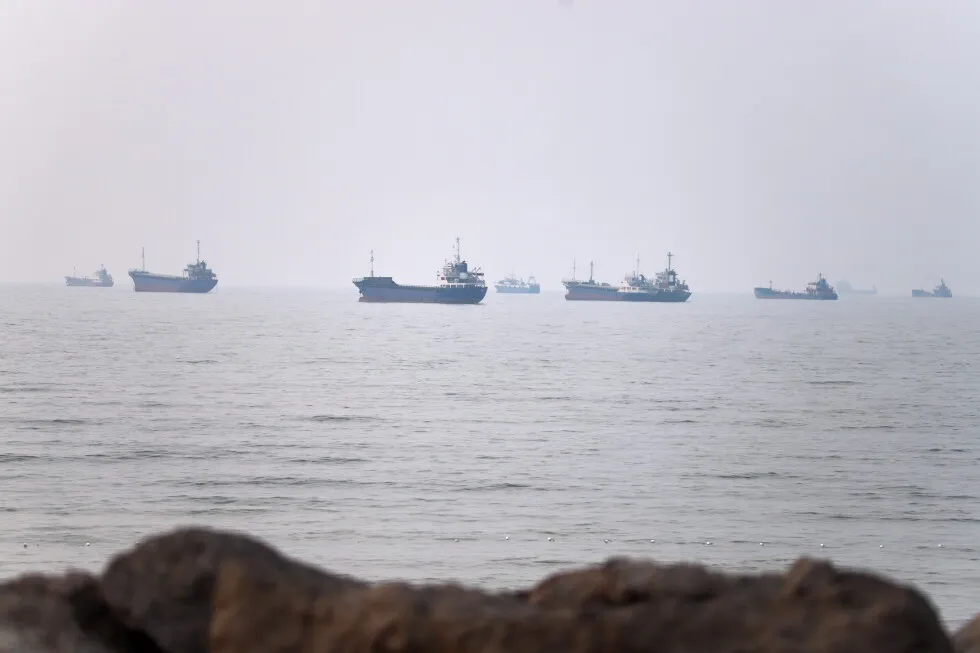
Commercial vessels are seen in the Strait of Hormuz off Bandar Abbas, Iran, Tuesday, June 30, 2026. (Amirhosein Khorgooi/ISNA via AP) By CATHY BUSSEWITZ Updated 11:13 PM MESZ, July 10, 2026 Add AP News on Google Add AP News as your preferred source to see more of our stories on Google. Share Share Facebook Copy Link copied Print Email X LinkedIn Bluesky Flipboard Pinterest Reddit NEW YORK (AP) — Global oil demand is set to decline this year for the first time since the height of the COVID-19 pandemic in 2020, according to a report from the International Energy Agency. The drop, which the agency expects to amount to about 1 million barrels per day in 2026, is due to higher oil prices and disruptions to physical supply that weighed heavily, but unevenly, on various parts of the world, the report said. The supply disruptions were caused by the war between the U.S. and Iran, which left ships loaded with crude oil stranded in the Persian Gulf for more than three months, unable to safely travel through the Strait of Hormuz, a major route for oil and gas shipments. “The future of Hormuz is probably more uncertain today than it was at the beginning of the war,” said Jim Burkhard, vice president and head of crude oil research at S&P Global Energy. Burkhard said Iran is still trying to control the strait, while the U.S. has not been able to fully restore normal operations, making a return to prewar conditions unlikely. Global oil demand averaged just 97.9 million barrels per day in May, down 5.3 million barrels per day from a year earlier. Much of the decline was in Asia, which relies heavily on oil from the Middle East. China’s decrease of 1.5 million barrels per day, representing a 9% decline, was by far the largest globally, the report said. But the main exception to the global slump in oil usage was in the U.S., where gasoline use increased in the second quarter of 2026, despite the fact that pump prices were about 50% above their prewar levels in May, the report said. The tenuous state of a Iran-ceasefire" class="entity-link entity-event" data-entity-id="120697" data-entity-type="event">US-Iran ceasefire renews anxiety over high fuel prices 3 MIN READ Trump is frustrated gasoline prices don’t mirror oil’s decline. Experts say it’s not that simple 3 MIN READ Oil and gas supplies could take months to return to normal after Iran-deal" class="entity-link entity-topic" data-entity-id="133298" data-entity-type="topic">Iran deal, energy experts say 3 MIN READ How China’s actions are keeping oil prices from spiking higher China decided to massively cut down on purchasing oil from the global market as the price rose during the spring, reducing its consumption by almost 6 million barrels per day, Burkhard said. “What China said is, ‘You know what, prices are high, there’s a crisis. We have this huge inventory stock, we can sustain demand. We’re just going to cut by 50% the amount of crude oil we buy,’” Burkhard said. One way China cut back its consumption was to temporarily stop filling up its strategic petroleum reserve, which it had been adding to at a rate of nearly 1 million barrels per day, said Daniel Sternoff, senior fellow at the Center on Global Energy Policy at Columbia University. The crisis also accelerated China’s saving of road transportation fuels as its use of electric vehicles grew, he said. “What we’re tracking so far, at least since the crisis began, is China is probably on track to see somewhere between 500,000 and 600,000 barrels per day worth of demand losses for gasoline and diesel. So that’s pretty significant,” Sternoff said. Why oil prices aren’t higher after renewed tension between the U.S. and Iran A fragile ceasefire enabled some ships to exit through the Strait of Hormuz in June, which allowed more oil on the market. That led to lower oil prices. But even after tensions escalated between the U.S. and Iran earlier this month, prices didn’t spike. “This gray zone conflict that the U.S. and Iran are in, it’s not really a shock to the oil market,” Burkhard said. “It can push prices up and down a few dollars like it did the other day, but it’s not the same shock that it was in early March when Iran did what many thought was unthinkable.” Another reason oil prices didn’t spike very high after recent military strikes is that there were fewer buyers available to scoop up the supply that had become available, experts said. On top of China dramatically reducing consumption, several refineries in Russia were unable to process crude after being damaged in drone hits from Ukraine, and refineries in the Middle East remained damaged from the war, Burkhard said. As a result, prices for gasoline, diesel and other refined products have stayed inflated longer than oil prices, he said. “There’s this gush of supply of crude oil being made available to the market, and there’s simply less demand for that crude oil,” Burkhard said. In the US, high gas prices didn’t keep drivers home Gasoline prices surpassed $4.50 on average for a gallon of regular in the U.S. in May, rising more than 50% since the start of the war, according to AAA data. But that didn’t stop drivers from hitting the road; in fact, gasoline consumption rose in the U.S. during the second quarter of the year. One reason may be because the percentage of household income spent on gasoline in the U.S. has been declining for years, Sternoff said. Plus, many people have been transitioning from remote work to in-office jobs, he added. “Even though it’s a really political price that people pay a lot of attention to, if you are in the higher quintiles of income in the U.S., you might grumble about it, but you’re not really driving less just because of that increase in prices,” Sternoff said. CATHY BUSSEWITZ Bussewitz is a national business reporter for The Associated Press. She writes about the workplace, job issues and wellness. twitter mailto
SRCAssociated Press (AP)
LANGEN
LEANCenter
WORDS994
ENT12
FRI · 2026-07-10 · 21:23 GMTBRIEF NSR-2026-0710-92092
NSR-2026-0710-92092News Report·EN·Economic Impact
Global oil demand is dropping, but US drivers keep buying more gas
Global oil demand is projected to decrease by about 1 million barrels per day in 2026, marking the first decline since 2020, according to the International Energy Agency. This drop is attributed to higher oil prices and supply disruptions, particularly stemming from the conflict between the U.S.
Associated Press (AP)Filed 2026-07-10 · 21:23 GMTLean · CenterRead · 4 min
Associated Press (AP)FIG 01
Reading time
4min
Word count
994words
Sources cited
2cited
Entities identified
12entities
Quality score
100%
§ 01
Briefing Summary
AI-generatedNEWSAR · AI
Global oil demand is projected to decrease by about 1 million barrels per day in 2026, marking the first decline since 2020, according to the International Energy Agency. This drop is attributed to higher oil prices and supply disruptions, particularly stemming from the conflict between the U.S. and Iran which impacted shipping through the Strait of Hormuz. While demand has fallen significantly in Asia, notably China, the United States is an exception, with gasoline consumption increasing in the second quarter of 2026 despite prices being over 50% higher than pre-war levels. China reduced its oil purchases due to high prices and existing inventory, while refinery damage in Russia and the Middle East also contributed to inflated prices for refined products. In the U.S., increased gasoline use is linked to a declining percentage of household income spent on fuel and a return to in-office work.
Confidence 0.90Sources 2Claims 5Entities 12
§ 02
Article analysis
Model · rule-basedFraming
Economic Impact
Conflict
Tone
Measured
AI-assessed
CalmNeutralAlarmist
Factuality
0.80 / 1.00
Factual
LowHigh
Sources cited
2
Limited
FewMany
§ 03
Key claims
5 extracted01
Supply disruptions caused by the US-Iran war stranded ships in the Persian Gulf for over three months.
factual
Confidence
0.95
02
China's oil consumption decreased by 1.5 million barrels per day, a 9% decline, which was the largest globally.
statisticInternational Energy Agency
Confidence
0.90
03
Global oil demand averaged 97.9 million barrels per day in May, a decrease of 5.3 million barrels per day from the previous year.
statisticInternational Energy Agency
Confidence
0.90
04
Global oil demand is set to decline in 2026 for the first time since 2020, amounting to about 1 million barrels per day.
statisticInternational Energy Agency
Confidence
0.90
05
US gasoline use increased in the second quarter of 2026, despite pump prices being 50% above pre-war levels.
factual
Confidence
0.85
§ 04
Full report
4 min read · 994 words§ 05
Entities
12 identifiedKey playerOppositionContextPositiveNeutralNegative
Organizations2
Locations5
§ 06
Keywords & salience
10 termsglobal oil demand
1.00
us gasoline consumption
0.90
strait of hormuz
0.80
us-iran war
0.80
oil prices
0.70
supply disruptions
0.70
international energy agency
0.60
crude oil
0.50
china oil purchases
0.50
fuel prices
0.40
§ 07
Topic connections
Interactive graph Network visualization showing 51 related topics
View Full Graph Person Organization Location Event|Click node to navigate|Edge numbers = shared articles