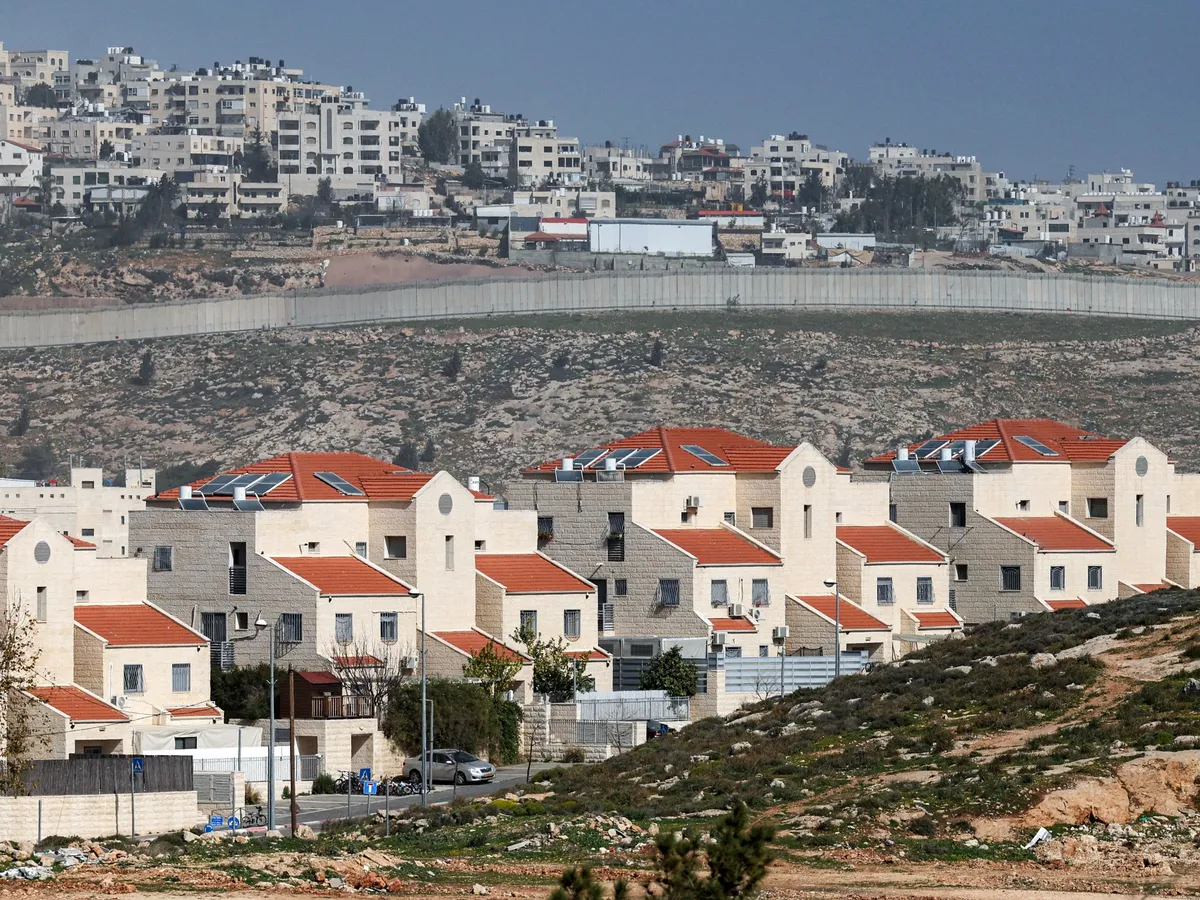
Pressure from EU member states to impose sanctions has increased in recent months amid escalating settler violence.The European Union’s foreign ministers are meeting in Brussels to discuss imposing sanctions on Israeli settlements in the occupied West Bank.Pressure from EU member states to impose sanctions has increased in recent months due to escalating violence by Israeli settlers against Palestinians and their property and the Israeli government’s continued expansion of settlements, which are illegal under international law.Recommended Stories list of 3 itemslist 1 of 3Detained by settlers, US Democrat Ro Khanna now faces pro-Israel attackslist 2 of 3Elderly Palestinian describes being beaten up by Israeli settlerslist 3 of 3EU states do not need ‘consensus’ to hold Israel accountableend of listA senior EU diplomat said the European Commission drafted a paper outlining possible approaches and many options are on the table on Monday, including an import licensing system, prohibitive tariffs or a ban, the Reuters news agency reported.“Everybody agrees that the situation in the West Bank is really intolerable,” EU foreign policy chief Kaja Kallas said at the start of the meeting in Brussels.“What is happening in the West Bank is actually making it more and more impossible that the two-state solution ever can come into effect,” Kallas said.Speaking on condition of anonymity, a diplomat told Reuters: “I think what you will see on Monday is a discussion on the options, and we will get a bit of a picture of where everybody is.”Diplomats said they did not expect a formal decision on any particular measure but the meeting would help to sound out if there is enough support to move forward.There’s lack of unity in Brussels as to whether any penalty would need backing from all 27 member states or just a weighted majority.Some diplomats said banning trade with Israeli settlements would require a qualified majority of at least 15 EU states, representing 65 percent of the bloc’s population.
SRCAl Jazeera
LANGEN
LEANCenter
WORDS317
ENT12
MON · 2026-07-13 · 10:32 GMTBRIEF NSR-2026-0713-92638
NSR-2026-0713-92638News Report·EN·Diplomatic
EU countries consider sanctions on trade from illegal Israeli settlements
EU foreign ministers are meeting in Brussels to discuss potential sanctions against Israeli settlements in the occupied West Bank. This discussion is driven by increased pressure from member states due to escalating settler violence against Palestinians and the continued expansion of settlements, which are considered illegal under international law.
By AFP, DPA and ReutersAl JazeeraFiled 2026-07-13 · 10:32 GMTLean · CenterRead · 2 min
Al JazeeraFIG 01
Reading time
2min
Word count
317words
Sources cited
3cited
Entities identified
12entities
Quality score
100%
§ 01
Briefing Summary
AI-generatedNEWSAR · AI
EU foreign ministers are meeting in Brussels to discuss potential sanctions against Israeli settlements in the occupied West Bank. This discussion is driven by increased pressure from member states due to escalating settler violence against Palestinians and the continued expansion of settlements, which are considered illegal under international law. The European Commission has drafted a paper outlining various options, including import licensing, tariffs, or a ban on trade. While a formal decision is not expected, the meeting aims to gauge support for potential measures. Some diplomats believe that banning trade would require a qualified majority of at least 15 member states representing 65 percent of the bloc's population.
Confidence 0.90Sources 3Claims 5Entities 12
§ 02
Article analysis
Model · rule-basedFraming
Diplomatic
Legal & Judicial
Tone
Measured
AI-assessed
CalmNeutralAlarmist
Factuality
0.80 / 1.00
Factual
LowHigh
Sources cited
3
Well sourced
FewMany
§ 03
Key claims
5 extracted01
EU foreign policy chief Kaja Kallas stated that the situation in the West Bank is intolerable and makes a two-state solution increasingly impossible.
quoteKaja Kallas
Confidence
1.00
02
EU foreign ministers are meeting in Brussels to discuss imposing sanctions on Israeli settlements in the occupied West Bank.
factual
Confidence
1.00
03
There is a lack of unity in Brussels regarding whether sanctions require consensus from all 27 member states or a weighted majority.
factual
Confidence
0.90
04
The European Commission drafted a paper outlining possible approaches to sanctions, including an import licensing system, prohibitive tariffs, or a ban.
factualsenior EU diplomat (via Reuters)
Confidence
0.90
05
Pressure from EU member states to impose sanctions has increased in recent months due to escalating violence by Israeli settlers and continued settlement expansion.
factual
Confidence
0.90
§ 04
Full report
2 min read · 317 words§ 05
Entities
12 identifiedKey playerOppositionContextPositiveNeutralNegative
Locations5
§ 06
Keywords & salience
8 termsisraeli settlements
1.00
eu sanctions
0.90
occupied west bank
0.80
settler violence
0.70
international law
0.60
two-state solution
0.50
european commission
0.40
import licensing system
0.40
§ 07
Topic connections
Interactive graph Network visualization showing 51 related topics
View Full Graph Person Organization Location Event|Click node to navigate|Edge numbers = shared articles