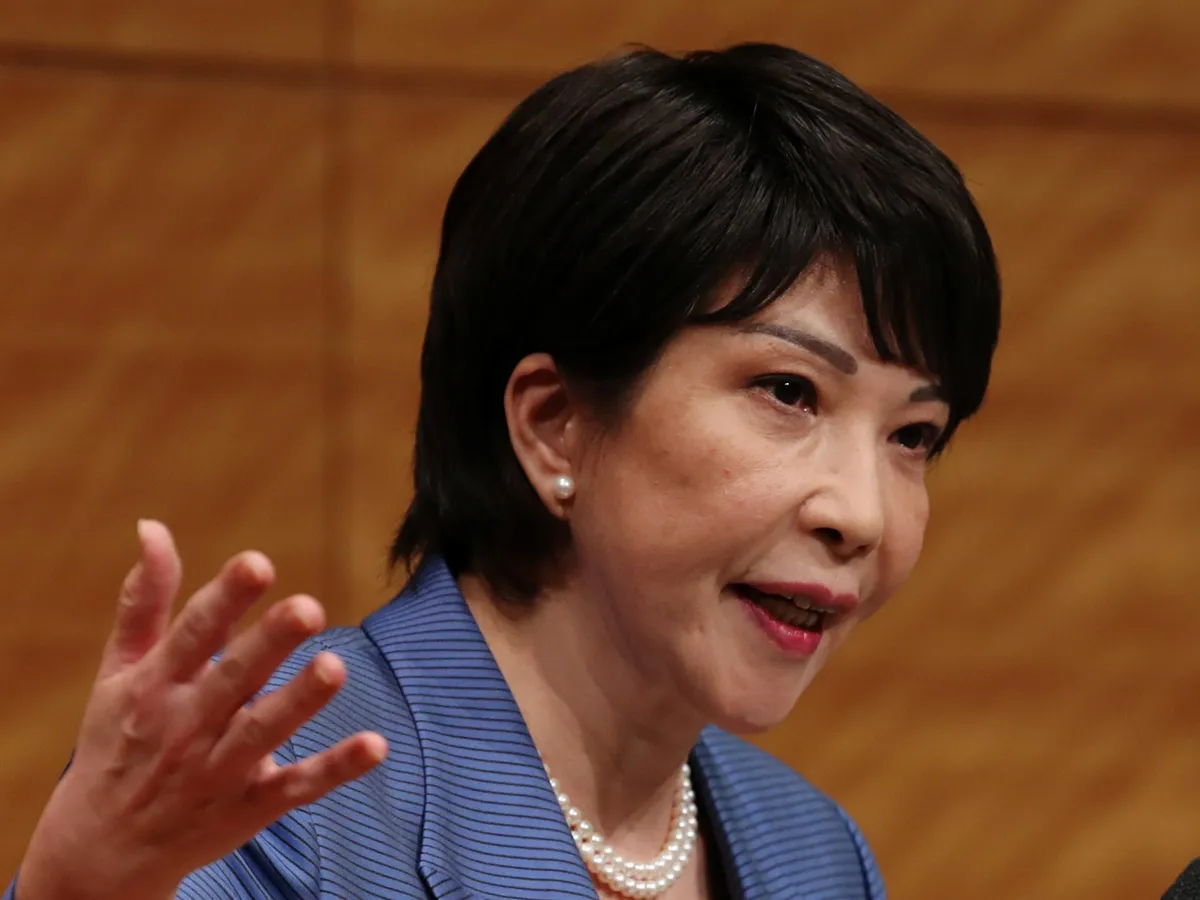
EXPLAINERJapan plans to launch its first centralised intelligence body with help from Western allies.Major policies of Prime Minister Sanae Takaichi include building up Japan's defence and intelligence capabilities [File: Kim Kyung-Hoon/Reuters]Published On 13 Jul 2026Japan is setting up its first centralised intelligence agency since World War II to try to modernise its defence capabilities against spies, foreign interference and other attacks from foreign adversaries.Legislation to establish the new agency passed the upper house of Japan’s National Diet in May, a month after it cleared the lower house.After decades of relying on US intelligence support and after a pacifist stance was enshrined in the Japanese Constitution, Prime Minister Sanae Takaichi described this law as “a first step” towards strengthening the country’s espionage capabilities.What is this new agency?The legislation creates two bodies: a National Intelligence Council that will act as the government’s command centre for intelligence gathering and analysis and an agency for operations. The reform changes the existing Cabinet Intelligence and Research Office (CIRO) into a centralised National Intelligence Council and National Intelligence Bureau.Takaichi isn’t exactly building the US Central Intelligence Agency, but The New York Times reported Western allies, including the United States, Germany and Australia, are advising the Japanese government on establishing the new spy agency.Ken Kotani, professor at Nihon University, said he believes Japan’s new National Intelligence Council and national intelligence agency model will be original to Japan.Sanshiro Hosaka, a research fellow at the Estonia-based International Centre for Defence and Security, said the reform is aimed at improving the Japanese government’s intelligence abilities “by strengthening coordination, reducing interagency barriers and ensuring that intelligence products better meet policymakers’ requirements”.Why does Japan want it now?Tokyo says it is facing threats from a number of nearby countries such as North Korea, Russia and China, and a national intelligence agency is needed to counter their efforts.Kotani explained that Japan’s foreign and national security policy followed the US during the Cold War period. But he noted that “recently Japan has gradually pursued her own policy, especially in the Trump administration period.”US President Donald Trump has repeatedly accused Washington’s allies of not spending enough on their own defence and on relying on American help. He has questioned US alliances and has been ambivalent about whether the world’s most powerful military would come to the defence of smaller nations.That, Kotani said, is why “Japan needs to collect intelligence by herself.”Japan currently lacks an antiespionage law that would make it relatively easy for foreign intelligence activities to go unpunished.Hosaka explained that former Russian intelligence officers who operated in Japan, such as Stanislav Levchenko and Konstantin Preobrazhensky, described Japan as a paradise for spies: “During the Cold War, Soviet intelligence targeted Japanese technologies, industrial and commercial information as well as the US bases in Japan,” Hosaka explained. “As a major US ally in Asia and an advanced technological economy, Japan remains an important intelligence target for China, Russia, North Korea and others.”Hosaka said what Japan needs “is a foreign-influence transparency law to increase the transparency of foreign actors’ lobbying activities as well as to deter illegal foreign interference. And an antiespionage law to conduct undercover operations and investigations using assumed identities.”Why the current system isn’t working:A major obstacle within Japan’s current decentralised structure, experts said, is that no one has the authority to force cooperation from other agencies or bodies or prevent intelligence data from being scattered.Kotani explained that the political power of Japan’s current intelligence agency has been weak: “This was because the CIRO was not given any legal mandates on intelligence when it was established in 1952.”Another difficulty is that under current Japanese laws, foreign representatives suspected of potential intelligence affiliations or interference are difficult to intercept because legal grounds are weak for Japanese authorities to intercept their communications or prosecute them.The ambitions of PM TakaichiTakaichi took office in October and has accelerated the expansion of Japan’s military and security ambitions through a number of measures, including establishing a central intelligence body.In December, the cabinet approved its largest defence budget ever at $58bn as the Ministry of Defence said it needed to accelerate its “transformation” and would use more than $600m for building a so-called drone and laser shield to protect its southwestern region.In April, Takaichi’s cabinet moved closer to abolishing a longstanding ban on the export of lethal weapons, such as tanks and warships.The new direction led to antiwar protests in the streets of Japan in May. However, a Jiji opinion poll in April showed only 19 percent were opposed to the new bill to reform intelligence within the country. About 40 percent were indifferent, and the rest were in favour.Kotani said he has noticed a lot of the old “taboo has gone” around this subject and it is no longer a topic of concern to many Japanese, He said: “Especially younger generations are not interested in such an old story.”Why surveillance is controversial in JapanJapan’s defeat in World War II left its citizens with distrust towards state surveillance as the wartime Special Higher Police, known as the Tokko, monitored, arrested and tortured citizens for their political beliefs.Article 9 in its constitution, drafted in 1947 shortly after the end of the war, renounced war, and Japan has never had its own foreign intelligence service. Instead, it relied on the US.The efforts for a new security agency have sparked some domestic criticism, but Hosaka said the latest reforms do not amount to a return to the kind of espionage apparatus that could be used against Japanese civilians.“The legislation does not itself create significant new intelligence collection or counterintelligence powers,” Hosaka said.
SRCAl Jazeera
LANGSCO
LEANCenter
WORDS926
ENT12
MON · 2026-07-13 · 13:07 GMTBRIEF NSR-2026-0713-92661
NSR-2026-0713-92661News Report·SCO·National Security
What is Japan’s new intelligence agency, and why is Tokyo building it?
Japan is establishing its first centralized intelligence agency since World War II, with legislation passed in May 2026. This reform transforms the existing Cabinet Intelligence and Research Office into a National Intelligence Council and a National Intelligence Bureau, aiming to improve intelligence gathering, analysis, and coordination.
Marthe van der WolfAl JazeeraFiled 2026-07-13 · 13:07 GMTLean · CenterRead · 4 min
Al JazeeraFIG 01
Reading time
4min
Word count
926words
Sources cited
3cited
Entities identified
12entities
Quality score
100%
§ 01
Briefing Summary
AI-generatedNEWSAR · AI
Japan is establishing its first centralized intelligence agency since World War II, with legislation passed in May 2026. This reform transforms the existing Cabinet Intelligence and Research Office into a National Intelligence Council and a National Intelligence Bureau, aiming to improve intelligence gathering, analysis, and coordination. The move is driven by Prime Minister Sanae Takaichi's efforts to modernize Japan's defense capabilities and counter perceived threats from countries like North Korea, Russia, and China. Western allies, including the US, Germany, and Australia, are advising Japan on this initiative. Experts cite the current decentralized system's lack of authority and weak legal grounds for prosecuting foreign interference as reasons for the reform, which seeks to strengthen Japan's ability to collect intelligence independently.
Confidence 0.90Sources 3Claims 5Entities 12
§ 02
Article analysis
Model · rule-basedFraming
National Security
Diplomatic
Tone
Measured
AI-assessed
CalmNeutralAlarmist
Factuality
0.70 / 1.00
Factual
LowHigh
Sources cited
3
Well sourced
FewMany
§ 03
Key claims
5 extracted01
Japan currently lacks an anti-espionage law, making it easier for foreign intelligence activities to go unpunished.
factual
Confidence
1.00
02
The new agency reform changes the existing Cabinet Intelligence and Research Office (CIRO) into a centralized National Intelligence Council and National Intelligence Bureau.
factual
Confidence
1.00
03
Japan is establishing its first centralized intelligence agency since WWII to modernize defense capabilities against foreign adversaries.
factual
Confidence
1.00
04
Japan needs to collect intelligence independently due to US questioning of alliances and defense spending by allies.
quoteKen Kotani
Confidence
0.90
05
Western allies, including the US, Germany, and Australia, are advising Japan on establishing the new spy agency.
factualThe New York Times
Confidence
0.90
§ 04
Full report
4 min read · 926 words§ 05
Entities
12 identifiedKey playerOppositionContextPositiveNeutralNegative
People3
Organizations4
§ 06
Keywords & salience
10 termsjapan
1.00
intelligence agency
1.00
defence capabilities
0.90
espionage
0.80
foreign interference
0.70
national intelligence council
0.60
us intelligence support
0.50
world war ii
0.50
counter threats
0.40
tokyo
0.40
§ 07
Topic connections
Interactive graph Network visualization showing 51 related topics
View Full Graph Person Organization Location Event|Click node to navigate|Edge numbers = shared articles