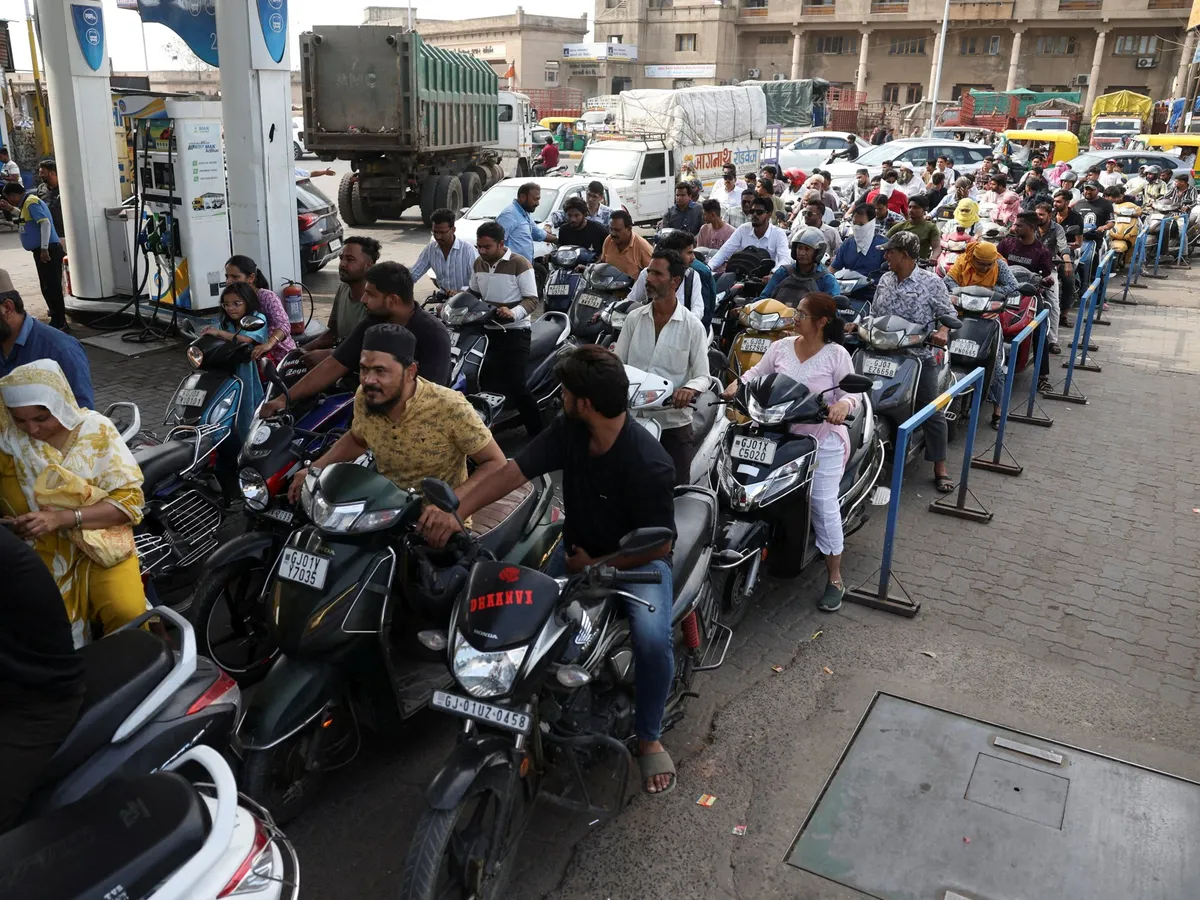
To prepare, the world needs to focus on building energy independence through renewables and decentralisation.Published On 14 Jul 2026People queue to fill petrol in their two-wheelers amid concerns over potential supply disruptions due to the US-Israeli war on Iran, in Ahmedabad, India on March 23, 2026 [Amit Dave/Reuters]As hostilities between the United States and Iran reignite, global attention has shifted again to the immediate risks of the conflict.Across the Middle East, families have endured fear, uncertainty and violence. Communities have faced disruption, displacement and the destruction that war brings. Protecting lives must remain the immediate priority.Yet, whatever happens in the coming days and weeks, the broader lesson will remain.The conflict has exposed a structural vulnerability in the global economy: as long as countries depend on fossil fuels, instability anywhere can create economic pain everywhere.It has also highlighted something else: the transition to decentralised renewable energy is increasingly a matter of economic security and resilience.As executive director of Greenpeace International, I regularly speak with colleagues across our global network who have described to me how the impacts of the US-Israel war on Iran are felt worldwide.In East Asia and Southeast Asia, the closure of the Strait of Hormuz has driven up fuel costs, inflation and pressure on household budgets in economies heavily dependent on imported oil and gas. Across Africa and Latin America, rising fuel prices have placed an additional burden on already impoverished communities. In Europe, North America and Australia, higher energy expenditures have affected transport costs, electricity bills and ultimately the price of everyday goods.This is fossilflation: the inflationary pressure created by an economic system that remains heavily dependent on fossil fuels.The more fossil fuel-dependent an economy is, the more exposed it is to disruptions far beyond its borders. The opposite is also true. Every increase in locally generated renewable energy reduces that exposure by weakening the connection between international crises and household costs, making countries more resilient and energy independent.The Organisation for Economic Co-operation and Development has warned that the Middle East conflict is driving rising inflation and weaker growth, with higher energy prices flowing through to transport, energy bills and consumer prices. It has also reported that governments in at least 46 countries have already introduced emergency measures to shield households and businesses from rising fuel costs.The International Monetary Fund, the World Bank and the World Food Programme (WFP) have warned that higher oil, gas and fertiliser prices are increasing food insecurity. Separately, the WFP has estimated that 45 million people could be pushed into acute hunger.What is often presented as an unfortunate consequence of geopolitics is, in reality, a feature of the fossil fuel system. The industry has become highly effective at exploiting the dynamics of conflict and energy shocks.Time and again, instability and price volatility have generated extraordinary profits for fossil fuel corporations. Analysis based on Rystad Energy data found that the world’s 100 largest oil and gas companies earned more than $30m an hour in windfall profits during the first month of the war.When crises expose the fragility of the system, the industry response is remarkably predictable: calls for more drilling, more pipelines, faster approvals, greater public subsidies and fewer environmental protections.The same crises that reveal the costs of fossil fuel dependence are used to justify deepening it. This is the fossil fuel playbook: turn disruption into profit, then use the disruption to argue for more of the system that created the vulnerability in the first place.The result is a cycle that leaves societies exposed to repeated economic shocks. Even worse, communities are made to subsidise the forces destabilising them.Even if this particular conflict subsides, the Strait of Hormuz remains open, and energy markets stabilise, the underlying risk remains.The next disruption could emerge from another conflict, another geopolitical confrontation, another supply constraint, or an extreme weather event. As long as economies rely on fuels traded through vulnerable global markets, households will remain exposed to forces far beyond their control.That is why the conversation should not end with ceasefires, shipping lanes, or short-term price movements.It should continue and focus on resilience.Renewable energy is often discussed primarily as a climate solution when it is increasingly an economic security solution as well.Every rooftop solar system, battery, electric bus, and energy-efficient building weakens the connection between geopolitical instability and household costs. Locally generated renewable energy cannot be blockaded, sanctioned or caught in the crossfire of international conflict. It reduces exposure to volatile fuel markets and strengthens energy independence.Countries that accelerate the transition to decentralised renewable energy systems will be insulated from future fossil fuel shocks. Those that remain dependent will continue to face recurring cycles of fossilflation.The lesson from the US-Israel war on Iran is that the economic insecurity created by fossil fuel dependence persists long after the headlines fade.Building a more peaceful, secure and resilient future requires more than ending individual conflicts. It requires replacing the energy system that allows crises in one part of the world to impose costs on people everywhere.The views expressed in this article are the author’s own and do not necessarily reflect Al Jazeera’s editorial stance.
SRCAl Jazeera
LANGEN
LEANCenter
WORDS844
ENT12
TUE · 2026-07-14 · 14:56 GMTBRIEF NSR-2026-0714-92964
NSR-2026-0714-92964Opinion·EN·Economic Impact
Even if the Iran war ends, the next fossil fuel shock is already on its way
The current US-Israeli war on Iran highlights the global economy's vulnerability to fossil fuel dependence, causing "fossilflation" and economic pain worldwide. Rising fuel prices, driven by potential disruptions like the closure of the Strait of Hormuz, burden households and exacerbate food insecurity.
Mads Flarup ChristensenAl JazeeraFiled 2026-07-14 · 14:56 GMTLean · CenterRead · 4 min
Al JazeeraFIG 01
Reading time
4min
Word count
844words
Sources cited
4cited
Entities identified
12entities
Quality score
100%
§ 01
Briefing Summary
AI-generatedNEWSAR · AI
The current US-Israeli war on Iran highlights the global economy's vulnerability to fossil fuel dependence, causing "fossilflation" and economic pain worldwide. Rising fuel prices, driven by potential disruptions like the closure of the Strait of Hormuz, burden households and exacerbate food insecurity. This instability is exploited by fossil fuel corporations for windfall profits, who then advocate for increased production. Even if the current conflict ends, the underlying risk of future disruptions from various sources remains. The article argues that building energy independence through decentralized renewable energy is crucial for economic security and resilience, weakening the link between geopolitical crises and household costs.
Confidence 0.90Sources 4Claims 5Entities 12
§ 02
Article analysis
Model · rule-basedFraming
Economic Impact
Conflict
Tone
Measured
AI-assessed
CalmNeutralAlarmist
Factuality
0.40 / 1.00
Mixed
LowHigh
Sources cited
4
Well sourced
FewMany
§ 03
Key claims
5 extracted01
The OECD warns that the Middle East conflict is driving rising inflation and weaker growth.
quoteOrganisation for Economic Co-operation and Development
Confidence
0.95
02
The conflict has exposed a structural vulnerability in the global economy: dependence on fossil fuels leads to instability.
factual
Confidence
0.95
03
Higher oil, gas, and fertilizer prices are increasing food insecurity, potentially pushing 45 million people into acute hunger.
statisticInternational Monetary Fund, World Bank, World Food Programme
Confidence
0.90
04
Rising fuel prices place an additional burden on already impoverished communities in Africa and Latin America.
quoteGreenpeace International
Confidence
0.90
05
The US-Israeli war on Iran has driven up fuel costs, inflation, and pressure on household budgets globally.
quoteGreenpeace International
Confidence
0.90
§ 04
Full report
4 min read · 844 words§ 05
Entities
12 identifiedKey playerOppositionContextPositiveNeutralNegative
Organizations1
Locations11
I
Iran
CountryContext
4x
90
US
United States
CountryContext
3x
80
I
Israel
CountryContext
2x
70
ME
Middle East
RegionContext
2x
70
SO
Strait of Hormuz
StrategicContext
50
EA
East Asia
RegionContext
40
SA
Southeast Asia
RegionContext
40
I
India
CountryContext
40
A
Africa
RegionContext
40
LA
Latin America
RegionContext
40
A
Ahmedabad
CityContext
30
§ 06
Keywords & salience
10 termsfossil fuels
1.00
energy independence
0.90
renewables
0.80
decentralisation
0.70
fossilflation
0.70
economic security
0.60
inflation
0.50
us-iran war
0.50
strait of hormuz
0.40
energy prices
0.40
§ 07
Topic connections
Interactive graph Network visualization showing 51 related topics
View Full Graph Person Organization Location Event|Click node to navigate|Edge numbers = shared articles