Two corpse flowers have bloomed at a southern California research institution, where thousands of visitors had the rare chance to watch two of the world’s largest – and most odorous – plants flowering at the same time.The two titan arums, named Odorysseus and Odora, attracted more than 7,000 people on Monday at the Huntington library, art museum and botanical gardens in San Marino, about 12 miles from downtown Los Angeles, after they bloomed over the weekend.Each bloom lasts only about 24 to 48 hours, so once the towering plants began unfurling, the staff at the research facility notified the public on Sunday afternoon. The corpse flowers reached their peak overnight before slowly starting to close the following day. Visitors still got a chance to see the fleeting spectacle on Monday.“They were enchanted by it,” said Brandon Tam, curator of the Huntington’s orchid collection. “People who lined up for three hours in our line just to see the corpse flowers for just a few minutes.”A blooming corpse flower at the Huntington last year. Photograph: MediaNews Group/Los Angeles Daily News/Getty Images“People were curious, people were inspired,” Tam told The Guardian. “People started to fall in love, if they haven’t already been falling in love, with plants because of this poster child of a plant that has led people to better understand that plants have a life of their own.”The excitement took over the space, so much so that advance tickets sold out by late Monday morning. The corpse flowers will be on display until early August.The Titan Arum, commonly called the corpse flower, is famous for producing a pungent odor resembling rotting flesh. The smell attracts carrion beetles and flesh flies, which pollinate the endangered plant. The plant is a native of western Sumatra, Indonesia.Don’t let the name fool you. The corpse flower is not a single flower, but a giant flowering structure composed of hundreds of tiny blooms. It can grow more than 12 feet tall and, once its brief flowering ends, collapses before entering a dormant period that can last years.At the Huntington, titan arums have been cultivated for more than 25 years. It currently has more than 43 mature specimens, many coming from a plant successfully pollinated in 2002.“In 2002, we pollinated a corpse flower, which produced hundreds of fruits and therefore hundreds of seeds that we would propagate”, Tam said.The seedlings were also shared with other botanical gardens in the US to help conserve the endangered species, of which fewer than 1,000 are believed to remain in the wild.
SRCThe Guardian - World News
LANGEN
LEANCenter-Left
WORDS421
ENT10
TUE · 2026-07-14 · 21:50 GMTBRIEF NSR-2026-0714-93070
NSR-2026-0714-93070News Report·EN·Human Interest
Thousands flock to see brief and rare blooming of corpse flowers in California
Two rare corpse flowers, named Odorysseus and Odora, bloomed simultaneously at the Huntington Library, Art Museum and Botanical Gardens in San Marino, California. This unusual event attracted over 7,000 visitors on Monday, who queued for hours to witness the spectacle.
Coral Murphy MarcosThe Guardian - World NewsFiled 2026-07-14 · 21:50 GMTLean · Center-LeftRead · 2 min
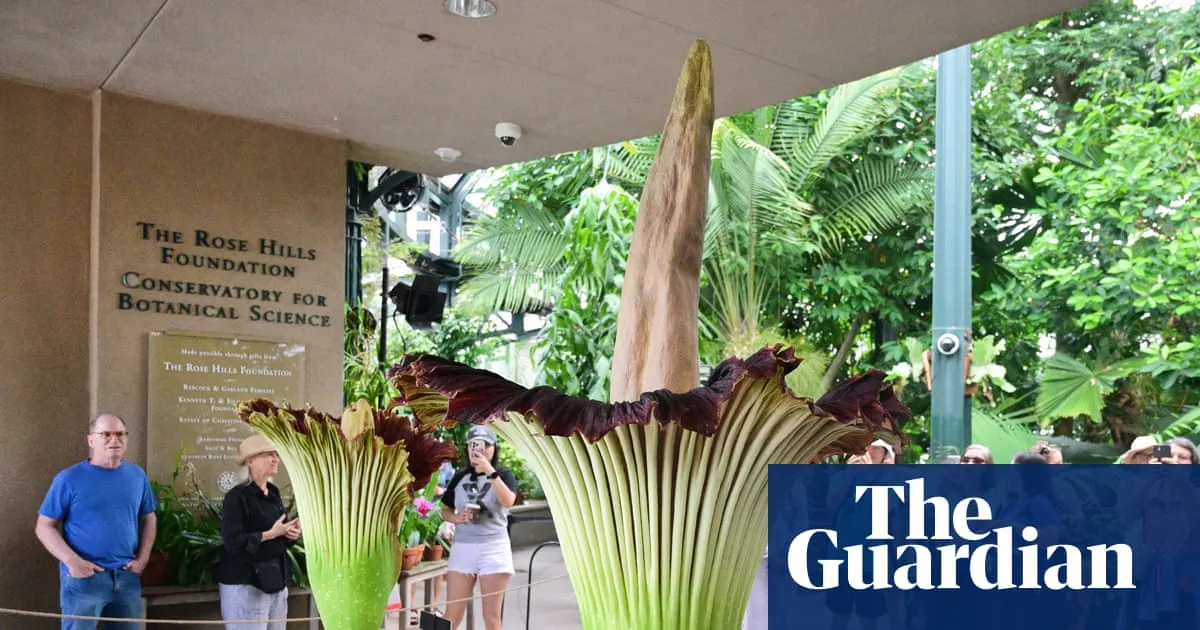
The Guardian - World NewsFIG 01
Reading time
2min
Word count
421words
Sources cited
1cited
Entities identified
10entities
Quality score
100%
§ 01
Briefing Summary
AI-generatedNEWSAR · AI
Two rare corpse flowers, named Odorysseus and Odora, bloomed simultaneously at the Huntington Library, Art Museum and Botanical Gardens in San Marino, California. This unusual event attracted over 7,000 visitors on Monday, who queued for hours to witness the spectacle. The titan arums, known for their immense size and pungent odor resembling rotting flesh, only flower for a brief 24 to 48-hour period. The Huntington staff notified the public when the blooms began over the weekend, allowing visitors to experience the fleeting display. The corpse flower's unique scent attracts pollinators, aiding the conservation of this endangered Indonesian native. The Huntington has cultivated these plants for over 25 years and shares seedlings with other institutions to help preserve the species.
Confidence 0.90Sources 1Claims 5Entities 10
§ 02
Article analysis
Model · rule-basedFraming
Human Interest
Environmental
Tone
Measured
AI-assessed
CalmNeutralAlarmist
Factuality
0.80 / 1.00
Factual
LowHigh
Sources cited
1
Limited
FewMany
§ 03
Key claims
5 extracted01
Fewer than 1,000 corpse flowers are believed to remain in the wild.
statistic
Confidence
1.00
02
The Titan Arum is famous for producing a pungent odor resembling rotting flesh.
factual
Confidence
1.00
03
Each corpse flower bloom lasts only about 24 to 48 hours.
factual
Confidence
1.00
04
Over 7,000 people visited the Huntington on Monday to see the blooming corpse flowers.
statistic
Confidence
1.00
05
Two corpse flowers bloomed simultaneously at the Huntington library, art museum and botanical gardens in San Marino, California.
factual
Confidence
1.00
§ 04
Full report
2 min read · 421 words§ 05
Entities
10 identifiedKey playerOppositionContextPositiveNeutralNegative
People1
Organizations2
Locations5
§ 06
Keywords & salience
9 termstitan arum
1.00
corpse flower
1.00
rare blooming
0.90
botanical gardens
0.80
public attraction
0.70
pungent odor
0.60
plant conservation
0.50
huntington library
0.50
san marino
0.40
§ 07
Topic connections
Interactive graph No topic relationship data available yet. This graph will appear once topic relationships have been computed.