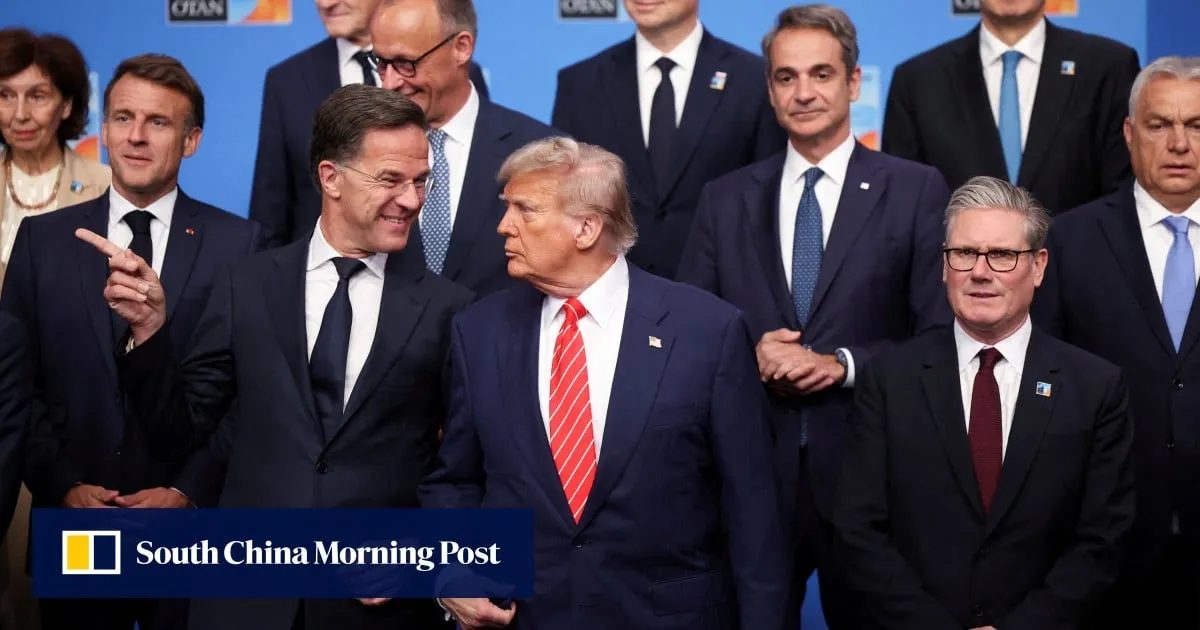
The transition of the North Atlantic military alliance to a more Europe-led “Nato 3.0” will fail to heal deep-seated strategic rifts between Washington and the European capitals, according to a leading Chinese think tank.In a report published on Monday, the China Institutes of Contemporary International Relations (CICIR) also warned that Nato’s expanding military and defence cooperation with Asia-Pacific nations such as Japan would leave the bloc “increasingly at odds with an accelerating multipolar world order”.The report follows the transatlantic security alliance’s summit in Ankara last week where the Nato 3.0 concept was formally embraced as its latest strategic direction.What is Nato 3.0?The term broadly refers to a structural overhaul that shifts greater responsibility for conventional defence on to Europe, while the United States recalibrates its global commitments.
SRCSouth China Morning Post
LANGEN
LEANCenter-Right
WORDS127
ENT9
WED · 2026-07-15 · 10:00 GMTBRIEF NSR-2026-0715-93209
NSR-2026-0715-93209News Report·EN·Political Strategy
China report warns against European-led Nato 3.0 expansion in the Asia-Pacific
A report by the China Institutes of Contemporary International Relations (CICIR) warns that NATO's shift to a more Europe-led "Nato 3.0" strategy will not resolve existing strategic differences between the US and European nations. The report, published on Monday, also cautions that NATO's growing defense ties with Asia-Pacific countries like Japan will create greater friction with the developing multipolar world order.
Cao JiaxuanSouth China Morning PostFiled 2026-07-15 · 10:00 GMTLean · Center-RightRead · 1 min
South China Morning PostFIG 01
Reading time
1min
Word count
127words
Sources cited
1cited
Entities identified
9entities
Quality score
100%
§ 01
Briefing Summary
AI-generatedNEWSAR · AI
A report by the China Institutes of Contemporary International Relations (CICIR) warns that NATO's shift to a more Europe-led "Nato 3.0" strategy will not resolve existing strategic differences between the US and European nations. The report, published on Monday, also cautions that NATO's growing defense ties with Asia-Pacific countries like Japan will create greater friction with the developing multipolar world order. This assessment follows NATO's formal adoption of the Nato 3.0 concept at a recent summit in Ankara. Nato 3.0 signifies a structural change where Europe assumes more responsibility for conventional defense, while the US adjusts its global commitments.
Confidence 0.85Sources 1Claims 4Entities 9
§ 02
Article analysis
Model · rule-basedFraming
Political Strategy
Diplomatic
Tone
Measured
AI-assessed
CalmNeutralAlarmist
Factuality
0.60 / 1.00
Mixed
LowHigh
Sources cited
1
Limited
FewMany
§ 03
Key claims
4 extracted01
The Nato 3.0 concept was formally embraced as its latest strategic direction at the recent Nato summit.
factual
Confidence
1.00
02
Nato's expanding cooperation with Asia-Pacific nations would leave the bloc 'increasingly at odds with an accelerating multipolar world order'.
quoteChina Institutes of Contemporary International Relations (CICIR)
Confidence
0.90
03
A European-led 'Nato 3.0' expansion in the Asia-Pacific is warned against by a Chinese think tank.
quoteChina Institutes of Contemporary International Relations (CICIR)
Confidence
0.90
04
Nato 3.0 will fail to heal strategic rifts between Washington and European capitals.
predictionChina Institutes of Contemporary International Relations (CICIR)
Confidence
0.80
§ 04
Full report
1 min read · 127 words§ 05
Entities
9 identifiedKey playerOppositionContextPositiveNeutralNegative
Organizations2
Locations6
Topics1
§ 06
Keywords & salience
9 termsnato 3.0
1.00
asia-pacific
0.90
multipolar world order
0.80
china
0.70
nato expansion
0.70
strategic rifts
0.60
us-europe relations
0.50
japan
0.50
military alliance
0.40
§ 07
Topic connections
Interactive graph Network visualization showing 51 related topics
View Full Graph Person Organization Location Event|Click node to navigate|Edge numbers = shared articles