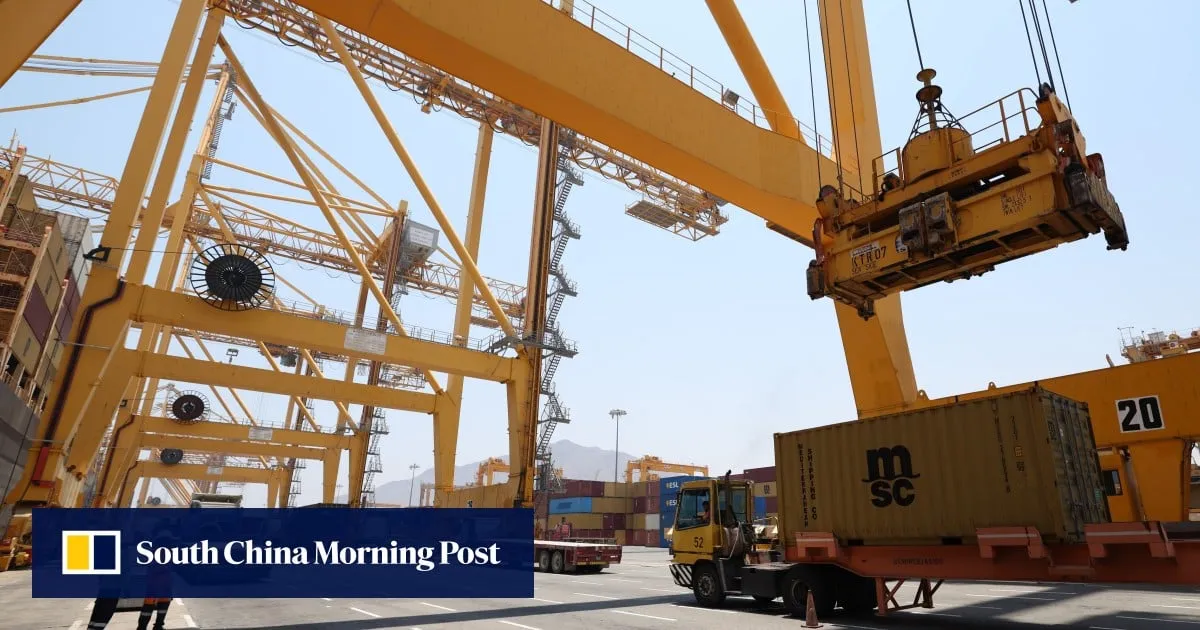
UAE’s Hormuz workaround tries to bypass its trillion-dollar economic heartNew terminals offer insurance, but analysts say securing trade ultimately relies on lasting peace, not just pouring concrete3-MIN READ3-MIN1ListenPublished: 11:00am, 18 Jul 2026Geography has handed the United Arab Emirates quite the quandary: its government wants to cut dependence on the Strait of Hormuz to “zero”, yet the ports that power its economy sit squarely inside the waterway it hopes to avoid.Jebel Ali and Khalifa ports collectively handle most of the UAE’s US$1 trillion in annual non-oil trade, much of which flows to and from Asia. Together, they form the single most vital link in a logistics corridor stretching from Singapore to Europe – a status not easily replicated.But war has a way of necessitating the impossible. With the United States and Iran locked in a seemingly intractable conflict, nervous exporters across Asia have been hedging their bets – and Oman’s ports are the immediate beneficiaries.Select VoiceSelect Speed0.8x0.9x1.0x1.1x1.2x1.5x1.75x00:0000:001.00x
SRCSouth China Morning Post
LANGEN
LEANCenter-Right
WORDS156
ENT12
SAT · 2026-07-18 · 03:00 GMTBRIEF NSR-2026-0718-93929
NSR-2026-0718-93929Analysis·EN·Economic Impact
UAE’s Hormuz workaround tries to bypass its trillion-dollar economic heart
The United Arab Emirates is seeking to reduce its reliance on the Strait of Hormuz, a critical chokepoint for its economy. Its major ports, Jebel Ali and Khalifa, which handle the majority of the UAE's trillion-dollar annual non-oil trade, are located within the strait.
Tom HussainSouth China Morning PostFiled 2026-07-18 · 03:00 GMTLean · Center-RightRead · 1 min
South China Morning PostFIG 01
Reading time
1min
Word count
156words
Sources cited
1cited
Entities identified
12entities
Quality score
100%
§ 01
Briefing Summary
AI-generatedNEWSAR · AI
The United Arab Emirates is seeking to reduce its reliance on the Strait of Hormuz, a critical chokepoint for its economy. Its major ports, Jebel Ali and Khalifa, which handle the majority of the UAE's trillion-dollar annual non-oil trade, are located within the strait. This strategic vulnerability is amplified by ongoing tensions between the United States and Iran, leading Asian exporters to seek alternative routes. As a result, Omani ports are experiencing increased activity. While the UAE is developing new terminals to enhance trade security, analysts suggest that lasting peace, rather than infrastructure alone, is ultimately crucial for securing trade.
Confidence 0.90Sources 1Claims 4Entities 12
§ 02
Article analysis
Model · rule-basedFraming
Economic Impact
Conflict
Tone
Measured
AI-assessed
CalmNeutralAlarmist
Factuality
0.60 / 1.00
Mixed
LowHigh
Sources cited
1
Limited
FewMany
§ 03
Key claims
4 extracted01
Jebel Ali and Khalifa ports handle the majority of the UAE's US$1 trillion in annual non-oil trade.
statistic
Confidence
0.95
02
Securing trade ultimately relies on lasting peace, not just infrastructure development.
quoteanalysts
Confidence
0.90
03
UAE's government aims to reduce dependence on the Strait of Hormuz to zero.
factualUAE government
Confidence
0.90
04
Oman's ports are benefiting from nervous exporters hedging their bets due to US-Iran conflict.
factual
Confidence
0.85
§ 04
Full report
1 min read · 156 words§ 05
Entities
12 identifiedKey playerOppositionContextPositiveNeutralNegative
Locations10
Events1
§ 06
Keywords & salience
8 termsstrait of hormuz
1.00
uae trade
0.90
economic heart
0.80
logistics corridor
0.70
us-iran conflict
0.60
trade dependence
0.50
oman ports
0.40
export hedging
0.40
§ 07
Topic connections
Interactive graph Network visualization showing 51 related topics
View Full Graph Person Organization Location Event|Click node to navigate|Edge numbers = shared articles