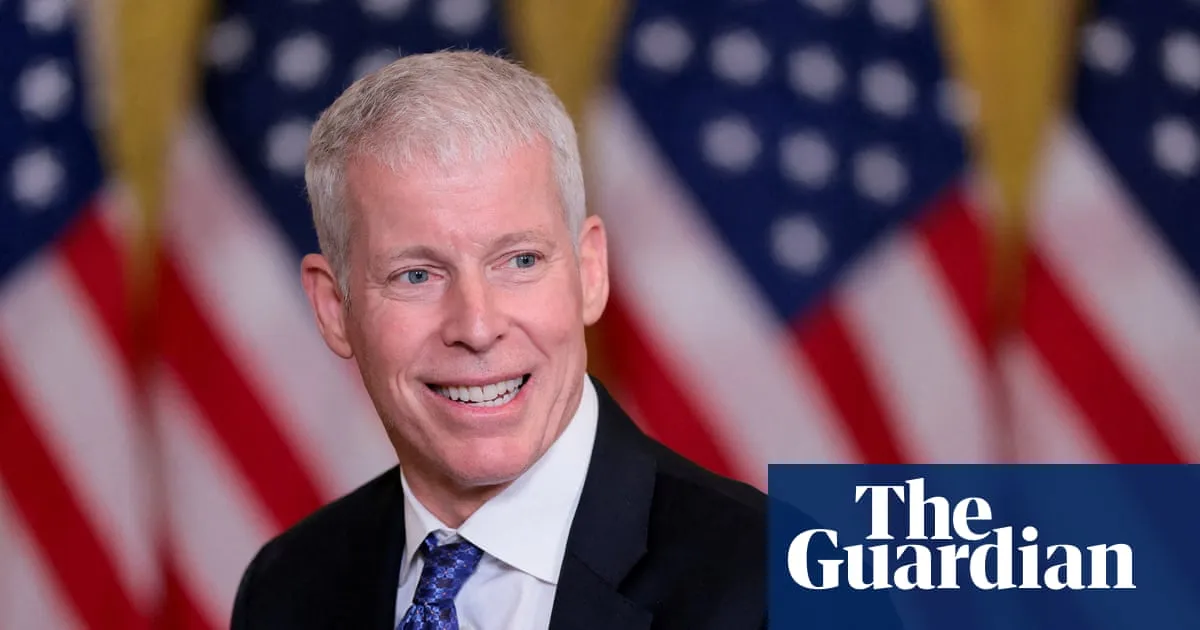
A Trump administration official on Sunday grappled with mounting criticism over the length of the Iran" class="entity-link entity-event" data-entity-id="167745" data-entity-type="event">US war with Iran after months of promised diplomatic breakthroughs, short-lived ceasefires, and the deaths of two more American troops in Jordan bringing the total number of American military members killed in the conflict to 16.Appearing on ABC’s This Week, US energy secretary Chris Wright defended the Trump administration’s strategy after being confronted with his earlier claims that the war which began in February would have ended by now.Wright argued that the mission has since shifted toward ensuring oil shipments can move through the Strait of Hormuz.“We did a pause to try to get an agreement with the Iranian people to allow oil to flow without them attacking it,” Wright said. “They’ve proven unwilling to do that, and we’ve pivoted. Now, what we’re doing is assuring that that oil and gas and other products can flow through the Strait of Hormuz with or without Iranian cooperation, and we’ve continued to degrade their offensive military capabilities.”On the same program, a prominent Democrat continued his party’s sharp criticism of the Trump administration’s handling of the nearly five-month conflict.US senator Mark Warner of Virginia described the conflict as a “war of choice” that was launched without an imminent threat and argued the administration has failed to accomplish its previously stated objectives.“Regime change, how are we doing there? We got a worse crowd than before,” Warner said of Iran. He said the enriched uranium that the US wanted to get from Iran to prevent it from building a nuclear weapon is “still there”, adding: “Matter of fact, it would take a minimum of 15,000 troops on the ground for a week to try to take these canisters, which are quite volatile, out of their bunker.”Warner also remarked, “Getting rid of Iran’s missile and drone capability – obviously, we’ve not been successful there” because the conflict continued on Sunday. He said: “The continuation of this war, at this pace, will be a continuing disaster.”The latest casualties in Iran for the US military came as a renewal of the campaign against Iran entered its second week, leading to intensified fighting around the Strait of Hormuz. The US launched retaliatory strikes on Sunday against Iran’s Revolutionary Guards (IRGC) after the killings.After the deaths of the two US troops on Friday, Trump’s defense secretary Pete Hegseth vowed the military campaign in Iran would continue, writing on social media that the service members’ “sacrifice only stiffens our resolve”.Donald Trump himself also escalated pressure on Iran Sunday, with the president urging Congress to include Iran in pending Russia sanctions legislation. The move would further weaken the memorandum of understanding between the two countries in June aimed at resolving the Iranian conflict that included an agreement to end sanctions for Iran.Alluding to the unexpected death on 11 July of US senator Lindsey Graham, his ally, Trump wrote on his Truth Social platform, “Republicans should add Iran to the Russian Sanctions Bill. That’s what Lindsey wanted to do, and it was going to happen. IMPORTANT!!!”
SRCThe Guardian - World News
LANGEN
LEANCenter-Left
WORDS508
ENT12
SUN · 2026-07-19 · 18:48 GMTBRIEF NSR-2026-0719-94234
NSR-2026-0719-94234News Report·EN·Conflict
Mission in Iran war has pivoted toward ensuring oil flow, Trump official says
A Trump administration official stated that the US mission in Iran has shifted from ending the conflict to ensuring oil flow through the Strait of Hormuz. Energy Secretary Chris Wright defended the strategy on ABC's "This Week," explaining that diplomatic efforts to allow oil shipments failed, leading to a pivot to guaranteeing passage with or without Iranian cooperation.
Marina DunbarThe Guardian - World NewsFiled 2026-07-19 · 18:48 GMTLean · Center-LeftRead · 3 min
The Guardian - World NewsFIG 01
Reading time
3min
Word count
508words
Sources cited
4cited
Entities identified
12entities
Quality score
100%
§ 01
Briefing Summary
AI-generatedNEWSAR · AI
A Trump administration official stated that the US mission in Iran has shifted from ending the conflict to ensuring oil flow through the Strait of Hormuz. Energy Secretary Chris Wright defended the strategy on ABC's "This Week," explaining that diplomatic efforts to allow oil shipments failed, leading to a pivot to guaranteeing passage with or without Iranian cooperation. This comes amidst mounting criticism over the war's length and the deaths of 16 American troops. Senator Mark Warner, a Democrat, criticized the conflict as a "war of choice" launched without an imminent threat, arguing the administration has not achieved its objectives of regime change or preventing Iran from obtaining nuclear weapons. The US launched retaliatory strikes against Iran's Revolutionary Guards after the latest troop deaths.
Confidence 0.90Sources 4Claims 5Entities 12
§ 02
Article analysis
Model · rule-basedFraming
Conflict
Economic Impact
Tone
Mixed Tone
AI-assessed
CalmNeutralAlarmist
Factuality
0.60 / 1.00
Mixed
LowHigh
Sources cited
4
Well sourced
FewMany
§ 03
Key claims
5 extracted01
The US launched retaliatory strikes on Sunday against Iran’s Revolutionary Guards (IRGC) after the killings of two US troops.
factualArticle
Confidence
0.95
02
The US has suffered 16 military member deaths in the conflict with Iran.
statisticArticle
Confidence
0.95
03
The mission in the Iran war has pivoted toward ensuring oil flow through the Strait of Hormuz.
quoteTrump administration official
Confidence
0.90
04
The conflict with Iran was launched without an imminent threat and has failed to accomplish stated objectives like regime change or securing enriched uranium.
quoteUS Senator Mark Warner
Confidence
0.85
05
Taking enriched uranium out of Iran would require a minimum of 15,000 troops on the ground for a week.
quoteUS Senator Mark Warner
Confidence
0.80
§ 04
Full report
3 min read · 508 words§ 05
Entities
12 identifiedKey playerOppositionContextPositiveNeutralNegative
People3
Locations4
§ 06
Keywords & salience
10 termsiran war
1.00
oil flow
0.90
strait of hormuz
0.80
us military
0.70
trump administration
0.60
offensive military capabilities
0.50
diplomatic breakthroughs
0.50
missile and drone capability
0.40
revolutionary guards
0.40
nuclear weapon
0.40
§ 07
Topic connections
Interactive graph No topic relationship data available yet. This graph will appear once topic relationships have been computed.