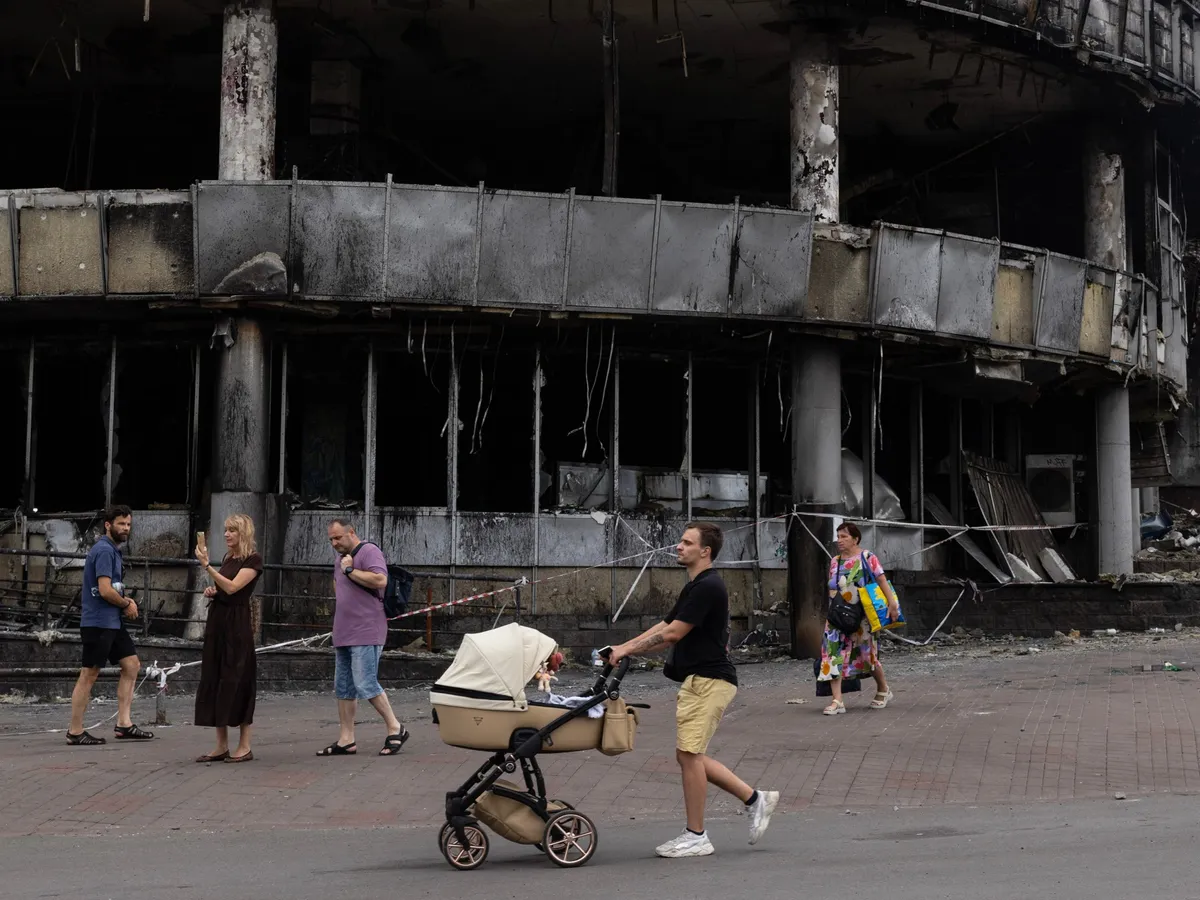
Increasing use of long-range missiles and drones against targets far from the front line is worsening the civilian toll.A United Nations monitoring mission decried multiple attacks in recent days that have caused civilian casualties in both Ukraine and Russia [Paula Bronstein/Getty Images]Published On 21 Jul 2026Civilian casualties in the war between Russia and Ukraine are increasing sharply, mainly because of long-range ballistic missiles and drones “affecting densely populated urban areas that are far away from the front line”, the United Nations says.Danielle Bell, head of the UN-human-rights-monitoring-mission-in-Ukraine" class="entity-link entity-organization" data-entity-id="168859" data-entity-type="organization">UN Human Rights Monitoring Mission in Ukraine, told reporters in Geneva on Tuesday that the unit documented 1,396 civilians killed and 7,978 wounded in Ukraine in the first six months of 2026.Recommended Stories list of 4 itemslist 1 of 4Ukrainian drone attacks on Russia kill at least 8, wound dozenslist 2 of 4Russia launches largest ballistic missile attack on Kyiv since start of warlist 3 of 4Russian strike on ship near Odesa kills 10, Ukraine hits Moscow with droneslist 4 of 4Why protests are growing in Ukraine over defence leadership and dismissalsend of listThat was a 37 percent increase from the same period in the previous year and “almost doubled what we documented in 2024”, she said.Pointing to credible Russian open-source reporting, Bell said 250 civilians had been killed and 1,596 injured in attacks inside Russia during the first six months of this year.“This represents a 121 percent increase in civilian casualties in the Russian Federation compared with last year,” she said.Both Moscow and Kyiv have intensified air strikes in recent months, targeting each other’s vital infrastructure, as United States-led talks on ending Russia’s invasion remain stalled, with the US’s focus largely turned towards its war on Iran.Russia has frequently used ballistic missiles while Kyiv is currently short of Patriot interceptor munitions, which are crucial to defend against them. In retaliation, Ukraine is intensifying its attacks on Russian territory, mainly targeting oil depots. A series of Ukrainian drone attacks killed at least eight warehouse workers from Wildberries on Saturday and injured dozens more, while another attack caused a fire at an oil depot outside Moscow.The second driver of the swelling civilian casualty toll was the widespread use of short-range drones and glide bombs in front-line areas, in particular the impact of so-called first-person view (FPV) drones, where the drone operator can see the target in real time, Bell said.“In the first six months of this year, civilian casualties from short-range drones increased by 65 percent,” she said, adding that “these drones are fundamentally changing civilian life in front-line communities”.During recent visits to Zaporizhzhia, Kherson, Kharkiv and Dnipro, Bell said people had told her team that they feel “tracked by FPV drones while carrying out ordinary daily activities: gardening, walking their dogs, feeding their animals outside, going to the store, driving or simply walking or cycling outdoors”.Attack on ship angers IndiaAmong the worst recent attacks in terms of civilian casualties was a Russian strike on the Golden Leo, a Guinea-Bissau-flagged ship carrying a cargo of corn and manned by a crew from India and Syria. It was hit by three cruise missiles on Sunday as it was leaving the Black Sea port of Odesa, with 10 crew members killed, including four Indians.The region’s Governor Oleh Kiper told Ukrainian TV on Monday that Russian strikes in Odesa have now killed 28 people in the month of July alone.India said on Tuesday that it had summoned Russia’s charge d’affaires in New Delhi, Vladimir Ladanov, and told him to convey to Moscow that attacks on commercial shipping and the resulting loss of civilian lives were unacceptable.“Such attacks undermine the safety, security, and stability of international maritime commerce,” India’s external affairs ministry said in a statement.Kremlin spokesman Dmitry Peskov told reporters that Moscow had contacted the Indian government after the incident.“We are explaining our position,” he said. “Most importantly, our armed forces are striking – and will continue to strike – vessels involved in transporting ammunition, weapons, and so on for the purposes of the Kyiv regime.”
SRCAl Jazeera
LANGEN
LEANCenter
WORDS668
ENT12
TUE · 2026-07-21 · 16:31 GMTBRIEF NSR-2026-0721-94777
NSR-2026-0721-94777News Report·EN·Human Rights
Steep rise in civilian casualties in Russia-Ukraine war, UN says
The United Nations reports a sharp increase in civilian casualties in the Russia-Ukraine war, primarily due to the use of long-range missiles and drones targeting populated urban areas far from the front lines. In the first six months of 2026, Ukraine documented 1,396 civilian deaths and 7,978 wounded, a 37% rise from the previous year.
Al Jazeera StaffAl JazeeraFiled 2026-07-21 · 16:31 GMTLean · CenterRead · 3 min
Al JazeeraFIG 01
Reading time
3min
Word count
668words
Sources cited
1cited
Entities identified
12entities
Quality score
100%
§ 01
Briefing Summary
AI-generatedNEWSAR · AI
The United Nations reports a sharp increase in civilian casualties in the Russia-Ukraine war, primarily due to the use of long-range missiles and drones targeting populated urban areas far from the front lines. In the first six months of 2026, Ukraine documented 1,396 civilian deaths and 7,978 wounded, a 37% rise from the previous year. Russia reported 250 civilian deaths and 1,596 injured within its territory, a 121% increase. Both nations have intensified air strikes, with Russia utilizing ballistic missiles and Ukraine, short on interceptor munitions, targeting Russian infrastructure like oil depots. The widespread use of short-range drones, including FPV drones, in front-line areas also contributes significantly to the rising civilian toll, making daily life perilous for residents.
Confidence 0.90Sources 1Claims 5Entities 12
§ 02
Article analysis
Model · rule-basedFraming
Human Rights
Conflict
Tone
Measured
AI-assessed
CalmNeutralAlarmist
Factuality
0.80 / 1.00
Factual
LowHigh
Sources cited
1
Limited
FewMany
§ 03
Key claims
5 extracted01
Civilian casualties from short-range drones increased by 65% in the first six months of 2026.
statisticDanielle Bell, UN Human Rights Monitoring Mission in Ukraine
Confidence
1.00
02
250 civilians were killed and 1,596 injured in attacks inside Russia in the first six months of 2026, a 121% increase from last year.
statisticDanielle Bell, UN Human Rights Monitoring Mission in Ukraine
Confidence
1.00
03
The UN documented 1,396 civilians killed and 7,978 wounded in Ukraine in the first six months of 2026, a 37% increase from the previous year.
statisticDanielle Bell, UN Human Rights Monitoring Mission in Ukraine
Confidence
1.00
04
Civilian casualties in the Russia-Ukraine war are increasing sharply due to long-range missiles and drones hitting urban areas.
factualUnited Nations
Confidence
1.00
05
Ukraine is short of Patriot interceptor munitions, crucial for defending against Russian ballistic missiles.
factualArticle
Confidence
0.90
§ 04
Full report
3 min read · 668 words§ 05
Entities
12 identifiedKey playerOppositionContextPositiveNeutralNegative
People1
Locations7
§ 06
Keywords & salience
9 termsrussia-ukraine war
1.00
civilian casualties
1.00
long-range missiles
0.90
drones
0.80
urban areas
0.70
united nations
0.60
air strikes
0.50
ballistic missiles
0.50
fpv drones
0.40
§ 07
Topic connections
Interactive graph Network visualization showing 51 related topics
View Full Graph Person Organization Location Event|Click node to navigate|Edge numbers = shared articles