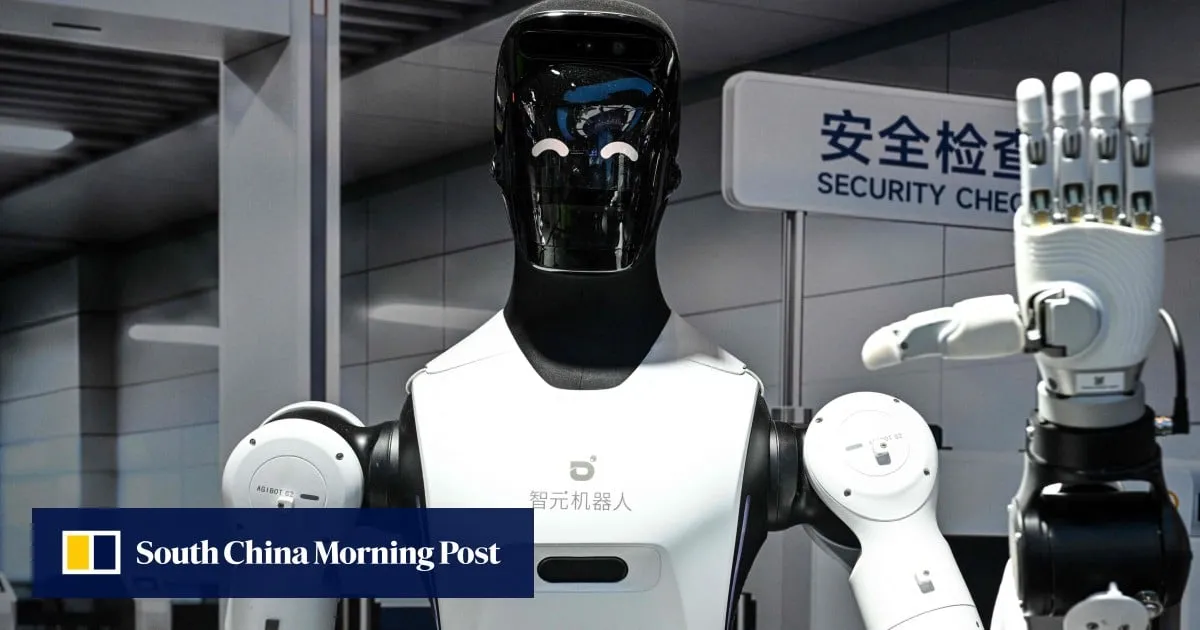
US scrutiny of Chinese technology has expanded to a new frontier, as lawmakers in Washington advance defence legislation prohibiting the military from deploying Chinese-made humanoid robots.The US House of Representatives has passed the National Defence Authorisation Act (NDAA), an annual military policy bill that incorporates provisions restricting the use of foreign autonomous systems over national security and data privacy concerns.Under Section 163 of the draft bill, the Pentagon would be barred from procuring, leasing or operating covered humanoid robotic systems linked to designated “foreign adversaries”, including China, Russia and Iran.
SRCSouth China Morning Post
LANGEN
LEANCenter-Right
WORDS90
ENT9
THU · 2026-07-23 · 11:30 GMTBRIEF NSR-2026-0723-95313
NSR-2026-0723-95313News Report·EN·National Security
US eyes ban on Chinese humanoid robots as US-China tech rivalry intensifies
The US House of Representatives has passed the National Defense Authorization Act (NDAA), an annual military policy bill that includes provisions to restrict the US military's use of Chinese-made humanoid robots. Section 163 of the draft bill would prohibit the Pentagon from procuring, leasing, or operating humanoid robotic systems linked to designated "foreign adversaries," such as China, Russia, and Iran.
Richard ChenSouth China Morning PostFiled 2026-07-23 · 11:30 GMTLean · Center-RightRead · 1 min
South China Morning PostFIG 01
Reading time
1min
Word count
90words
Sources cited
0cited
Entities identified
9entities
Quality score
100%
§ 01
Briefing Summary
AI-generatedNEWSAR · AI
The US House of Representatives has passed the National Defense Authorization Act (NDAA), an annual military policy bill that includes provisions to restrict the US military's use of Chinese-made humanoid robots. Section 163 of the draft bill would prohibit the Pentagon from procuring, leasing, or operating humanoid robotic systems linked to designated "foreign adversaries," such as China, Russia, and Iran. This move reflects intensifying US-China technological rivalry and stems from national security and data privacy concerns regarding foreign autonomous systems. The legislation signifies an expansion of US scrutiny into new technological frontiers.
Confidence 0.85Claims 4Entities 9
§ 02
Article analysis
Model · rule-basedFraming
National Security
Technology
Tone
Measured
AI-assessed
CalmNeutralAlarmist
Factuality
0.90 / 1.00
Factual
LowHigh
Sources cited
0
No named sources
FewMany
§ 03
Key claims
4 extracted01
Concerns driving these restrictions include national security and data privacy.
factual
Confidence
1.00
02
Section 163 of the draft bill would bar the Pentagon from procuring, leasing, or operating humanoid robotic systems linked to designated 'foreign adversaries' like China, Russia, and Iran.
factual
Confidence
1.00
03
The US House of Representatives passed the National Defence Authorisation Act (NDAA), which includes provisions restricting foreign autonomous systems.
factual
Confidence
1.00
04
US lawmakers are advancing defense legislation to prohibit the military from deploying Chinese-made humanoid robots.
factual
Confidence
1.00
§ 04
Full report
1 min read · 90 words§ 05
Entities
9 identifiedKey playerOppositionContextPositiveNeutralNegative
Locations4
§ 06
Keywords & salience
8 termshumanoid robots
1.00
us-china tech rivalry
0.90
national defence authorisation act
0.80
autonomous systems
0.70
national security
0.60
data privacy
0.50
pentagon
0.40
foreign adversaries
0.40
§ 07
Topic connections
Interactive graph Network visualization showing 51 related topics
View Full Graph Person Organization Location Event|Click node to navigate|Edge numbers = shared articles