Speaker of the House Mike Johnson, R-La., leaves without taking any questions from reporters after finishing a series of votes on President Donald Trump’s priorities, at the Capitol in Washington, Wednesday, July 22, 2026. (AP Photo/J. Scott Applewhite) Updated [hour]:[minute] [AMPM] [timezone], [monthFull] [day], [year] WASHINGTON (AP) — The House on Thursday narrowly passed a resolution to halt Iran" class="entity-link entity-event" data-entity-id="170161" data-entity-type="event">U.S. military action in Iran, sending a warning to President Donald Trump for the second time as the war has escalated and the future of the conflict is increasingly uncertain.The 214-208 vote requiring congressional approval for the war comes as the Senate is expected to consider a similar resolution later Thursday morning. Though the votes forced by Democrats are largely symbolic, they are meant as a strong signal to the Republican president that his support on Capitol Hill is chipping away as the war drags on and lawmakers in both parties have questioned his administration’s endgame.The war has had “no clear mission, no strategy, no end goal,” said Washington Rep. Pramila Jayapal, a Democrat who led the resolution on the House floor.The resolution narrowly passed after a handful of Republicans voted with Democrats to end the war. But the vast majority of Republicans voted to back the war and cede congressional war powers to Trump.Trump has insisted that continued U.S. attacks against Iran do not mean a return to war or long-term action. After the first House vote to halt the war in early June, he posted on social media that it was “unpatriotic” and “meaningless.” Continued American airstrikes are occurring even as diplomatic efforts show little public sign of progress and officials on both sides have dug in on the dispute over the Strait of Hormuz, a crucial waterway for global energy that remains largely closed. The unpopular war threatens further worldwide economic disruption and is sending fuel prices up ahead of midterm U.S. elections this fall. Most Republicans vote to cede congressional powersAs the House debated the resolution Wednesday evening, Foreign Affairs Committee Chairman Brian Mast, R-Fla., read out names of 18 service members killed since the war began. “To belittle this mission is to belittle and demean the very service these members gave their life for,” Mast said. “Their sacrifice was not meaningless. This operation is bringing reckoning for the hundreds of times Iran has attacked and killed people of the United States of America.” 2 MIN READ 4 MIN READ 4 MIN READ The top Democrat on the panel, New York Rep. Gregory Meeks, said that presidents are supposed to make the case to Congress. The service members who died made the ultimate sacrifice for “an illegal unauthorized war that the American people don’t want,” Meeks said. As both chambers vote on whether to weigh in, the U.S. has carried out waves of airstrikes in recent days as the two countries clash over control of the Strait of Hormuz. Gas prices have spiked again, and Defense Secretary Pete Hegseth told senators at a hearing Tuesday that the U.S. had spent $37.5 billion on the war so far. On Wednesday, Trump traveled to Dover Air Force Base for the arrival and dignified transfer of the remains of four U.S. service members.“I do think the combination of the hearings, plus the fact that we are in this new escalatory phase where Americans have been killed, and Americans are experiencing the rising costs — I think it’s important that people be held accountable,” said Maryland Sen. Chris Van Hollen, a Democrat who is leading the Senate effort on Thursday. “And this is a very unpopular war.” Trump is watching Iran votes closely Republicans on both sides of the Capitol know that voting against the war can have a political cost, even as many of them have privately questioned the Trump administration’s handling of the conflict. In his post after the June House vote, Trump called the four Republicans who voted with Democrats “GRANDSTANDERS!” and said they should be “ashamed of themselves.” “They would rather have our Country fail than give me another, of many, victories,” he said. When the Senate passed a war powers resolution on Iran for the first time in June, the president attended a GOP Senate luncheon the next day and called the Republicans who voted for it “losers.”Louisiana Sen. Bill Cassidy, a Republican who lost his Senate seat in a primary after Trump endorsed one of his opponents, told Trump directly that he needed to give more details to the public about the conflict. “This was supposed to last four weeks. It’s lasted four months,” Cassidy said. “Our original objectives have not been achieved.”Trump argued back, Cassidy later told reporters, and he told the president that he wouldn’t change his vote until he got a briefing. The White House later relented, giving Cassidy a one-on-one meeting, and the Louisiana Republican changed his vote in a late-night do-over vote before the Senate left for a two-week recess.Cassidy wouldn’t say Wednesday whether recent developments would change his vote. Polling find Americans disapprove of the warMost Americans disapprove of the way Trump is handling the situation with Iran, according to recent polling. A Washington Post/Ipsos poll conducted in July found that few Americans think the war in Iran has been worth fighting, and most aren’t confident that the Iran" class="entity-link entity-event" data-entity-id="170161" data-entity-type="event">U.S. military action in Iran and negotiations to end the war will prevent Iran from developing nuclear weapons. Only about two-thirds of Republicans approve of Trump’s handling of the situation in Iran, according to the poll. Most Republicans, about 6 in 10, think the war has been worth fighting and are confident that the military action and ensuing negotiations will prevent Iran from development nuclear weapons, but a sizable share — about one-third — are unconvinced.___Associated Press writer Amelia Thomson DeVeaux contributed to this report.
SRCAssociated Press (AP)
LANGEN
LEANCenter
WORDS963
ENT12
THU · 2026-07-23 · 14:53 GMTBRIEF NSR-2026-0723-95377
NSR-2026-0723-95377News Report·EN·Conflict
House again passes resolution seeking to halt military action in Iran as some Republicans defect
The House of Representatives narrowly passed a resolution to halt U.S. military action in Iran for the second time, sending a message to President Donald Trump.
By
MARY CLARE JALONICKAssociated Press (AP)Filed 2026-07-23 · 14:53 GMTLean · CenterRead · 4 min
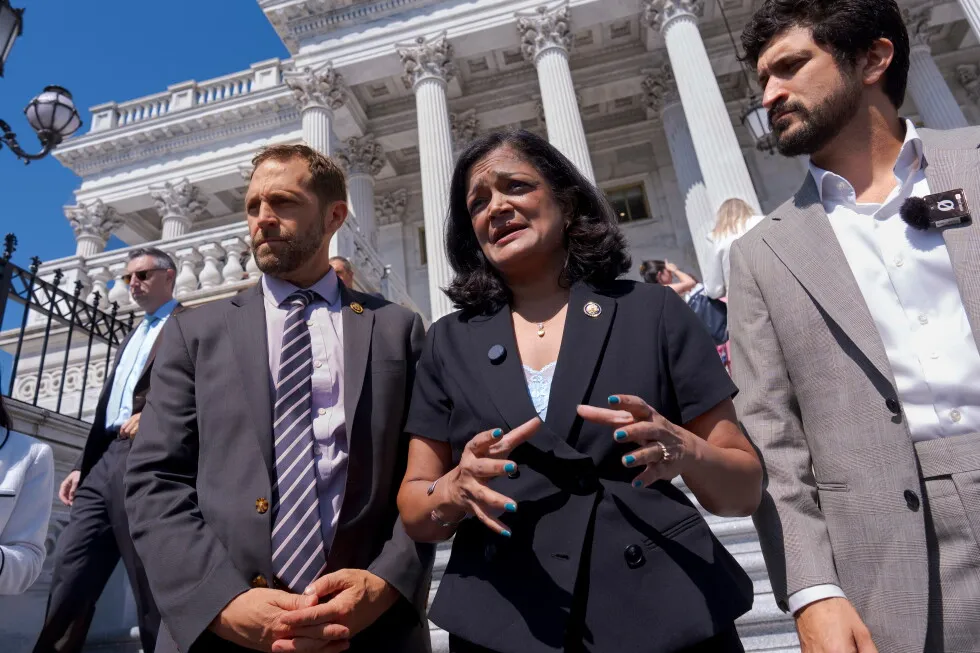
Associated Press (AP)FIG 01
Reading time
4min
Word count
963words
Sources cited
3cited
Entities identified
12entities
Quality score
100%
§ 01
Briefing Summary
AI-generatedNEWSAR · AI
The House of Representatives narrowly passed a resolution to halt U.S. military action in Iran for the second time, sending a message to President Donald Trump. The 214-208 vote, largely symbolic, signals growing congressional unease with the ongoing conflict, which has seen escalating airstrikes and rising fuel prices. While most Republicans voted to support the war and cede war powers to the President, a small number defected to vote with Democrats. The resolution comes as the Senate is expected to consider a similar measure. Lawmakers in both parties have questioned the administration's strategy and endgame in the conflict, which has resulted in U.S. service member deaths and significant financial expenditure.
Confidence 0.90Sources 3Claims 5Entities 12
§ 02
Article analysis
Model · rule-basedFraming
Conflict
Political Strategy
Tone
Measured
AI-assessed
CalmNeutralAlarmist
Factuality
0.60 / 1.00
Mixed
LowHigh
Sources cited
3
Well sourced
FewMany
§ 03
Key claims
5 extracted01
The war has had “no clear mission, no strategy, no end goal,”
quoteRep. Pramila Jayapal
Confidence
1.00
02
Foreign Affairs Committee Chairman Brian Mast read out names of 18 service members killed since the war began.
factualRep. Brian Mast
Confidence
0.90
03
The House narrowly passed a resolution to halt U.S. military action in Iran, sending a warning to President Donald Trump.
factual
Confidence
0.90
04
Continued American airstrikes are occurring even as diplomatic efforts show little public sign of progress and officials on both sides have dug in on the dispute over the Strait of Hormuz.
factual
Confidence
0.80
05
The unpopular war threatens further worldwide economic disruption and is sending fuel prices up ahead of midterm U.S. elections this fall.
prediction
Confidence
0.70
§ 04
Full report
4 min read · 963 words§ 05
Entities
12 identifiedKey playerOppositionContextPositiveNeutralNegative
People4
Locations3
§ 06
Keywords & salience
9 termsiran
1.00
military action
1.00
house resolution
0.90
congressional approval
0.80
war powers
0.70
donald trump
0.60
strait of hormuz
0.50
economic disruption
0.40
midterm elections
0.40
§ 07
Topic connections
Interactive graph No topic relationship data available yet. This graph will appear once topic relationships have been computed.