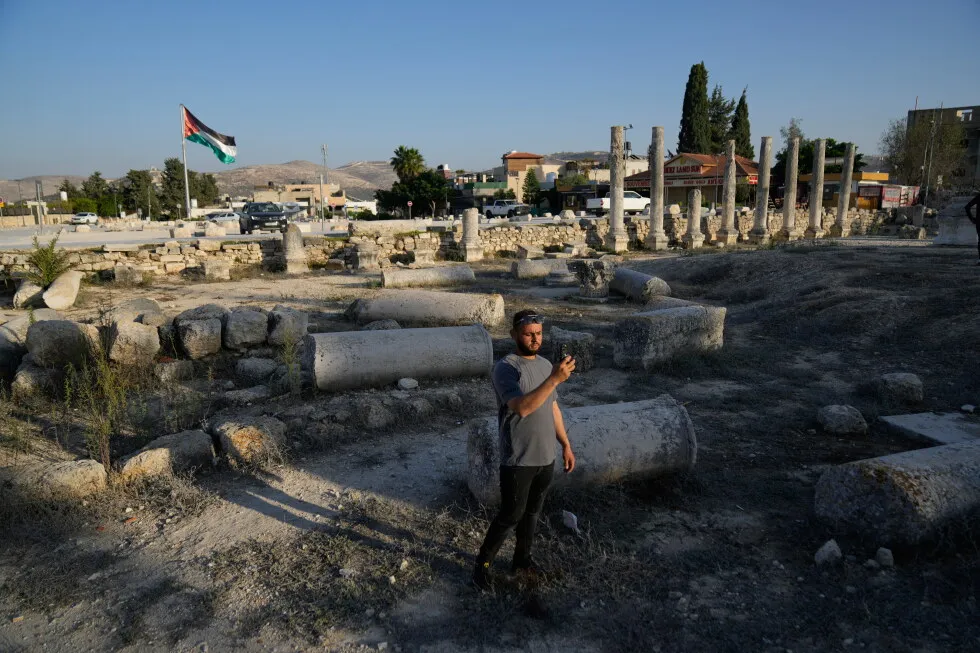
UNESCO adds West Bank site and Lebanese castles to World Heritage List despite Israeli objections 1 of 2 | A Palestinian visitor takes a photo at the Roman historical site in the West Bank town of Sebastia Thursday, Nov. 20, 2025. (AP Photo/Nasser Nasser, File) 2 of 2 | Smoke rises to the sky in an area near Beaufort Castle following an Israeli military strike in southern Lebanon as seen from northern Israel, Friday, June 19, 2026. (AP Photo/Leo Correa, File) By KIM TONG-HYUNG Updated 11:38 AM MESZ, July 24, 2026 Add AP News on Google Add AP News as your preferred source to see more of our stories on Google. Share Share Facebook Copy Link copied Print Email X LinkedIn Bluesky Flipboard Pinterest Reddit SEOUL, South Korea (AP) — A United Nations committee voted Friday to inscribe a major archaeological site in the West Bank and a set of castles in southern Lebanon as World Heritage sites, despite objections from Israel, which had urged the committee to reject the bids. The decision at a U.N. Educational, Scientific and Cultural Organization meeting in South Korea came days after Israel’s Foreign Ministry urged the committee to reject efforts to designate the small West Bank town of Sebastia and the Lebanese castles, calling the nominations a “weaponization of cultural heritage.” At their meeting in Busan, members of the UNESCO committee decided to place Sebastia and five castles in Lebanon’s Mount Amel area on both the World Heritage List and the List of World Heritage in Danger after reviewing the nominations on an emergency basis. Sebastia, a hilltop town about 10 kilometers (6 miles) northwest of Nablus in the Israeli-occupied West Bank, is identified by scholars as ancient Samara, capital of the biblical Israel" class="entity-link entity-location" data-entity-id="170752" data-entity-type="location">Kingdom of Israel. The area’s archaeological remains span the Iron Age, Roman, Byzantine and Islamic periods. Christian and Islamic tradition holds that John the Baptist was buried there, according to a UNESCO website. Sebastia’s nomination, first submitted by the Palestinian delegation to UNESCO in 2012, argued that World Heritage status was needed to help preserve the site, saying it remains largely undeveloped under Israeli control and requires additional conservation despite attracting tourists. How some in Palestinian diaspora find connection, identity and resilience in traditional embroidery 1 MIN READ Lebanon’s deal with Israel requires Hezbollah to disarm -- but that might be difficult 5 MIN READ 68 Israeli troops fatally shoot a Palestinian in the occupied West Bank 5 MIN READ 68 The designation comes as Israel, which does not recognize a Palestinian state, moves to expropriate large swaths of land around the site, even as it faces pressure to crack down on violence by Israeli settlers in the Palestinian territory. The five castles in the Mount Amel region are recognized for their layered architectural heritage, combining Crusader, Ayyubid, Mamluk and local influences, reflecting the evolution of fortified architecture over nearly nine centuries, according to a UNESCO description. In Tuesday’s statement, Israel’s Foreign Ministry accused the Palestinian delegation of waging a “hostile, one-sided campaign” at UNESCO by falsely portraying Sebastia as an area facing an emergency, calling the effort a political attempt to “erase the site’s profound, well-documented Jewish and Christian history.” Israel withdrew from UNESCO in 2019, accusing the organization of being biased against it and of downplaying its historical ties to the Holy Land. Israel’s Foreign Ministry also took objection to efforts to list Beaufort Castle in southern Lebanon as a World Heritage site. The castle was part of the nomination covering five castles in the Mount Amel area. The ministry said Hezbollah, an Iran-backed militant group, has turned Beaufort Castle into a military stronghold by building tunnels beneath the site and launching rockets from the area, and accused UNESCO of ignoring those developments. UNESCO and the Lebanese embassy in South Korea declined to comment on the Israeli claims about Hezbollah. The UNESCO committee on Wednesday placed another Lebanese site, Tyre, an ancient Phoenician city in the southern part of the country, on the list of world heritage sites in danger. KIM TONG-HYUNG Kim has been covering the Koreas for the AP since 2014. He has published widely read stories on North Korea’s nuclear ambitions, the dark side of South Korea’s economic rise and international adoptions of Korean children. twitter mailto
SRCAssociated Press (AP)
LANGEN
LEANCenter
WORDS712
ENT12
FRI · 2026-07-24 · 09:53 GMTBRIEF NSR-2026-0724-95663
NSR-2026-0724-95663News Report·EN·Diplomatic
UNESCO adds West Bank site and Lebanese castles to World Heritage List despite Israeli objections
A United Nations committee has inscribed a major archaeological site in the West Bank, Sebastia, and five castles in Lebanon's Mount Amel area as World Heritage sites, despite Israeli objections. Israel's Foreign Ministry had urged the committee to reject the nominations, calling them a "weaponization of cultural heritage" and accusing the Palestinian delegation of a "hostile, one-sided campaign." Sebastia, identified as ancient Samara, has archaeological remains spanning multiple periods, and Christian and Islamic tradition holds John the Baptist was buried there.
Associated Press (AP)Filed 2026-07-24 · 09:53 GMTLean · CenterRead · 3 min
Associated Press (AP)FIG 01
Reading time
3min
Word count
712words
Sources cited
1cited
Entities identified
12entities
Quality score
100%
§ 01
Briefing Summary
AI-generatedNEWSAR · AI
A United Nations committee has inscribed a major archaeological site in the West Bank, Sebastia, and five castles in Lebanon's Mount Amel area as World Heritage sites, despite Israeli objections. Israel's Foreign Ministry had urged the committee to reject the nominations, calling them a "weaponization of cultural heritage" and accusing the Palestinian delegation of a "hostile, one-sided campaign." Sebastia, identified as ancient Samara, has archaeological remains spanning multiple periods, and Christian and Islamic tradition holds John the Baptist was buried there. The Lebanese castles are recognized for their layered architectural heritage. Both Sebastia and the Lebanese castles were also placed on the List of World Heritage in Danger. Israel withdrew from UNESCO in 2019, citing bias.
Confidence 0.90Sources 1Claims 5Entities 12
§ 02
Article analysis
Model · rule-basedFraming
Diplomatic
Conflict
Tone
Measured
AI-assessed
CalmNeutralAlarmist
Factuality
0.80 / 1.00
Factual
LowHigh
Sources cited
1
Limited
FewMany
§ 03
Key claims
5 extracted01
Sebastia's nomination was first submitted by the Palestinian delegation to UNESCO in 2012.
factual
Confidence
1.00
02
Israel urged the committee to reject the nominations, calling them a 'weaponization of cultural heritage'.
quoteIsrael's Foreign Ministry
Confidence
1.00
03
UNESCO committee voted to inscribe a West Bank archaeological site and Lebanese castles as World Heritage sites.
factual
Confidence
1.00
04
The designation comes as Israel moves to expropriate land around the site and faces pressure over settler violence.
factual
Confidence
0.90
05
The West Bank site, Sebastia, is identified by scholars as ancient Samara, capital of the biblical Kingdom of Israel.
factualscholars
Confidence
0.90
§ 04
Full report
3 min read · 712 words§ 05
Entities
12 identifiedKey playerOppositionContextPositiveNeutralNegative
Organizations1
§ 06
Keywords & salience
9 termsunesco
1.00
world heritage list
1.00
west bank site
0.90
lebanese castles
0.90
israeli objections
0.80
cultural heritage
0.70
archaeological site
0.60
sebastia
0.50
mount amel
0.40
§ 07
Topic connections
Interactive graph Network visualization showing 6 related topics
View Full Graph Person Organization Location Event|Click node to navigate|Edge numbers = shared articles