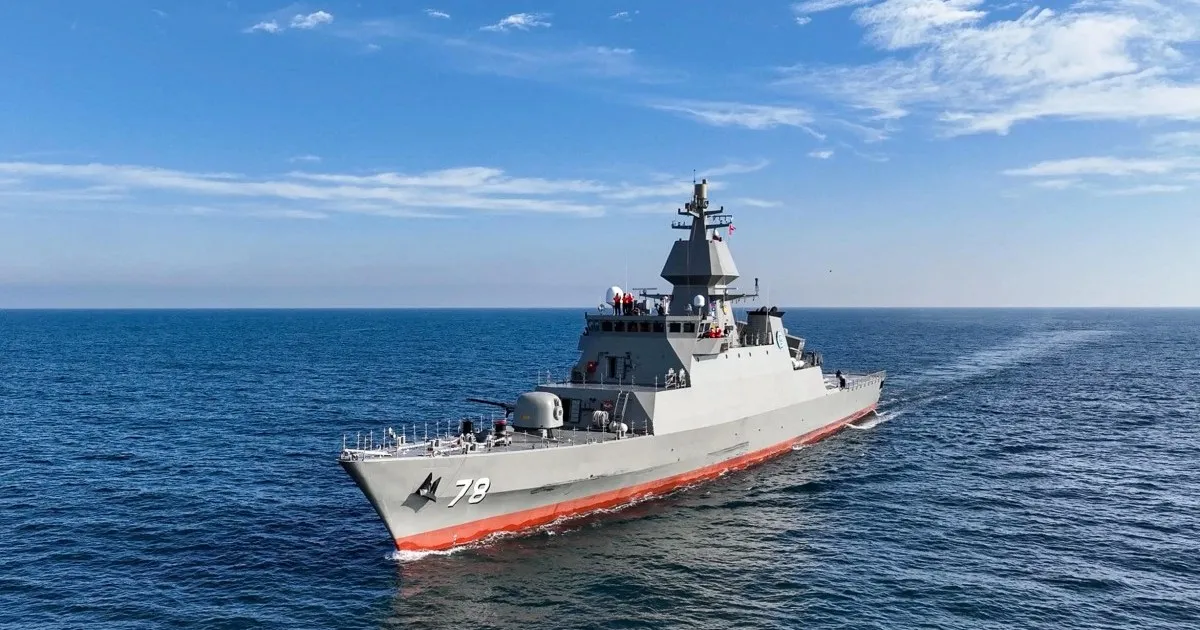
EXPLAINERIran condemns what it calls a ‘hostile and criminal’ Ukrainian attack on a commercial vessel. How will the incident affect the war?An Iranian warship during its inauguration ceremony at the port of Bandar Anzali on the Caspian Sea [File: Iranian Army via AFP]Published On 26 Jul 2026A Ukrainian strike on an Iranian commercial vessel in the Caspian Sea could open a new front in a growing overlap between the wars in Ukraine and the Middle East.Iran said one of its sailors was killed and another wounded after the vessel was attacked on Saturday, prompting Tehran to summon Ukraine’s diplomats and accuse Kyiv of carrying out a “hostile and criminal” act.Recommended Stories list of 4 itemslist 1 of 4Iran accuses Ukraine of deadly attack on Caspian commercial vessellist 2 of 4New front in US-Iran-war" class="entity-link entity-event" data-entity-id="38748" data-entity-type="event">Iran war escalates as Houthis fire at Saudi oil facilitieslist 3 of 4Iran blames US for Hormuz dispute as both sides confirm ongoing talkslist 4 of 4Iran’s government spars with state TV as mediators push talks with USend of listUkrainian President Volodymyr Zelenskyy said long-range strikes targeted vessels carrying military cargo linked to Iran, as well as a Russian warship, as he accused Moscow of helping Iran’s military campaign against the United States.The incident came as tensions remain high despite a pause in the US attacks on Iran after 13 consecutive nights of renewed bombardment. It also raises questions about whether the Caspian Sea, long regarded as one of Iran’s safest maritime routes, could become another arena for confrontation.The timing is particularly sensitive, with Iran already facing pressure along its southern coastline, where the US maintains a naval blockade around the Strait of Hormuz, while Yemen’s Houthi rebels continue to disrupt shipping through the Red Sea.Any threat to trade across the Caspian Sea would further squeeze one of Iran’s remaining strategic maritime corridors. Questions, therefore, surround whether the incident marks the opening of a new military front or simply an attempt to increase economic pressure on Iran.Here’s what we know:Why did Iran summon Ukraine’s diplomats?Iran’s Ministry of Foreign Affairs summoned Ukraine’s charge d’affaires in Tehran after what it described as a “hostile and criminal” attack on an Iranian commercial vessel in the Caspian Sea, according to state news agency IRNA.The ministry said the attack, which it claimed had been acknowledged by Ukraine’s leadership, reflected Kyiv’s continued “irrational and hostile approach” towards Iran and warned that Tehran would defend its national interests.It also described the incident as a violation of Article 2(4) of the United Nations Charter and warned it could further expand the Russia-Ukraine war.Iranian Foreign Minister Abbas Araghchi later discussed the incident with the European Union foreign policy chief, Kaja Kallas.According to Iran’s Foreign Ministry, Araghchi condemned the attack and called for “a firm response” from the UN Security Council, the EU and the wider international community. He also demanded accountability for those responsible, as well as for countries supporting Ukraine – an apparent reference to Europe’s military assistance to Kyiv.Tehran also reiterated that it has never directly intervened in the Russia-Ukraine war.What has Ukraine said?Zelenskyy posted on X that Ukraine had achieved “very strong results” through long-range strikes in the Caspian Sea, targeting “vessels used in military cargo shipments involving Iran, as well as a warship”. He did not identify the Iranian commercial vessel.The Ukrainian president also accused Russia of providing Iran with satellite intelligence to support its military campaign in the Middle East.“Since the beginning of July, we have recorded active Russian satellite surveillance of the Gulf states and US military facilities located there. These images subsequently appear in Iran,” Zelenskyy said.He added that Ukraine had observed “a clear correlation” between Russian satellite imagery and subsequent Iranian attacks, saying the images were used both before strikes “in preparation for them” and afterwards “to assess the damage inflicted”.Zelenskyy said Russian satellites monitored four airbases on July 19 and 20 – two in Bahrain and one each in Jordan and Kuwait – and announced that Ukraine would share the intelligence with its international partners.“Russia must be stopped. This war must be stopped. Pressure on the aggressor must work,” he said.Why are Iran and Ukraine at odds?Relations between Tehran and Kyiv have deteriorated sharply since 2022, when Iran began supplying Russia with Shahed drones.Kyiv says Moscow has since adapted the Iranian-designed drones and launched tens of thousands of them on Ukrainian cities. According to it, Ukrainian forces have shot down more than 44,000 Iranian-designed drones since Russia’s full-scale invasion began in 2022.As Iran’s confrontation with the US intensified, Ukraine has also offered its antidrone technology and expertise to Gulf countries targeted by Iranian missile and drone attacks, deploying specialists to Qatar, Saudi Arabia, the United Arab Emirates and Kuwait.Could the confrontation escalate further?Al Jazeera’s Tohid Asadi, reporting from Tehran, said Iranians are “not really happy with [the Ukrainian attack], while they are also dealing with a US blockade on the southern coast”.He said pressure on Iran’s northern coastline was adding to growing concerns over the country’s maritime trade routes.Iran has not indicated whether it intends to retaliate against Ukraine. However, Iranian commentators have said Kyiv lies within the range of several Iranian missile and drone systems, potentially giving Tehran military options should it decide to respond.The incident also came as regional mediators continue efforts to prevent the US-Israel war on Iran conflict from escalating further.Iranian Foreign Ministry spokesperson Esmaeil Baghaei on Sunday said mediation efforts were under way to prevent further escalation, although he declined to provide details.Axios has reported that Qatar, Egypt, Pakistan and other regional mediators have presented Washington and Tehran with a proposal for a 10-day pause in fighting to allow negotiations over a memorandum of understanding (MoU) agreed last month to resume.Axios also reported that US President Donald Trump was presented with plans for what would have been a 14th consecutive night of air attacks on Iran, but instead opted to give renewed diplomatic efforts more time.There were also no reports of weekend attacks by Iran on neighbours in the Gulf, similar to its daily responses to the US attacks.The pause in fighting has coincided with further mediation efforts.Analysts say the Ukrainian strike in the Caspian Sea could be an attempt to exert more pressure on Tehran to force it to make some concessions.Reporting from Tehran, Al Jazeera’s Resul Serdar Atas said the Ukrainian strike was particularly alarming for Iran because it suggested the conflict could spread to another maritime theatre.“Iran is already experiencing conflict in the southern coastal provinces, as well as the Strait of Hormuz, the Sea of Oman and even the Indian Ocean, which have turned into battlefields,” he said.“So, the Caspian Sea now not being safe for the Iranians, regarding trade, is a huge concern.”Atas said the incident had heightened concerns in Tehran about possible further escalation.While attempts to disrupt other maritime trade routes used by Iran could increase economic pressure on Tehran, attacks on vessels linked to Iran in the Caspian Sea could further complicate the country’s ability to sustain energy exports and military logistics, potentially giving the US greater leverage in any future negotiations.However, Michael Mulroy, a former US deputy assistant secretary of defence for the Middle East, told Al Jazeera that while Iran continues to control the Strait of Hormuz, Washington’s options are becoming increasingly limited and would face difficult choices if the standoff with Iran continued.
SRCAl Jazeera
LANGEN
LEANCenter
WORDS1 220
ENT12
SUN · 2026-07-26 · 10:45 GMTBRIEF NSR-2026-0726-96079
NSR-2026-0726-96079Analysis·EN·Conflict
After Strait of Hormuz and Red Sea, has Iran war now reached Caspian Sea?
Iran has condemned what it calls a "hostile and criminal" Ukrainian attack on a commercial vessel in the Caspian Sea, resulting in one Iranian sailor killed and another wounded. Iran summoned Ukraine's diplomats, accusing Kyiv of a "criminal" act and warning it could expand the Russia-Ukraine war.
Caolán MageeAl JazeeraFiled 2026-07-26 · 10:45 GMTLean · CenterRead · 5 min
Al JazeeraFIG 01
Reading time
5min
Word count
1 220words
Sources cited
3cited
Entities identified
12entities
Quality score
100%
§ 01
Briefing Summary
AI-generatedNEWSAR · AI
Iran has condemned what it calls a "hostile and criminal" Ukrainian attack on a commercial vessel in the Caspian Sea, resulting in one Iranian sailor killed and another wounded. Iran summoned Ukraine's diplomats, accusing Kyiv of a "criminal" act and warning it could expand the Russia-Ukraine war. Ukrainian President Volodymyr Zelenskyy stated that long-range strikes targeted vessels carrying Iranian military cargo and a Russian warship, accusing Russia of providing Iran with satellite intelligence for its Middle East campaign. This incident raises concerns about the Caspian Sea becoming a new front for conflict, adding to existing tensions in the Strait of Hormuz and Red Sea. Relations between Iran and Ukraine have worsened since Iran began supplying drones to Russia.
Confidence 0.90Sources 3Claims 5Entities 12
§ 02
Article analysis
Model · rule-basedFraming
Conflict
Diplomatic
Tone
Sensational
AI-assessed
CalmNeutralAlarmist
Factuality
0.60 / 1.00
Mixed
LowHigh
Sources cited
3
Well sourced
FewMany
§ 03
Key claims
5 extracted01
Iran's Ministry of Foreign Affairs summoned Ukraine’s charge d’affaires in Tehran after what it described as a “hostile and criminal” attack on an Iranian commercial vessel in the Caspian Sea.
factualIran's Ministry of Foreign Affairs
Confidence
0.95
02
Ukrainian President Volodymyr Zelenskyy said long-range strikes targeted vessels carrying military cargo linked to Iran, as well as a Russian warship.
quoteVolodymyr Zelenskyy
Confidence
0.90
03
Iran said one of its sailors was killed and another wounded after the vessel was attacked on Saturday.
factualIran
Confidence
0.90
04
Any threat to trade across the Caspian Sea would further squeeze one of Iran’s remaining strategic maritime corridors.
factual
Confidence
0.85
05
A Ukrainian strike on an Iranian commercial vessel in the Caspian Sea could open a new front in a growing overlap between the wars in Ukraine and the Middle East.
prediction
Confidence
0.70
§ 04
Full report
5 min read · 1 220 words§ 05
Entities
12 identifiedKey playerOppositionContextPositiveNeutralNegative
Organizations1
Locations8
§ 06
Keywords & salience
10 termscaspian sea
1.00
iran-ukraine conflict
0.90
strait of hormuz
0.80
red sea
0.70
military confrontation
0.70
commercial vessel attack
0.60
economic pressure
0.50
maritime routes
0.50
naval blockade
0.40
military cargo
0.40
§ 07
Topic connections
Interactive graph Network visualization showing 51 related topics
View Full Graph Person Organization Location Event|Click node to navigate|Edge numbers = shared articles