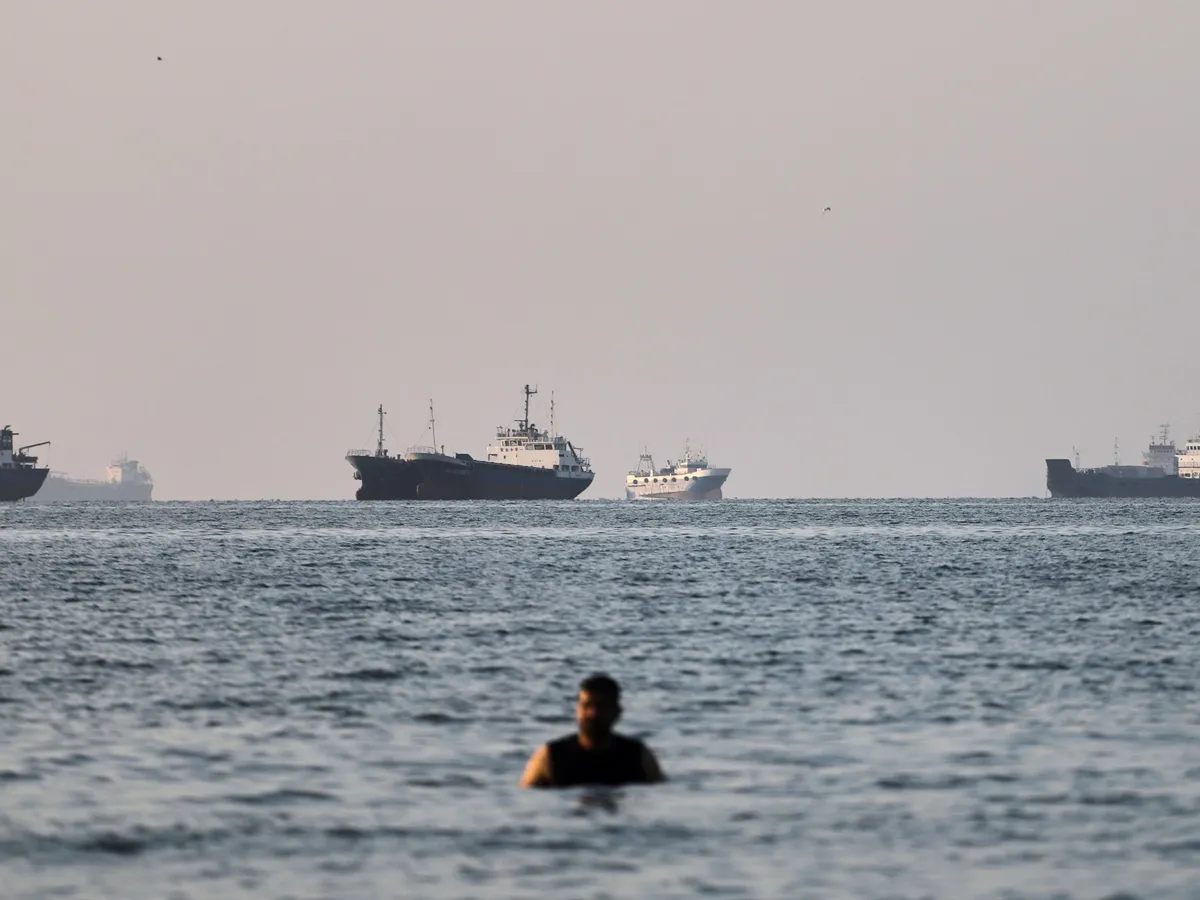
Mediation efforts continue but uncertainty remains as risks of further disruptions in international waterways grow.Published On 26 Jul 2026Tehran, Iran – Iran and the United States have returned to mediated talks, and their military action is temporarily suspended, but the war continues to impact international maritime corridors beyond the Strait of Hormuz as well as domestic markets.The near-total closure of the strategic waterway, disruptions in the Red Sea by the Iran-aligned Houthis in Yemen and Ukraine attacking an Iranian vessel in the Caspian Sea have all kept tensions high.Recommended Stories list of 4 itemslist 1 of 4Iran accuses Ukraine of deadly attack on Caspian commercial vessellist 2 of 4After Strait of Hormuz and Red Sea, has Iran war now reached Caspian Sea?list 3 of 4Iran’s government spars with state TV as mediators push talks with USlist 4 of 4Iran’s army issues warning ahead of Netanyahu’s US visitend of listIran’s government is also facing more tough choices, including a potential fuel price hike amid high social and economic discontent, as the US military enforces a naval blockade of the country’s southern ports for a second time.The Ministry of Petroleum said on Saturday that Iran has sold $11.5bn of crude oil during the war without specifying the exact dates and $6.5bn during the period of the now-suspended memorandum of understanding (MoU) signed with the US last month. It said the combined figure represented 60 percent of the full-year oil revenue target in the budget.The signing of the June 17 MoU led to the partial reopening of the Strait of Hormuz and lifting of the US naval blockade on Iran, which eased some of the pressure on global oil markets and allowed Iran to export oil stored on supertankers waiting to sail from its territorial waters. Iran’s Petroleum Ministry said increased oil prices generated about $3bn in additional value in the first half of the year and $11bn from the yields has so far been transferred to government coffers despite US embargoes.During the previous blockade that was imposed on April 13 and lasted a little over two months, Iranian authorities attested to near-zero crude exports. A prolonged second blockade risks further reducing Iran’s export revenues and piling pressure on Kharg Island, through which about 90 percent of Iran’s crude oil exports pass, and other Iranian storage and export sites, which could in turn affect production at petrochemical plants and make an eventual restart costlier and slower.The US military’s Central Command (CENTCOM) said that as of Saturday, soldiers had redirected 12 commercial vessels trying to run the blockade that has been in place since mid-July, disabled two that did not comply and boarded two “to ensure total compliance”.The US military also showed footage of heavily armed soldiers rappelling down from a helicopter onto the deck of the Charminar, an Iran-linked oil tanker subject to US sanctions since last year for allegedly being part of the Shamkhani network. The US says Iranian oil magnate Mohammad Hossein Shamkhani plays a central role in Iranian and Russian shadow fleet operations.Iran has also said it has been redirecting multiple ships each day to keep the strait closed as its armed forces emphasised that they will not bow to pressure. On Sunday, Iranian media reports said a vessel blew up after hitting a naval mine in the Strait of Hormuz.Still, CENTCOM has stopped extensive bombing strikes against Iran for two nights with US Ambassador to the United Nations Mike Waltz saying President Donald Trump is giving talks with Tehran “some space”.Iran has also stopped retaliatory attacks across the region while Ministry of Foreign Affairs spokesman Esmaeil Baghaei said discussions with Oman on reopening the Strait of Hormuz have been productive.A woman and girl cross a street in central Tehran on July 22, 2026 [Vahid Salemi/AP Photo]The domestic pictureThe oil export constraints, however, are still adding to Iran’s existing economic woes, which are linked to domestic structural issues and mismanagement as well as years of harsh sanctions.Iran’s infrastructure has also suffered significant damage during the war launched by the US and Israel in late February and may fare worse if the conflict escalates.The government said last month that about 230 million cubic metres (300 million cubic yards) per day of Iran’s pre-war natural gas output of roughly 650 million cubic metres (850 million cubic yards) was lost due to US and Israeli bombing, worsening electricity and petrochemical shortages.Sekhavat Asadi, managing director of the Pars Special Economic Energy Zone, said on Sunday that Iran expects to restore more than 100 million cubic metres (130 million cubic yards) per day of that lost production capacity within the coming months.Authorities are also managing a fuel imbalance as the country faces a deficit of more than 20 million litres (5.3 million gallons) per day of petrol. The shortage is managed through limited but costly imports, blending fuel components, tapping inventories stocked before the war and repeatedly asking citizens to consume less.The Petroleum Ministry said tighter monthly fuel consumption caps may be imposed if the imbalance persists.The government said this week that it is seriously considering doubling the price of a third tier of monthly petrol quotas allocated to individuals.Another petrol price hike was made in December, weeks before the country was swept by a wave of nationwide protests, in which thousands of people were killed in a government crackdown in January. An overnight fuel price increase in November 2019 also triggered deadly nationwide protests.The capital, Tehran, and cities across the country are facing rolling electricity cuts, which also create water and communications disruptions. President Masoud Pezeshkian said he has ordered industries not to be cut off until late September to avoid further inflaming a bruised jobs market.The closure of the Strait of Hormuz has also hit Iran’s commerce with China, its largest trading partner and buyer of oil, which has considerably curtailed its overall crude oil imports to adapt to conditions created by the war.But nonoil trade with China has also deteriorated since the start of the war, falling by 75 percent in March and June when compared with a year before, according to Chinese customs data.Two near-total internet shutdowns imposed by the authorities, first during the January protests and then during the war, only worsened conditions for Iran’s economy this year as it battles chronic inflation and a rapid dwindling of public purchasing power.A report last year by the Saba Pension Strategies Institute, a think tank affiliated with Iran’s state-run pension fund, found that while a little more than 30 percent of Iranians lived below the poverty line five years ago, that rate was projected to have reached 45 percent this year – and was still rising.Spread to Bab al-Mandeb, Caspian SeaAfter repeated Iranian threats that escalating the war could spread the scope of maritime disruptions to the Red Sea, the Houthis in Yemen last week declared a blockade against Saudi Arabia, turning back or hitting vessels transiting near the strait of Bab al-Mandeb while also bombing Saudi oil facilities.Dozens of commodity vessels have still continued their transit through the strait, including Chinese supertankers, but war-risk premiums have increased, raising import and insurance costs for all.Saudi authorities, who lead a coalition backing Yemen’s internationally recognised government against the Houthis, have responded by launching major air attacks across Yemen.
SRCAl Jazeera
LANGEN
LEANCenter
WORDS1 205
ENT12
SUN · 2026-07-26 · 19:31 GMTBRIEF NSR-2026-0726-96190
NSR-2026-0726-96190News Report·EN·Economic Impact
What lies ahead for Iran’s economy as scope of US war grows beyond Hormuz?
Despite ongoing mediation efforts and a temporary suspension of military actions, Iran's economy faces continued strain due to disruptions in international waterways and domestic challenges. The Strait of Hormuz remains partially closed, with Houthi actions in the Red Sea and a Caspian Sea incident adding to tensions.
Maziar MotamediAl JazeeraFiled 2026-07-26 · 19:31 GMTLean · CenterRead · 5 min
Al JazeeraFIG 01
Reading time
5min
Word count
1 205words
Sources cited
2cited
Entities identified
12entities
Quality score
100%
§ 01
Briefing Summary
AI-generatedNEWSAR · AI
Despite ongoing mediation efforts and a temporary suspension of military actions, Iran's economy faces continued strain due to disruptions in international waterways and domestic challenges. The Strait of Hormuz remains partially closed, with Houthi actions in the Red Sea and a Caspian Sea incident adding to tensions. The US military has reimposed a naval blockade on Iran's southern ports, impacting oil exports. While Iran reported significant crude oil sales during the conflict, a prolonged blockade risks further revenue loss and production disruptions. Domestically, Iran grapples with infrastructure damage, natural gas production losses, and a fuel deficit, exacerbated by years of sanctions and mismanagement.
Confidence 0.90Sources 2Claims 5Entities 12
§ 02
Article analysis
Model · rule-basedFraming
Economic Impact
Conflict
Tone
Measured
AI-assessed
CalmNeutralAlarmist
Factuality
0.70 / 1.00
Factual
LowHigh
Sources cited
2
Limited
FewMany
§ 03
Key claims
5 extracted01
The US military's Central Command (CENTCOM) said that as of Saturday, soldiers had redirected 12 commercial vessels trying to run the blockade that has been in place since mid-July, disabled two that did not comply and boarded two “to ensure total compliance”.
statisticCENTCOM
Confidence
0.90
02
Iran has sold $11.5bn of crude oil during the war without specifying the exact dates and $6.5bn during the period of the now-suspended memorandum of understanding (MoU) signed with the US last month.
statisticMinistry of Petroleum
Confidence
0.90
03
Iran and the United States have returned to mediated talks, and their military action is temporarily suspended, but the war continues to impact international maritime corridors beyond the Strait of Hormuz as well as domestic markets.
factual
Confidence
0.90
04
The near-total closure of the strategic waterway, disruptions in the Red Sea by the Iran-aligned Houthis in Yemen and Ukraine attacking an Iranian vessel in the Caspian Sea have all kept tensions high.
factual
Confidence
0.80
05
A prolonged second blockade risks further reducing Iran’s export revenues and piling pressure on Kharg Island, through which about 90 percent of Iran’s crude oil exports pass.
prediction
Confidence
0.70
§ 04
Full report
5 min read · 1 205 words§ 05
Entities
12 identifiedKey playerOppositionContextPositiveNeutralNegative
Organizations4
§ 06
Keywords & salience
10 termsiran economy
1.00
us war
0.90
strait of hormuz
0.80
maritime corridors
0.70
naval blockade
0.70
oil revenue
0.60
mediated talks
0.50
red sea disruptions
0.40
caspian sea
0.40
fuel price hike
0.40
§ 07
Topic connections
Interactive graph Network visualization showing 51 related topics
View Full Graph Person Organization Location Event|Click node to navigate|Edge numbers = shared articles