Punishment could range from a fine to up to seven years in prison if the fallout of the misinformation is serious enough.On 23 July, China's Cyberspace Administration also announced a nationwide crackdown on fake internet content related to floods and other disasters, ordering its local branches to focus on catching out fabricated data, malicious editing, staged scenes, misattributed historical events and those impersonating officials. In addition, it called on social media platforms to strengthen the review of the content they are publishing.Prof Gao believes "the answer is public education combined with law enforcement", saying that there was a "need to publicise real cases where people have been punished."He added that "the harm caused by AI-generated fake content is ultimately the result of how people choose to use the technology - not the technology itself", adding that existing laws were sufficient to deal with it.However, others are not so confident. Professor Chen pointed out that "AI technology continues to evolve much faster than legal frameworks. As new legal questions emerge, AI misinformation remains a considerable challenge."Shanghai and Washington based lawyer Peter Pang says lawyers around the world are seeing an explosion in the number of cases dealing with these issues.He believes that the companies that create AI apps and the platforms used to publish fake videos and other material must be held legally accountable along with the people who create misinformation."The first line would be the platforms, because they're the ones that are the enablers. They're the ones that allow this to go out," he told the BBC.
SRCBBC News - World
LANGEN
LEANCenter
WORDS257
ENT12
MON · 2026-07-27 · 22:07 GMTBRIEF NSR-2026-0728-96585
NSR-2026-0728-96585News Report·EN·Legal & Judicial
China's new challenge as natural disasters strike - fake AI videos
China is facing a new challenge as fake AI-generated videos of natural disasters, such as storms and flooding, have proliferated on social media. In response, China's Cyberspace Administration announced a nationwide crackdown on such fabricated content, targeting manipulated data, staged scenes, and impersonations.
2 hours agoShareSaveAdd as preferred on GoogleStephen McDonellChina correspondentBBC News - WorldFiled 2026-07-27 · 22:07 GMTLean · CenterRead · 2 min
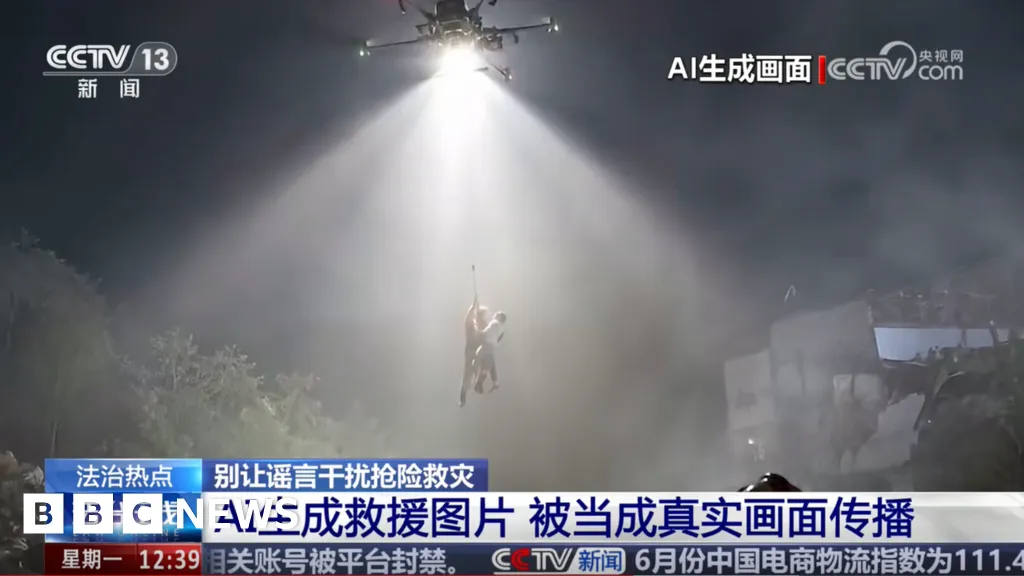
BBC News - WorldFIG 01
Reading time
2min
Word count
257words
Sources cited
3cited
Entities identified
12entities
Quality score
100%
§ 01
Briefing Summary
AI-generatedNEWSAR · AI
China is facing a new challenge as fake AI-generated videos of natural disasters, such as storms and flooding, have proliferated on social media. In response, China's Cyberspace Administration announced a nationwide crackdown on such fabricated content, targeting manipulated data, staged scenes, and impersonations. The government is ordering social media platforms to enhance content review, and penalties for serious misinformation could include fines or imprisonment. Experts suggest a combination of public education and law enforcement is needed, with some believing existing laws are sufficient. However, others express concern that AI technology's rapid evolution outpaces legal frameworks, and legal professionals worldwide are seeing an increase in related cases. There are calls to hold AI app creators and publishing platforms legally accountable alongside misinformation creators.
Confidence 0.90Sources 3Claims 5Entities 12
§ 02
Article analysis
Model · rule-basedFraming
Legal & Judicial
Technology
Tone
Measured
AI-assessed
CalmNeutralAlarmist
Factuality
0.60 / 1.00
Mixed
LowHigh
Sources cited
3
Well sourced
FewMany
§ 03
Key claims
5 extracted01
Existing laws are sufficient to deal with AI-generated fake content, with public education and law enforcement being key.
quoteProf Gao
Confidence
1.00
02
Companies creating AI apps and platforms publishing fake material should be held legally accountable.
quotePeter Pang
Confidence
1.00
03
AI technology is evolving faster than legal frameworks, posing a considerable challenge for AI misinformation.
quoteProfessor Chen
Confidence
1.00
04
Punishment for serious misinformation fallout can range from a fine to up to seven years in prison.
factual
Confidence
1.00
05
China is cracking down on fake internet content related to disasters, including fabricated data and staged scenes.
factualChina's Cyberspace Administration
Confidence
1.00
§ 04
Full report
2 min read · 257 words§ 05
Entities
12 identifiedKey playerOppositionContextPositiveNeutralNegative
§ 06
Keywords & salience
9 termsai-generated fake content
1.00
misinformation
0.90
natural disasters
0.80
law enforcement
0.70
legal accountability
0.60
public education
0.60
social media platforms
0.50
cyberspace administration
0.40
ai technology
0.40
§ 07
Topic connections
Interactive graph Network visualization showing 51 related topics
View Full Graph Person Organization Location Event|Click node to navigate|Edge numbers = shared articles