Spain PM to visit Ceuta after 34 migrants die breaching border from MoroccoRegional leader says 60,000 crossed into Ceuta by land and sea as EU chief calls situation ‘unacceptable’.Migrants try to cross the border fence by swimming from the Moroccan side into the Spanish enclave of Ceuta [Fabian Bimmer/Reuters]Published On 31 Jul 2026At least 34 migrants trying to reach the Spanish territory of Ceuta have died after breaching the border from Morocco, as tens of thousands of people entered the enclave in the past 24 hours.Juan Jesus Vivas, the regional president of the North African Spanish enclave, confirmed the death toll to reporters on Friday, without giving details about how the victims died.Recommended Stories list of 4 itemslist 1 of 4Spanish police accuse tractor driver of sparking wildfire as blazes spreadlist 2 of 4Can the UN’s Refugee Convention survive?list 3 of 4At least 18 die as thousands cross from Morocco into enclave of Ceutalist 4 of 4Trump says Morocco named Tiznit-Dakhla highway after him: Why it mattersend of listHe said around 60,000 people had crossed from Morocco into Ceuta by land and sea, many by swimming around a border barrier stretching into the water.Spanish Prime Minister Pedro Sanchez said his government was mobilising all available resources in response to the situation. He is expected to join Interior Minister Fernando Grande-Marlaska in a visit to Ceuta on Friday.Sanchez called the crossings a “violation” of Spanish territorial sovereignty, saying on Friday that authorities were speeding up the repatriation of this week’s arrivals. Spain has also asked Morocco to step up efforts, he added.Rachid Sbihi, who leads a local workers’ association representing Civil Guard officers in Ceuta, called the situation a “serious humanitarian crisis”, saying thousands of migrants, including unaccompanied children, were sleeping on sidewalks, while others roamed the streets aimlessly.Among those who died, many drowned, Sbihi told The Associated Press news agency, but some were also killed in a stampede to cross the breakwater fence at Tarajal beach, an urban beach near a border checkpoint with Morocco.At the gates into Ceuta, Moroccan authorities had deployed water cannon trucks and pushed people back. The charred remains of a bus and seven cars could be seen nearby from clashes with the crowds.Video footage on Thursday showed hoards of people, mainly Moroccans, walking around the breakwaters onto local roads. Most appeared to be young men, but there were also families with women and small children.Ceuta, together with Melilla – another autonomous Spanish city in North Africa – represents the European Union’s only land border with Africa. Both cities often experience surges in attempted crossings by people seeking to migrate to Europe.To reach Ceuta on the northern African coast, migrants often swim from the Moroccan town of Fnideq, covering about 5km (3 miles) to reach Spanish territory. Others attempt the crossing from the nearby town of Belyounech, where the distance is shorter.‘Dangerous crossings must stop’Ceuta authorities have linked the surge in attempted crossings to a Spanish Supreme Court ruling earlier this month that barred authorities from immediately returning migrants who arrive by sea without due process. The ruling does not apply to migrants who enter Spain by land, including by climbing over the border fence.Sanchez said on Friday that the influx of migrants was caused by mafias spreading rumours about the court ruling. “What has emerged from our talks with Moroccan authorities is that trafficking mafias took a self-serving interpretation of a Supreme Court ruling,” he said. That interpretation “spread like wildfire in recent hours.”But some activists in Morocco expressed doubt that the ruling was behind the surge, arguing most migrants would have been unaware of such legal decisions.European Union chief Ursula von der Leyen on Friday described the images from Ceuta as “unacceptable”.“We cannot allow anyone to come to our [European] Union without abiding by our rules,” she said on social media. “Dangerous crossings must stop immediately. Smuggling networks must be dismantled. And [migrant] returns must be swift, as our rules allow.”German Chancellor Friedrich Merz meanwhile said he welcomed Spain’s intention not to allow illegal migrants onto the European mainland, adding that his government was in contact with Spain’s.France is also in touch with Spanish and Moroccan authorities, French President Emmanuel Macron’s entourage said, and Paris stands ready to help out Spain if necessary including via the European border and coast guards agency, Frontex.Earlier, French Interior Minister Laurent Nunez said France will tighten its borders with Spain after the recent developments.He had “given instructions to immediately step up controls at the Spanish border” on Thursday night, he said on X, and also announced the activation of the rapid intervention border force “for in-depth inspections”.The border crisis has already had ripple effects in Italy, another key destination for migrants. Premier Giorgia Meloni threatened to suspend Italy’s open-border Schengen agreement with Spain “to defend our borders and ensure the safety of our citizens”, though Italy does not share a border with Spain.Juan Jesus Vivas, the head of Ceuta’s regional government, had called for the national government to declare an emergency on grounds of national security, asking for more police and for the army to be deployed on the border “to guarantee the inviolability of the frontier and citizen safety”.Spain’s Ministry of Interior rejected calls to declare a national emergency, saying such a measure does not cover migration crises, but promised additional resources.
SRCAl Jazeera
LANGEN
LEANCenter
WORDS885
ENT12
FRI · 2026-07-31 · 10:40 GMTBRIEF NSR-2026-0731-97852
NSR-2026-0731-97852News Report·EN·Human Interest
Spain PM to visit Ceuta after 19 migrants die breaching border from Morocco
At least 34 migrants died attempting to cross from Morocco into the Spanish enclave of Ceuta, with an estimated 60,000 people entering the territory by land and sea. Spanish Prime Minister Pedro Sanchez called the influx a "violation" of sovereignty and announced a visit to Ceuta, vowing to speed up repatriations and asking Morocco to increase efforts.
By AFP, AP and ReutersAl JazeeraFiled 2026-07-31 · 10:40 GMTLean · CenterRead · 4 min
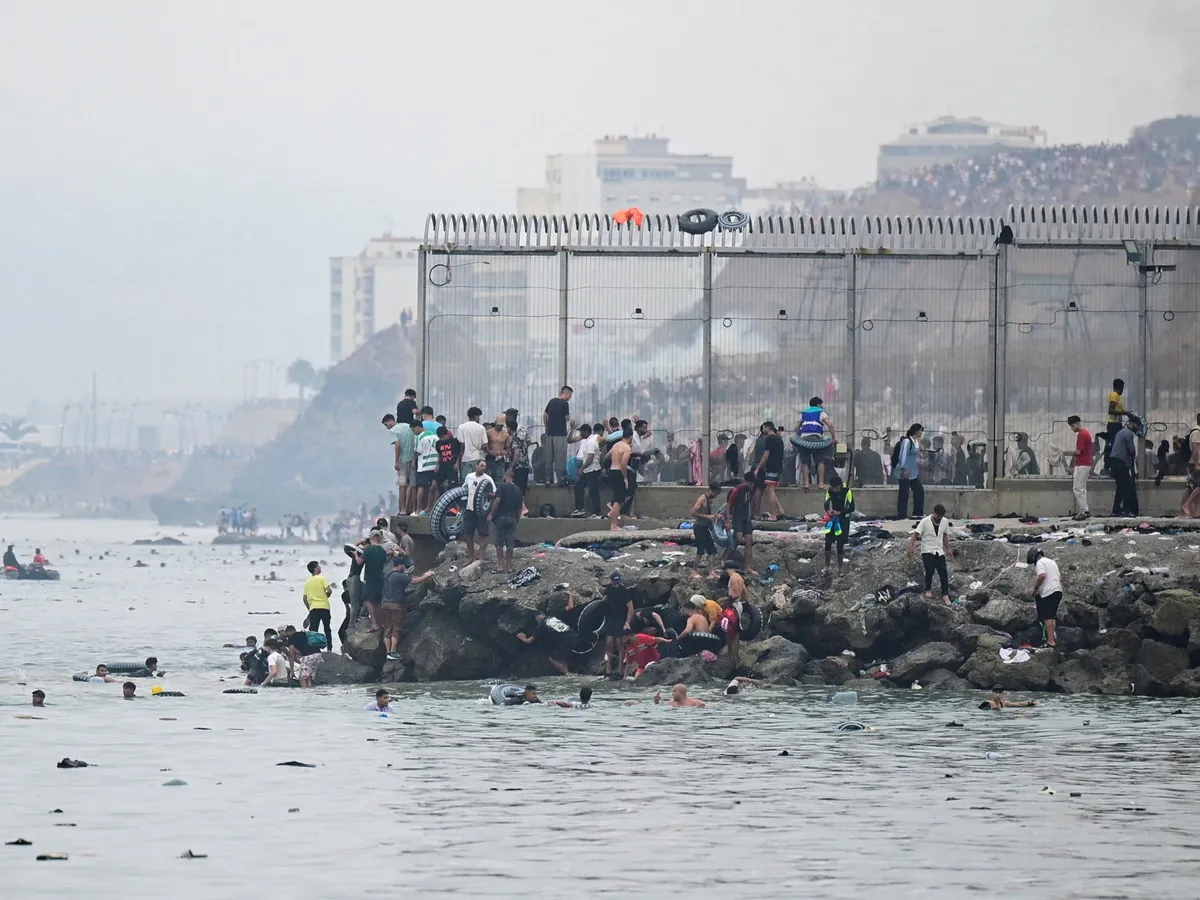
Al JazeeraFIG 01
Reading time
4min
Word count
885words
Sources cited
3cited
Entities identified
12entities
Quality score
100%
§ 01
Briefing Summary
AI-generatedNEWSAR · AI
At least 34 migrants died attempting to cross from Morocco into the Spanish enclave of Ceuta, with an estimated 60,000 people entering the territory by land and sea. Spanish Prime Minister Pedro Sanchez called the influx a "violation" of sovereignty and announced a visit to Ceuta, vowing to speed up repatriations and asking Morocco to increase efforts. The situation has been described as a "serious humanitarian crisis" with thousands of migrants, including unaccompanied children, present. EU chief Ursula von der Leyen deemed the images "unacceptable" and called for an end to dangerous crossings and swift returns. France announced it would tighten its borders with Spain and offered assistance.
Confidence 0.90Sources 3Claims 5Entities 12
§ 02
Article analysis
Model · rule-basedFraming
Human Interest
Diplomatic
Tone
Mixed Tone
AI-assessed
CalmNeutralAlarmist
Factuality
0.80 / 1.00
Factual
LowHigh
Sources cited
3
Well sourced
FewMany
§ 03
Key claims
5 extracted01
Spanish Prime Minister Pedro Sanchez called the crossings a 'violation' of Spanish territorial sovereignty.
quotePedro Sanchez
Confidence
1.00
02
Around 60,000 people have crossed from Morocco into Ceuta by land and sea in the past 24 hours.
statisticJuan Jesus Vivas
Confidence
1.00
03
At least 34 migrants died attempting to reach the Spanish territory of Ceuta after breaching the border from Morocco.
statisticJuan Jesus Vivas
Confidence
1.00
04
Moroccan authorities deployed water cannon trucks and pushed people back at the gates into Ceuta.
factual
Confidence
0.90
05
Thousands of migrants, including unaccompanied children, were sleeping on sidewalks or roaming streets aimlessly in Ceuta.
factualRachid Sbihi
Confidence
0.90
§ 04
Full report
4 min read · 885 words§ 05
Entities
12 identifiedKey playerOppositionContextPositiveNeutralNegative
People4
§ 06
Keywords & salience
9 termsmigrant crisis
1.00
ceuta border
0.90
humanitarian crisis
0.80
spain morocco relations
0.70
border breach
0.60
territorial sovereignty
0.50
unaccompanied children
0.50
pedro sanchez
0.40
drowning deaths
0.40
§ 07
Topic connections
Interactive graph Network visualization showing 51 related topics
View Full Graph Person Organization Location Event|Click node to navigate|Edge numbers = shared articles