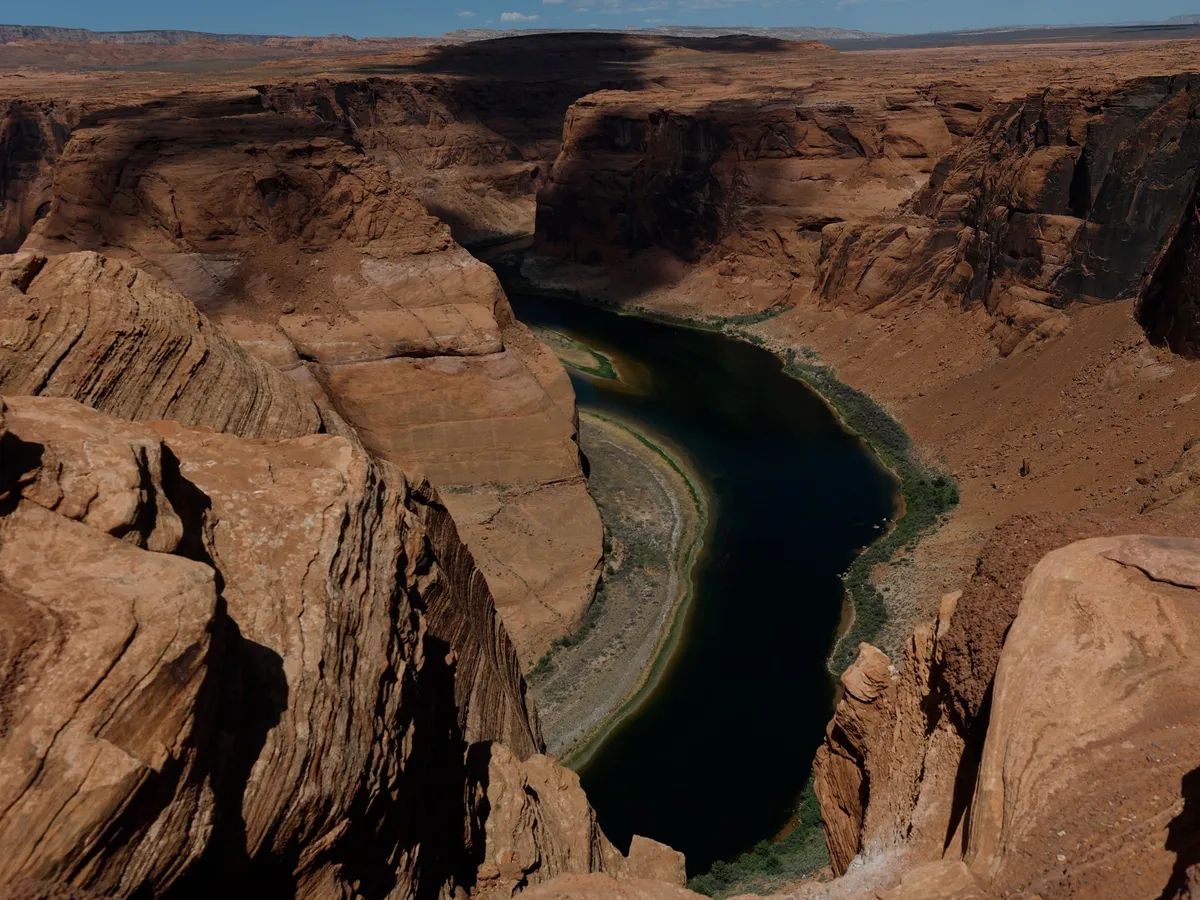
The proposal comes as the river faces a historic water shortage, with reservoirs dropping to levels not seen since 1957.The Colorado River is a major source of water for large swaths of the US, as well as Mexico [File: Justin Sullivan/Getty Images/AFP]Published On 31 Jul 2026Three western states in the United States would take less water from the Colorado River under a federal proposal to stave off a crisis in the beleaguered waterway.On Friday, the US Bureau of Reclamation issued a proposal that would spare four other states from facing mandatory cuts for now.Recommended Stories list of 3 itemslist 1 of 3California water wars: A century of wrangling over Los Angeles’s waterlist 2 of 3Satellite images show 10 places where water is disappearing globallylist 3 of 3With water cuts looming in Arizona in US, locals fight data centresend of listIt is meant to be flexible, allowing deeper cuts in drier times while giving the states more time to collectively agree on how to manage the dwindling resource that flows through dams to produce hydropower.The Lower Basin states of Arizona, California and Nevada could together be forced to reduce their use by up to 3 million acre-feet (130 billion cubic feet) annually through 2036 — about the amount that Arizona and Nevada receive and enough to serve more than 25 million people a year.The actual reductions would be determined every two years based on conditions throughout the basin.“The Department has a responsibility to ensure the Colorado River system remains reliable and resilient for the millions of Americans, communities and industries that depend on it,” US Interior Secretary Doug Burgum said in a statement.Under the proposal, California, Nevada and Arizona would divide half the cuts based on a plan they already developed. Beyond that, priority water rights come into play.Arizona and Nevada have faced mandatory reductions before, but the proposal outlines deeper cuts that could impact agriculture, cities and tribes. It could translate into higher water prices, more reliance on groundwater and leaving fields unplanted, experts say.The proposal comes after years of deadlocked negotiations among the states and threats of lawsuits if a proposal did not comply with longstanding laws and guidelines that govern the river, some of which expire at the end of 2026.A record-low snowpack also left the Colorado River’s two key reservoirs at their lowest combined level since 1957. The federal government released its final environmental review on Friday, with binding operating guidelines expected by October 1.Why is the plan coming now?More than 40 million people in seven US states, several tribal nations and Mexico rely on the flows of the 2,334-kilometre (1,450-mile) river.Decades of overuse, along with rising temperatures, drought and climate change, mean it no longer provides what was promised in 1922.The river’s health often is determined by how much water is in Lake Mead and Lake Powell, the two largest human-made reservoirs in the US.Together, the reservoirs are at their lowest point since they began filling, according to a recent paper by Colorado River experts, and they are approaching levels where they could no longer produce hydropower.How the water is allocated and conserved — especially amid a decades-long drought — has led to contentious arguments among the states, including threats of lawsuits. Both basins drew up proposals but didn’t decide together on a single plan.Because the states didn’t reach an agreement, the federal government stepped in with its own proposal to buoy the river.What are the reactions from stakeholders?Leaders in Arizona, which has the lowest priority rights in the Lower Basin, called the federal proposal flawed. California officials said it’s an important milestone but not the finish line. Nevada’s governor called the proposed reductions unrealistic and devastating.The Lower Basin states have been united in wanting all seven states to share in specific, measurable cuts. The Upper Basin states of Colorado, New Mexico, Utah and Wyoming, meanwhile, repeatedly pushed back, saying such cuts would be illegal and that states have long lived with what the river provides.While the federal proposal mandates cuts in the Lower Basin, the Upper Basin states can proceed with voluntary water cuts primarily among agricultural users.The four Upper Basin state governors gave the document a favourable initial assessment but said they were still reviewing it.“We are encouraged that new operating guidelines will better reflect existing water supply which must underpin any practicable plan going forward,” the governors said in a joint statement.The Arizona Department of Water Resources said enacting 3 million acre-feet of cuts in the Lower Basin would devastate its water users and economy. The Central Arizona Project, which manages much of the state’s allocation used primarily in metro Phoenix and Tucson, said the proposal doesn’t accurately portray Arizona’s rights.What impact could the plan have?Exactly how the cuts trickle down to each state is largely up to the states themselves, though the federal government is expected to offer suggestions in the coming days.Arizona Department of Water Resources director Tom Buschatzke said it will be painful. Farmers in Southern California and Yuma, Arizona, produce the majority of North America’s leafy greens in the winter.“Those are a lot of potential devastating impacts — and a lot of uncertainties for all of us,” Buschatzke said.Cities in metro Phoenix don’t rely entirely on the Colorado River and likely will keep everyone’s taps running, but water rates will increase in some areas, said Rhett Larson, a water law professor at Arizona State University.The city of Gilbert, for example, has increased residential water rates by 50 percent since April 2025, he said.“We are not running out of water. We’re running out of cheap water,” Larson said.Meanwhile, cities across the Colorado River basin are constantly on the hunt for new sources of water, like tapping groundwater, treating wastewater and desalinating water, all of which are more expensive than deliveries from the Colorado River.
SRCAl Jazeera
LANGEN
LEANCenter
WORDS964
ENT12
FRI · 2026-07-31 · 23:26 GMTBRIEF NSR-2026-0801-98004
NSR-2026-0801-98004News Report·EN·Environmental
US proposes cuts to Colorado River use for Arizona, California and Nevada
The US Bureau of Reclamation has proposed significant water use reductions for Arizona, California, and Nevada from the Colorado River to address a historic shortage. This proposal, issued on July 31, 2026, aims to prevent a crisis by potentially cutting annual use by up to 3 million acre-feet through 2036, impacting agriculture, cities, and tribes.
Al JazeeraFiled 2026-07-31 · 23:26 GMTLean · CenterRead · 4 min
Al JazeeraFIG 01
Reading time
4min
Word count
964words
Sources cited
2cited
Entities identified
12entities
Quality score
100%
§ 01
Briefing Summary
AI-generatedNEWSAR · AI
The US Bureau of Reclamation has proposed significant water use reductions for Arizona, California, and Nevada from the Colorado River to address a historic shortage. This proposal, issued on July 31, 2026, aims to prevent a crisis by potentially cutting annual use by up to 3 million acre-feet through 2036, impacting agriculture, cities, and tribes. The actual reductions will be determined every two years based on river conditions. This federal intervention comes after years of stalled negotiations among the seven basin states. While the proposal spares four other states from immediate mandatory cuts, it has drawn criticism from Arizona, California, and Nevada officials who deem the reductions unrealistic or flawed. The Colorado River's reservoirs are at their lowest levels since 1957, threatening hydropower production and water supply for over 40 million people.
Confidence 0.90Sources 2Claims 5Entities 12
§ 02
Article analysis
Model · rule-basedFraming
Environmental
Economic Impact
Tone
Measured
AI-assessed
CalmNeutralAlarmist
Factuality
0.80 / 1.00
Factual
LowHigh
Sources cited
2
Limited
FewMany
§ 03
Key claims
5 extracted01
Decades of overuse, rising temperatures, drought, and climate change mean the river no longer provides what was promised in 1922.
factual
Confidence
1.00
02
More than 40 million people in seven US states, tribal nations, and Mexico rely on the river.
statistic
Confidence
1.00
03
Lower Basin states could be forced to reduce their use by up to 3 million acre-feet annually through 2026-2036.
statistic
Confidence
1.00
04
The Colorado River faces a historic water shortage, with reservoirs dropping to levels not seen since 1957.
factual
Confidence
1.00
05
US proposes cuts to Colorado River use for Arizona, California and Nevada due to historic water shortage.
factual
Confidence
1.00
§ 04
Full report
4 min read · 964 words§ 05
Entities
12 identifiedKey playerOppositionContextPositiveNeutralNegative
Organizations1
Locations6
§ 06
Keywords & salience
10 termscolorado river
1.00
water shortage
0.90
water use cuts
0.80
us bureau of reclamation
0.70
nevada
0.60
arizona
0.60
california
0.60
water rights
0.50
hydropower
0.50
reservoirs
0.40
§ 07
Topic connections
Interactive graph Network visualization showing 21 related topics
View Full Graph Person Organization Location Event|Click node to navigate|Edge numbers = shared articles