The lack of international action after the atrocities in el-Geneina and el-Fasher has doomed el-Obeid.Published On 3 Aug 2026People pray for the victims of a drone strike in El Obeid, North Kordofan State on January 12, 2026 [El Tayeb Siddig/Reuters]Last month, United Nations High Commissioner for Human Rights Volker Turk declared a “red alert” for el-Obeid. The city is a commercial capital and logistics hub in central Sudan that is now on the front line of a 40-month war between the country’s army and the rapacious Rapid Support Forces (RSF) militia. The city’s residents are likely to be the latest victims in a conflict that has displaced more than 14 million and left over half of the country’s 50 million people reliant on international assistance.In June, the RSF hit el-Obeid with 27 drone attacks, the highest monthly total since the start of the conflict. Most targeted fuel depots, water pumps and the electrical grid, making life for the city’s 500,000 residents unbearable.Many routes out of the city have been blocked by the RSF as well. As seasonal rains make roads unpassable, life in the city and escape from it could become impossible. Sensing this, Sudan’s army won back control over the Sadarat highway, linking el-Obeid to the capital Khartoum and creating a reprieve in the RSF’s assault.The city is facing a scenario that has played out before – one in which the United States and other global powers have repeatedly failed to act.Last year, the RSF laid siege to the North Darfur city of el-Fasher. More than 6,000 civilians were killed in a matter of days while countless more were tortured, raped, enslaved or forcibly disappeared, according to a UN investigation. The report of the investigation, which was released last month, declared that the RSF’s crimes constituted genocide. No serious action was taken in the aftermath of the atrocities.In the opening months of the conflict, as the RSF expanded its control over the Darfur region, civilians in the West Darfur city of el-Geneina suffered what the UN termed genocide when the paramilitary group blocked humanitarian aid from entering the city and prevented civilians from fleeing. In January 2025, then US Secretary of State Antony Blinken also declared these atrocities genocide. At the time, it was hoped that this label would spark an international response to end the violence before it spiralled out of control.But history shows how misplaced that hope was. In an eerily reminiscent scenario in 1994, the US acknowledged “acts of genocide” were happening in Rwanda but took no serious action. Then-US Secretary of State Warren Christopher fumbled a response to a journalist’s question, asking, “How many acts of genocide make up a whole genocide?”The widely held legal view at the end of the Cold War was that declaring violence a genocide required an international response to stop it. That explains Christopher’s reticence to call the violence what it was.The failures of international response in Rwanda and a year later in Bosnia triggered soul-searching among Western leaders and the international institutions charged with preventing and responding to this “crime of crimes”.Concepts like the UN’s Responsibility to Protect emerged, positing that state sovereignty was not sacrosanct and that when a state was unable to protect its citizens or was itself the aggressor, then responsibility to intervene passed to the international community. And institutions like the International Criminal Court (ICC) were established to ensure that the perpetrators of these crimes would be held to account.In 2004, the administration of then US President George W Bush used the label “genocide” to define the mass killing unfolding in Darfur at that time. The term was used as a rallying cry to catalyse concerted global action in a region few policymakers saw as critical to their national security.More than two decades later, the crime is once again being repeated across Sudan. And it is no longer merely acts of genocide, but genocides in the plural that are driving Sudan’s conflict and calling into question what the slogans of “Never Again” and “Save Darfur” ever meant.In the span of those 20 years, the idea of acting to prevent genocide was politicised by failed interventions, like the US-led operation in Libya in 2011, and the reluctance to act, like in the case of President Barack Obama’s administration, which did not respond to the use of chemical weapons in the Syria war, despite setting it as a “red line”.Today, the US is directly undermining the principles and structures of international law meant to protect against genocide. Just this month, the Trump administration declared a “full-on diplomatic campaign to dismantle the capabilities of the ICC”, “brick by brick if necessary”.This is undercutting the administration’s stated objective of achieving peace in Sudan and holding accountable those responsible for the violence.Worse still, US mediators are courting the perpetrators of genocide, the RSF, to engage in ceasefire talks where they could ultimately be afforded a share of authority in a future political settlement. Such an outcome might serve the near-term interest of suspending the conflict, currently the world’s deadliest for civilians, but would likely only plant the seed of future conflict.Perhaps the greatest tragedy in Sudan is that, unlike previous episodes of genocide, no arguments are being made for any Western or international coalition to intervene militarily to stop the violence. Nor does any government today share the seemingly anachronistic belief that “genocide prevention is both a core national security interest and a core moral responsibility”, as Obama put it in 2016.Indeed, the reason for Sudan’s global neglect lies in a kind of strategic contradiction. While the country is too large, too wealthy, and too geographically important for the region not to fight over its spoils, it remains too distant and disconnected from core interests for powers like the US and the European Union to deploy their sizeable political capital to assist in ending the human suffering or avoid the country’s possible breakup.Instead, Washington allows its friends in Ankara, Cairo, Riyadh and Abu Dhabi to sell arms, extract gold, and provide the tactical support that enables each side to sustain the conflict. Meanwhile, those same powers lament the efforts of nameless outside enablers of Sudan’s present drama, of which they are all a part.G7 foreign ministers recently added to the chorus of calls to end the conflict, denouncing the RSF’s bombardment of el-Obeid and calling for the parties to engage in ceasefire talks and for Sudan’s neighbours and foreign backers to suspend their support for the war. But nowhere in this, or in the three previous years of official statements, do leaders suggest that they are willing to do more than condemn the RSF’s abuses.Sadly, condemnations will not be enough to avert the next genocide in el-Obeid or the inevitable question, “How many genocides does it take for genocide prevention to once again be in the national interest?”The views expressed in this article are the author’s own and do not necessarily reflect Al Jazeera’s editorial stance.
SRCAl Jazeera
LANGEN
LEANCenter
WORDS1 156
ENT12
MON · 2026-08-03 · 13:00 GMTBRIEF NSR-2026-0803-98648
NSR-2026-0803-98648Analysis·EN·Human Rights
Why genocide keeps repeating in Sudan
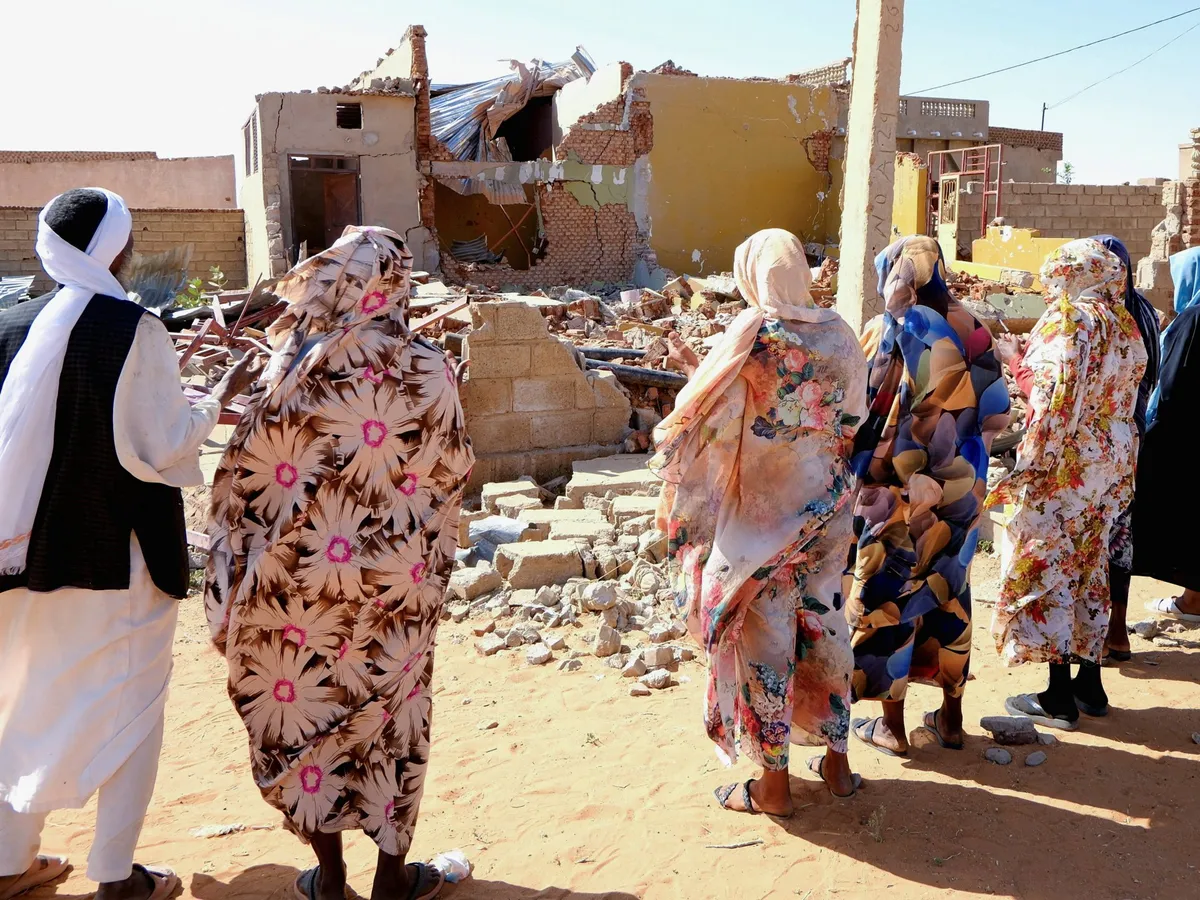
The city of el-Obeid in Sudan is facing imminent danger, with the UN High Commissioner for Human Rights issuing a "red alert" due to escalating attacks by the Rapid Support Forces (RSF) militia. These attacks, targeting infrastructure, have made life unbearable for residents and blocked escape routes.
Cameron HudsonAl JazeeraFiled 2026-08-03 · 13:00 GMTLean · CenterRead · 5 min
Al JazeeraFIG 01
Reading time
5min
Word count
1 156words
Sources cited
3cited
Entities identified
12entities
Quality score
100%
§ 01
Briefing Summary
AI-generatedNEWSAR · AI
The city of el-Obeid in Sudan is facing imminent danger, with the UN High Commissioner for Human Rights issuing a "red alert" due to escalating attacks by the Rapid Support Forces (RSF) militia. These attacks, targeting infrastructure, have made life unbearable for residents and blocked escape routes. This situation mirrors previous atrocities in el-Geneina and el-Fasher, where the RSF committed acts declared as genocide by the UN and the US. Despite these declarations and the establishment of international mechanisms like the ICC to prevent and respond to genocide, a lack of decisive international action has allowed such crimes to repeat. The article suggests that historical failures to act, politicization of intervention, and current US actions undermining international law contribute to this cycle of violence.
Confidence 0.90Sources 3Claims 5Entities 12
§ 02
Article analysis
Model · rule-basedFraming
Human Rights
Conflict
Tone
Mixed Tone
AI-assessed
CalmNeutralAlarmist
Factuality
0.70 / 1.00
Factual
LowHigh
Sources cited
3
Well sourced
FewMany
§ 03
Key claims
5 extracted01
The US declared the atrocities in el-Geneina as genocide in January 2025, but this did not spark an international response.
factualAntony Blinken (then US Secretary of State)
Confidence
1.00
02
A UN investigation declared the RSF's crimes in el-Fasher constituted genocide, with no serious international action taken.
factualUN investigation
Confidence
1.00
03
The RSF conducted 27 drone attacks on el-Obeid in June, targeting infrastructure and making life unbearable for residents.
factual
Confidence
1.00
04
The UN High Commissioner for Human Rights declared a "red alert" for el-Obeid due to its position on the front line of the war.
factualUnited Nations High Commissioner for Human Rights Volker Turk
Confidence
1.00
05
The lack of international action after atrocities in el-Geneina and el-Fasher has doomed el-Obeid.
prediction
Confidence
0.80
§ 04
Full report
5 min read · 1 156 words§ 05
Entities
12 identifiedKey playerOppositionContextPositiveNeutralNegative
Organizations3
Locations6
Topics1
§ 06
Keywords & salience
9 termssudan conflict
1.00
genocide
1.00
rapid support forces (rsf)
0.90
international inaction
0.80
el-obeid
0.70
humanitarian crisis
0.60
displacement
0.50
war crimes
0.50
darfur
0.40
§ 07
Topic connections
Interactive graph Network visualization showing 51 related topics
View Full Graph Person Organization Location Event|Click node to navigate|Edge numbers = shared articles