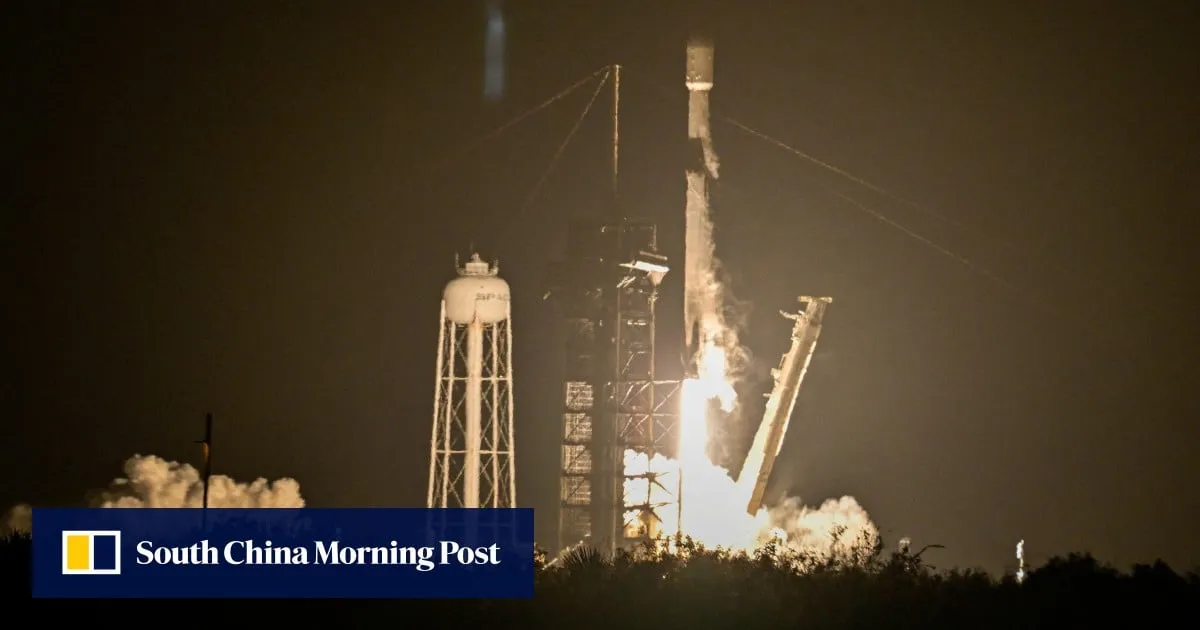
A SpaceX rocket piece floating in space since last year is on track to smash into the Moon at high speed early on Wednesday morning.The school bus-sized object is the second stage of a SpaceX-falcon-9" class="entity-link entity-organization" data-entity-id="86571" data-entity-type="organization">SpaceX Falcon 9 rocket that had launched a lunar lander from Firefly Aerospace towards the Moon in January 2025.Weighing four tonnes (4,000kg), the rocket body is due to hit the Moon around 2.35am ET (0635 GMT), hitting its surface at 8,690km/h (5,400 mph).The space junk will kick up a plume of lunar dust that is likely to be illuminated by sunlight but difficult to spot with the naked eye from Earth.The impact is unintentional, SpaceX said. The rocket piece is expected to hit Einstein Crater on the Moon’s western limb, which is often difficult to see from Earth.Nasa’s Lunar Reconnaissance Orbiter map shows the predicted impact site for a Falcon 9 rocket part, expected to strike the Moon on Wednesday, and the locations of other Moon landers. Image: NasaSuch stages typically fall back into Earth’s atmosphere and burn up or plunge into the ocean after boosting the rocket’s payload to a precise spot in orbit.
SRCSouth China Morning Post
LANGEN
LEANCenter-Right
WORDS189
ENT8
TUE · 2026-08-04 · 23:48 GMTBRIEF NSR-2026-0805-99168
NSR-2026-0805-99168News Report·EN·Technology
Piece of SpaceX rocket to crash into moon at high speed
A piece of a SpaceX Falcon 9 rocket, weighing four tonnes and roughly the size of a school bus, is set to impact the moon at high speed early Wednesday morning. This object, the second stage of a rocket that launched a Firefly Aerospace lunar lander in January 2025, has been in space since last year.
ReutersSouth China Morning PostFiled 2026-08-04 · 23:48 GMTLean · Center-RightRead · 1 min
South China Morning PostFIG 01
Reading time
1min
Word count
189words
Sources cited
1cited
Entities identified
8entities
Quality score
100%
§ 01
Briefing Summary
AI-generatedNEWSAR · AI
A piece of a SpaceX Falcon 9 rocket, weighing four tonnes and roughly the size of a school bus, is set to impact the moon at high speed early Wednesday morning. This object, the second stage of a rocket that launched a Firefly Aerospace lunar lander in January 2025, has been in space since last year. The unintentional collision is predicted to occur around 2:35 AM ET, with the rocket body striking the lunar surface at approximately 8,690 km/h. The impact is expected to occur in Einstein Crater on the moon’s western limb, kicking up a plume of lunar dust. Unlike typical rocket stages that burn up or fall into the ocean, this piece will create a crater on the moon.
Confidence 0.90Sources 1Claims 5Entities 8
§ 02
Article analysis
Model · rule-basedFraming
Technology
Human Interest
Tone
Mixed Tone
AI-assessed
CalmNeutralAlarmist
Factuality
0.90 / 1.00
Factual
LowHigh
Sources cited
1
Limited
FewMany
§ 03
Key claims
5 extracted01
The impact is unintentional, SpaceX said.
quoteSpaceX
Confidence
1.00
02
The rocket body weighs four tonnes (4,000kg).
statistic
Confidence
1.00
03
The object is the second stage of a SpaceX Falcon 9 rocket.
factual
Confidence
1.00
04
A piece of SpaceX rocket is on track to crash into the moon.
factual
Confidence
1.00
05
The rocket body is due to hit the moon around 2.35am ET (0635 GMT) at 8,690km/h (5,400 mph).
prediction
Confidence
0.90
§ 04
Full report
1 min read · 189 words§ 05
Entities
8 identifiedKey playerOppositionContextPositiveNeutralNegative
Organizations4
§ 06
Keywords & salience
9 termsmoon impact
1.00
spacex rocket
1.00
space junk
0.90
falcon 9 rocket
0.80
lunar lander
0.70
einstein crater
0.60
firefly aerospace
0.50
lunar dust
0.40
nasa lunar reconnaissance orbiter
0.40
§ 07
Topic connections
Interactive graph Network visualization showing 16 related topics
View Full Graph Person Organization Location Event|Click node to navigate|Edge numbers = shared articles