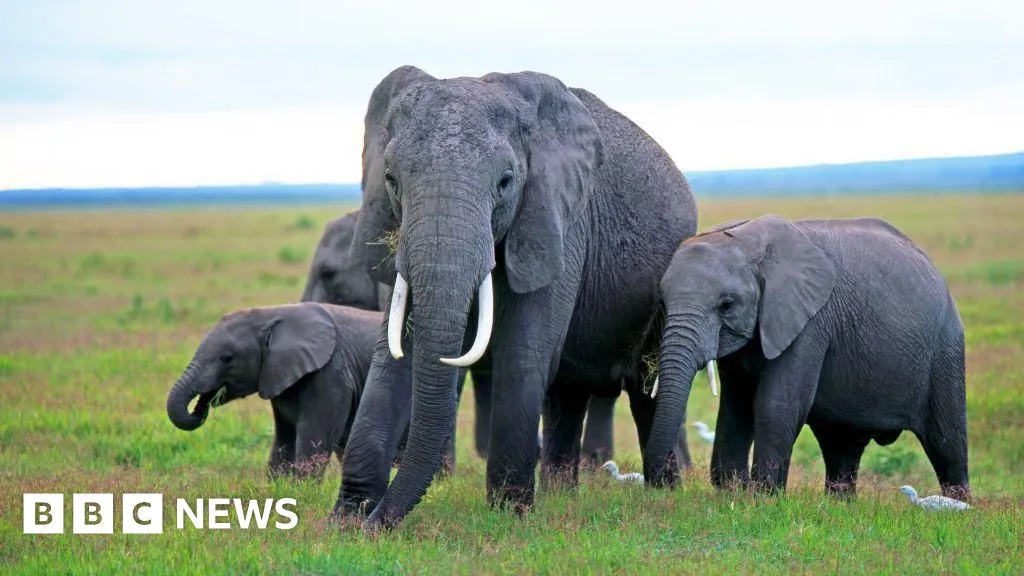
News that the recent deaths of 15 elephants may have been caused by pesticides sprayed on tomato crops surrounding Amboseli National Park has raised concerns and questions in Kenya.Last week, the Kenya-wildlife-service" class="entity-link entity-organization" data-entity-id="5710" data-entity-type="organization">Kenya Wildlife Service (KWS) said that some of the elephants that had died between 24 June and 24 July had shown signs of "partial paralysis" that pointed to poisoning from cyanide used in pesticides.But conservationists have told the BBC that, perhaps, is not the full story. Farmers we have spoken to in the area were also sceptical."We have stayed with this wildlife for decades and have never experienced this," Daniel Nina, who represents some of the landowners in the area, told the BBC."So that's why we are wondering why it is happening today."The tomato farms are found in the Kimana area, which is part of a corridor between Amboseli National Park and the Tsavo National Park in the south of Kenya.It is a vast area known as the Amboseli ecosystem, which straddles the border near Tanzania where more than 2,000 elephants move along in search of food and water.These farms thrive thanks to the streams from nearby Mount Kilimanjaro and supply markets in Kenya's capital, Nairobi, and beyond.
SRCBBC News - World
LANGEN
LEANCenter
WORDS199
ENT11
TUE · 2026-08-04 · 23:13 GMTBRIEF NSR-2026-0805-99179
NSR-2026-0805-99179News Report·EN·Environmental
Mysterious elephant deaths in Kenya raise questions around pesticides
Fifteen elephants have died in Kenya's Amboseli ecosystem between June 24 and July 24, with the Kenya Wildlife Service (KWS) suggesting pesticides, specifically cyanide used on nearby tomato crops, may be the cause. KWS noted signs of "partial paralysis" in some deceased elephants, indicative of poisoning.
47 minutes agoShareSaveAdd as preferred on GoogleThomas MukhwanaAfrica correspondent, AmboseliBBC News - WorldFiled 2026-08-04 · 23:13 GMTLean · CenterRead · 1 min
BBC News - WorldFIG 01
Reading time
1min
Word count
199words
Sources cited
3cited
Entities identified
11entities
Quality score
100%
§ 01
Briefing Summary
AI-generatedNEWSAR · AI
Fifteen elephants have died in Kenya's Amboseli ecosystem between June 24 and July 24, with the Kenya Wildlife Service (KWS) suggesting pesticides, specifically cyanide used on nearby tomato crops, may be the cause. KWS noted signs of "partial paralysis" in some deceased elephants, indicative of poisoning. However, conservationists and local farmers have expressed doubt about this explanation, questioning why such deaths are occurring now after decades of coexistence with wildlife. The affected farms are located in the Kimana area, a vital corridor for elephants moving between Amboseli and Tsavo National Parks.
Confidence 0.90Sources 3Claims 4Entities 11
§ 02
Article analysis
Model · rule-basedFraming
Environmental
Human Interest
Tone
Measured
AI-assessed
CalmNeutralAlarmist
Factuality
0.70 / 1.00
Factual
LowHigh
Sources cited
3
Well sourced
FewMany
§ 03
Key claims
4 extracted01
Tomato farms in the Kimana area, part of a wildlife corridor, are irrigated by streams from Mount Kilimanjaro.
factual
Confidence
1.00
02
Conservationists and local landowners express skepticism that pesticides are the sole cause of the elephant deaths.
quoteConservationists and Daniel Nina (landowner representative)
Confidence
0.90
03
15 elephants died between June 24 and July 24, showing signs of partial paralysis.
factualKenya Wildlife Service (KWS)
Confidence
0.90
04
Pesticides, specifically cyanide used in them, are suspected as the cause of elephant deaths.
factualKenya Wildlife Service (KWS)
Confidence
0.80
§ 04
Full report
1 min read · 199 words§ 05
Entities
11 identifiedKey playerOppositionContextPositiveNeutralNegative
Organizations1
Locations6
§ 06
Keywords & salience
9 termselephant deaths
1.00
pesticides
0.90
poisoning
0.80
amboseli national park
0.70
kenya wildlife service
0.60
tomato crops
0.50
conservationists
0.50
wildlife
0.40
cyanide
0.40
§ 07
Topic connections
Interactive graph Network visualization showing 4 related topics
View Full Graph Person Organization Location Event|Click node to navigate|Edge numbers = shared articles