EXPLAINERWashington and Tokyo’s rare, coordinated intervention aims to avoid a spillover to the global financial system.Yen and US dollar banknotes are seen in this illustration shown on March 19, 2025 [Dado Ruvic/Reuters]Published On 5 Aug 2026The United States and Japan last week staged a coordinated intervention to halt the slide of the Yen after the Japanese currency fell to a 40-year low against the US dollar.While it is unusual for authorities to intervene to help prop up another country’s currency, the Yen has an important role in international finance as the world’s third-most-traded currency, meaning its depreciation has repercussions far beyond Japan.Recommended Stories list of 4 itemslist 1 of 4Colombia’s Petro repeats vote fraud claims days before handing over powerlist 2 of 4Bodycam video shows firefighters battling blaze in Spokane, USlist 3 of 4Why are the Washington wildfires so severe?list 4 of 4Palestine weekly: Israel kills dozens in Gaza after Hamas disarmament dealend of listHere is everything you need to know about the currency intervention:What is a currency intervention and how did the US and Japan coordinate?A currency intervention occurs when a government or central bank buys or sells large quantities of foreign currency to help stabilise the value of its own currency.In this case, the US and Japan coordinated an intervention to lift the value of the Yen after it slid to 163 against the dollar for the first time since 1986.The intervention began on July 31 when the US Treasury began selling euros for Yen, while Japanese authorities also bought Yen.In the days after the intervention, the Yen began to rise and reached 157 to the dollar on Wednesday.The US last staged a currency intervention with Japan in 2011 when the Yen began appreciating rapidly following the Tohoku earthquake and tsunami.It also stepped in to support the Japanese currency during the Asian Financial Crisis in 1998.How did the Yen get so weak?The Yen’s collapse is the result of longstanding economic challenges combined with new pressures from the US-Israel war on Iran.Japan has struggled with economic stagnation since the early 1990s.The Japan" class="entity-link entity-organization" data-entity-id="17400" data-entity-type="organization">Bank of Japan has for decades attempted to stimulate growth with ultra-low and even negative interest rates, a policy that has exerted downward pressure on the Yen.While Japan’s weak currency has helped draw record numbers of tourists and kept exports cheap, it has also placed a strain on households by raising the cost of imported goods.Tokyo has spent tens of billions of dollars since 2022 trying to defend the Yen, but the economic policies of successive Japanese leaders, including current Prime Minister Sanae Takaichi, have partly offset these efforts.“Takaichi wants it all: Growth, loose fiscal policy, loose monetary policy and a stable Yen – but their policy mix is leading to a weak Yen, which is causing an inflation problem,” Chris Turner, global head of markets at ING, told Al Jazeera.Visitors walk along Nakamise-dori street as they visit Sensoji temple in Tokyo, Japan, on March 10, 2025 [Issei Kato/Reuters]Why does the US want a stronger Yen?While Japan is a close US ally, Washington stepped in for its own benefit as much as Tokyo’s, said Masahiko Loo, a senior fixed income strategist at State Street Investment Management in Tokyo.“Washington isn’t trying to strengthen the Yen for Japan’s sake. It’s trying to prevent a disorderly decline that could spill over into Treasury markets, global funding conditions, and broader financial stability,” Loo told Al Jazeera.“A free-falling Yen isn’t just Japan’s problem. At some point it becomes a global liquidity and financial stability issue, which is why Washington stepped in.”The Yen is the most traded currency after the US dollar and the euro, which means dramatic changes in its value can have ripple effects across the global financial system.One of Washington’s biggest concerns is the prospect of Japan selling off its holdings of US Treasury securities, which were valued at $1.114 trillion in May.If the Yen continued to fall, Tokyo would be encouraged to sell large quantities of US Treasuries to raise cash it can use to defend the currency.That would put upward pressure on interest rates in the US, raising the cost of servicing the country’s rapidly growing national debt, which already exceeds $39 trillion.“The financial cost of intervention for the US is low and, given that President Donald Trump favours a weaker US dollar, the domestic political cost is minimal,” Shigeto Nagai, head of Japan economics at Oxford Economics, wrote in a research briefing on Monday.“Coordinated intervention is a cost-effective method as it allows the US to do a significant favour for Japan, a precious loyal ally in Asia, and take some pressure off US interest rates.”While the joint intervention has provided short-term support for the Yen, Japan will need to take more fundamental measures, such as raising interest rates, to raise the value of the currency in the long term, according to experts.Japan’s benchmark interest rate currently stands at 1.0 percent, its highest since 1995 but far lower than other advanced economies, including the US.The large gap between interest rates in the US and Japan is a primary driver of the Yen’s persistent weakness.Without a change in Japan’s low-interest-rate environment, the latest currency intervention is just “throwing good money after bad,” said Derek Tang, an economist and CEO of Monetary Policy Analytics, a US research advisory firm.“Ultimately… the gravitational force of economic fundamentals will overwhelm intervention efforts,” Tang told Al Jazeera.“Nevertheless, Japan seems very reluctant to tighten monetary policy to raise its own interest rates and allow the currency to appreciate in that manner,” Tang said.
SRCAl Jazeera
LANGEN
LEANCenter
WORDS917
ENT10
WED · 2026-08-05 · 07:06 GMTBRIEF NSR-2026-0805-99278
NSR-2026-0805-99278News Report·EN·Economic Impact
Why the Trump administration is helping support Japan’s weakening yen
The United States and Japan recently conducted a rare, coordinated currency intervention to support the weakening yen, which had fallen to a 40-year low against the US dollar. This action, involving the US Treasury selling euros for yen and Japanese authorities buying yen, aimed to stabilize the currency and prevent negative spillover effects on the global financial system.
Erin Hale,John PowerAl JazeeraFiled 2026-08-05 · 07:06 GMTLean · CenterRead · 4 min
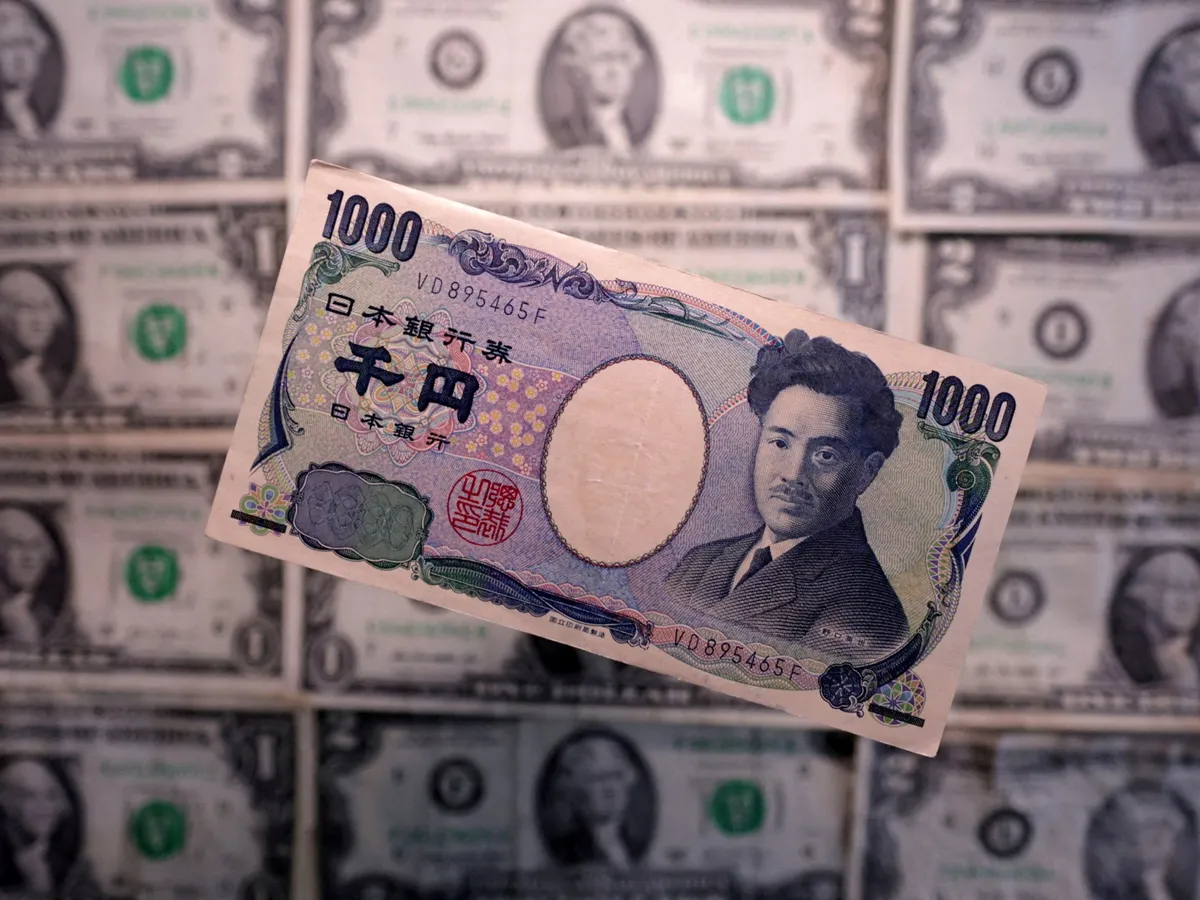
Al JazeeraFIG 01
Reading time
4min
Word count
917words
Sources cited
1cited
Entities identified
10entities
Quality score
100%
§ 01
Briefing Summary
AI-generatedNEWSAR · AI
The United States and Japan recently conducted a rare, coordinated currency intervention to support the weakening yen, which had fallen to a 40-year low against the US dollar. This action, involving the US Treasury selling euros for yen and Japanese authorities buying yen, aimed to stabilize the currency and prevent negative spillover effects on the global financial system. The yen's depreciation is attributed to Japan's long-standing economic stagnation, ultra-low interest rates, and new pressures from the US-Israel war on Iran. The US intervened not only to assist its ally but also to protect its own interests, particularly concerns about Japan potentially selling off its significant holdings of US Treasury securities, which could drive up US interest rates. While this intervention has provided temporary relief, Japan will need to implement more fundamental economic policies to achieve sustained yen appreciation.
Confidence 0.90Sources 1Claims 5Entities 10
§ 02
Article analysis
Model · rule-basedFraming
Economic Impact
Diplomatic
Tone
Measured
AI-assessed
CalmNeutralAlarmist
Factuality
0.70 / 1.00
Factual
LowHigh
Sources cited
1
Limited
FewMany
§ 03
Key claims
5 extracted01
Takaichi wants it all: Growth, loose fiscal policy, loose monetary policy and a stable yen – but their policy mix is leading to a weak yen, which is causing an inflation problem.
quoteChris Turner, global head of markets at ING
Confidence
1.00
02
Japan has struggled with economic stagnation since the early 1990s, and the Bank of Japan has for decades attempted to stimulate growth with ultra-low interest rates.
factual
Confidence
1.00
03
The yen has an important role in international finance as the world’s third-most-traded currency.
factual
Confidence
1.00
04
The US and Japan staged a coordinated intervention to halt the slide of the yen after it fell to a 40-year low against the US dollar.
factual
Confidence
1.00
05
The yen's collapse is the result of longstanding economic challenges combined with new pressures from the US-Israel war on Iran.
factual
Confidence
0.90
§ 04
Full report
4 min read · 917 words§ 05
Entities
10 identifiedKey playerOppositionContextPositiveNeutralNegative
People1
Organizations3
§ 06
Keywords & salience
10 termsweakening yen
1.00
currency intervention
1.00
us dollar
0.90
japanese yen
0.90
global financial system
0.80
bank of japan
0.70
economic stagnation
0.60
international finance
0.50
us treasury
0.40
interest rates
0.40
§ 07
Topic connections
Interactive graph Network visualization showing 51 related topics
View Full Graph Person Organization Location Event|Click node to navigate|Edge numbers = shared articles