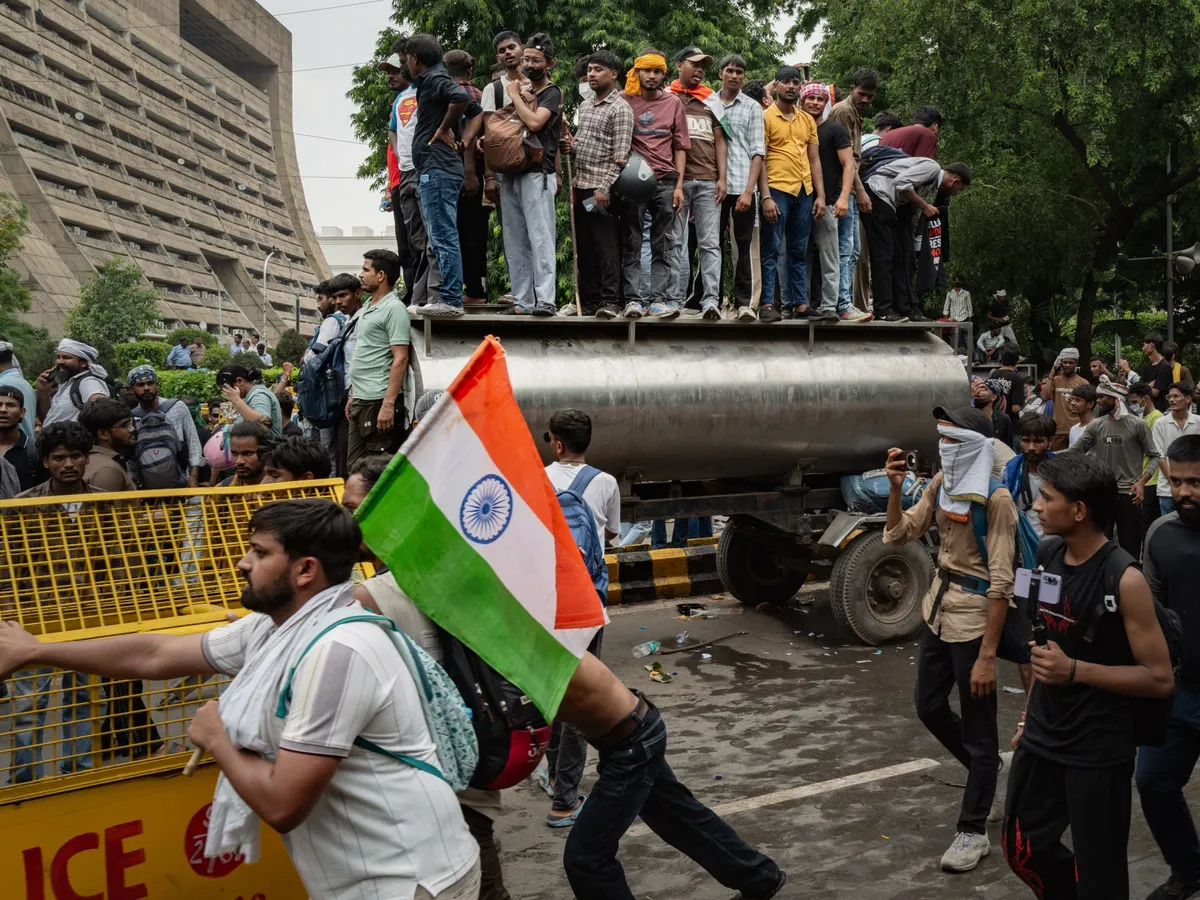
Why governments across the world are struggling to understand Generation Z, and why India may still have an opportunity.Indian politician and public policy commentator.Published On 6 Aug 2026Thousands of young Indians gathered on the streets of Delhi carrying placards demanding accountability, transparency, and justice. To many observers, the protests were simply another chapter in India’s familiar contest between the government and the opposition. That interpretation, however, misses the larger story.The Cockroach Janta Party (CJP) protests were not merely about one organisation or one controversy. They revealed a profound shift in how India’s youngest generation understands politics, institutions, and the social contract itself. Around the world, governments are discovering that Generation Z is reshaping democratic politics in ways few had anticipated. From Hong Kong to Santiago, Paris to Dhaka, youth-led movements have become less ideological, more digitally connected and increasingly driven by questions of fairness, accountability, and opportunity. Delhi was not an exception; it was the Indian expression of a much larger global phenomenon. Yet reducing the CJP protests to a global trend would also miss something uniquely Indian.At the heart of the demonstrations lay a deep personal anxiety that resonates across millions of households: The fear that merit itself may no longer be enough. The National Eligibility-cum-Entrance Test (NEET), India’s nationwide entrance test for undergraduate medical courses, was never just about a single examination. It touched something far more fundamental: The belief that education remains the surest path to opportunity. Across the country, parents invest years of savings, students sacrifice their adolescence, and entire households organise their lives around the hope that hard work will be rewarded fairly.
SRCAl Jazeera
LANGEN
LEANCenter
WORDS268
ENT10
THU · 2026-08-06 · 10:55 GMTBRIEF NSR-2026-0806-99706
NSR-2026-0806-99706Opinion·EN·Social Justice
What the CJP protests reveal about India’s next generation
Recent protests in Delhi, involving thousands of young Indians demanding accountability, transparency, and justice, reveal a significant shift in Generation Z's political understanding. These demonstrations, exemplified by the Cockroach Janta Party (CJP) protests, are not solely about specific controversies but reflect a global trend of youth-led movements driven by fairness, accountability, and opportunity.
Sudhanshu MittalAl JazeeraFiled 2026-08-06 · 10:55 GMTLean · CenterRead · 2 min
Al JazeeraFIG 01
Reading time
2min
Word count
268words
Sources cited
0cited
Entities identified
10entities
Quality score
100%
§ 01
Briefing Summary
AI-generatedNEWSAR · AI
Recent protests in Delhi, involving thousands of young Indians demanding accountability, transparency, and justice, reveal a significant shift in Generation Z's political understanding. These demonstrations, exemplified by the Cockroach Janta Party (CJP) protests, are not solely about specific controversies but reflect a global trend of youth-led movements driven by fairness, accountability, and opportunity. In India, a core anxiety fueling these protests is the fear that merit may no longer guarantee success, particularly concerning the National Eligibility-cum-Entrance Test (NEET). This concern highlights the deep-seated belief that education is the primary path to opportunity, and the perceived unfairness in its reward system is a fundamental issue for this generation.
Confidence 0.90Claims 5Entities 10
§ 02
Article analysis
Model · rule-basedFraming
Social Justice
Human Interest
Tone
Mixed Tone
AI-assessed
CalmNeutralAlarmist
Factuality
0.30 / 1.00
Opinion-Heavy
LowHigh
Sources cited
0
No named sources
FewMany
§ 03
Key claims
5 extracted01
The National Eligibility-cum-Entrance Test (NEET) touched a fundamental belief that education is the surest path to opportunity.
factual
Confidence
0.90
02
Thousands of young Indians gathered on the streets of Delhi demanding accountability, transparency, and justice.
factual
Confidence
0.90
03
There is a deep personal anxiety across millions of Indian households that merit may no longer be enough.
factual
Confidence
0.80
04
Generation Z is reshaping democratic politics globally, with youth-led movements becoming less ideological, more digitally connected, and driven by fairness, accountability, and opportunity.
factual
Confidence
0.80
05
The Cockroach Janta Party (CJP) protests revealed a profound shift in how India’s youngest generation understands politics, institutions, and the social contract.
factual
Confidence
0.70
§ 04
Full report
2 min read · 268 words§ 05
Entities
10 identifiedKey playerOppositionContextPositiveNeutralNegative
Locations6
§ 06
Keywords & salience
10 termsgeneration z
1.00
political engagement
0.90
accountability
0.80
social contract
0.70
meritocracy
0.70
youth movements
0.60
india
0.50
neet
0.50
opportunity
0.40
transparency
0.40
§ 07
Topic connections
Interactive graph Network visualization showing 13 related topics
View Full Graph Person Organization Location Event|Click node to navigate|Edge numbers = shared articles