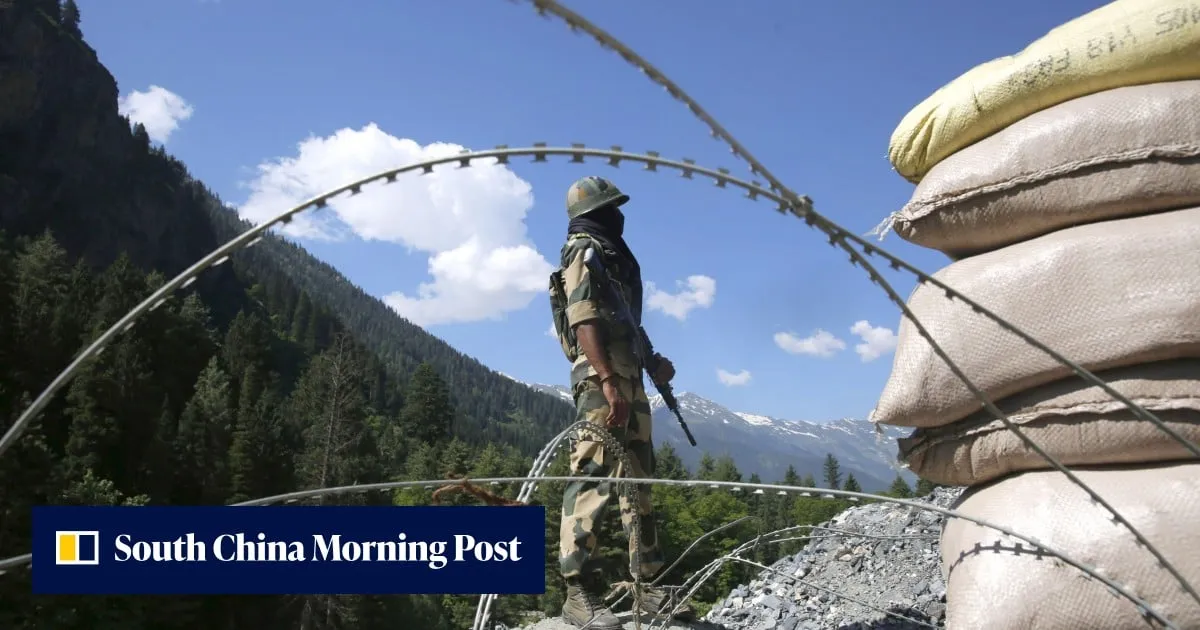
Last week, Pakistan, Turkey and Saudi Arabia signed a pact in Mecca in which they agreed to treat an armed attack on one as an attack on all. The three governments have described it as defensive and not directed at any particular state.Analysts said its main significance for India lay less in whether it would be invoked, but in how it could alter Pakistan’s strategic position as well as the balance between the three nuclear powers.“The agreement institutionalises a trilateral framework combining Saudi capital, Turkish defence technology and Pakistan’s strategic geography,” according to Brahma Chellaney, a New Delhi-based strategic analyst.“Regardless of whether such provisions are ever invoked [the pact’s] existence could nonetheless complicate India’s strategic calculus by introducing additional uncertainty into crisis planning and deterrence,” he wrote in a social media post.That uncertainty is important because India already faces two major security challenges from its long-running border disputes with both Pakistan to its west and China to the north.
SRCSouth China Morning Post
LANGEN
LEANCenter-Right
WORDS159
ENT10
MON · 2026-08-10 · 14:07 GMTBRIEF NSR-2026-0810-100934
NSR-2026-0810-100934Analysis·EN·National Security
China, India and Pakistan’s dangerous nuclear triangle just became more complicated
Pakistan, Turkey, and Saudi Arabia signed a defensive pact in Mecca last week, agreeing to treat an armed attack on one as an attack on all. While the signatories describe the agreement as defensive and not targeting any specific state, analysts suggest it significantly complicates India's strategic position.
Khushboo RazdanSouth China Morning PostFiled 2026-08-10 · 14:07 GMTLean · Center-RightRead · 1 min
South China Morning PostFIG 01
Reading time
1min
Word count
159words
Sources cited
1cited
Entities identified
10entities
Quality score
100%
§ 01
Briefing Summary
AI-generatedNEWSAR · AI
Pakistan, Turkey, and Saudi Arabia signed a defensive pact in Mecca last week, agreeing to treat an armed attack on one as an attack on all. While the signatories describe the agreement as defensive and not targeting any specific state, analysts suggest it significantly complicates India's strategic position. This new alliance, combining Saudi capital, Turkish defense technology, and Pakistan's geography, introduces additional uncertainty into India's crisis planning and deterrence strategies. India already faces security challenges from border disputes with both Pakistan and China, and this trilateral framework adds another layer of complexity to its existing strategic calculus.
Confidence 0.90Sources 1Claims 4Entities 10
§ 02
Article analysis
Model · rule-basedFraming
National Security
Political Strategy
Tone
Mixed Tone
AI-assessed
CalmNeutralAlarmist
Factuality
0.40 / 1.00
Mixed
LowHigh
Sources cited
1
Limited
FewMany
§ 03
Key claims
4 extracted01
India already faces two major security challenges from its long-running border disputes with both Pakistan and China.
factual
Confidence
1.00
02
The pact's existence could complicate India’s strategic calculus by introducing additional uncertainty into crisis planning and deterrence.
quoteBrahma Chellaney
Confidence
1.00
03
The agreement institutionalizes a trilateral framework combining Saudi capital, Turkish defence technology and Pakistan’s strategic geography.
quoteBrahma Chellaney
Confidence
1.00
04
Pakistan, Turkey, and Saudi Arabia signed a pact in Mecca agreeing to treat an armed attack on one as an attack on all.
factual
Confidence
1.00
§ 04
Full report
1 min read · 159 words§ 05
Entities
10 identifiedKey playerOppositionContextPositiveNeutralNegative
Locations7
§ 06
Keywords & salience
10 termsnuclear triangle
1.00
strategic position
0.90
security challenges
0.80
crisis planning
0.70
deterrence
0.70
strategic calculus
0.60
india
0.50
pakistan
0.50
china
0.50
border disputes
0.40
§ 07
Topic connections
Interactive graph Network visualization showing 51 related topics
View Full Graph Person Organization Location Event|Click node to navigate|Edge numbers = shared articles