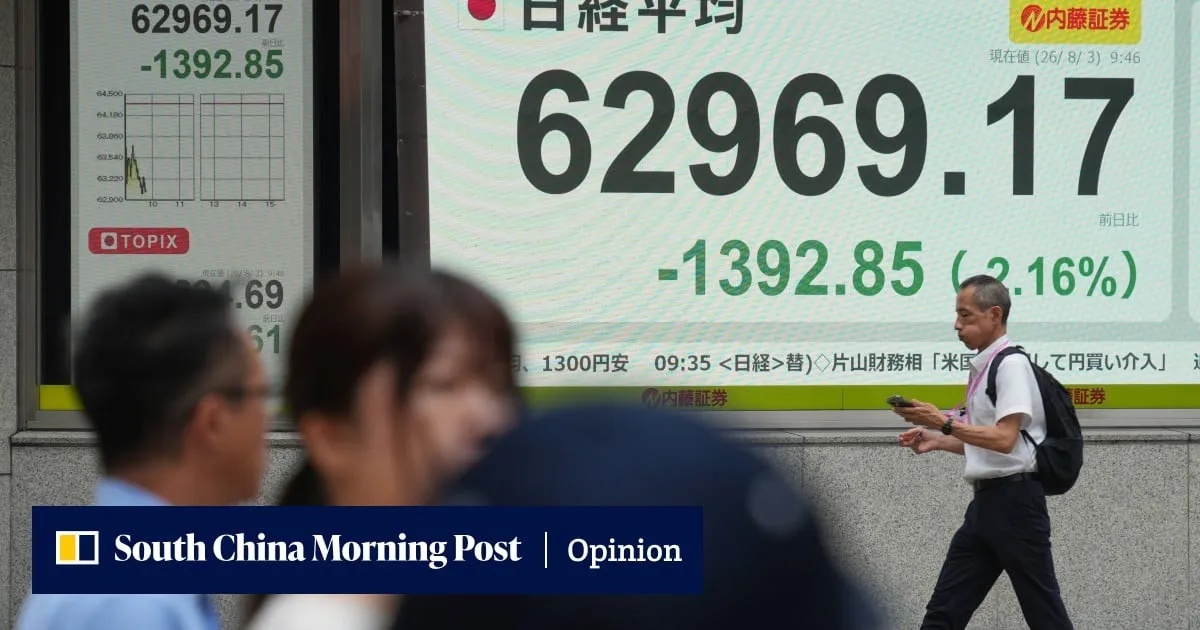
Dr Andy Xie is a Shanghai-based independent economist specialising in China and Asia, and writes, speaks and consults on global economics and financial markets.In a rare intervention, the US has propped up the Japanese Yen. The move is seen as a bid to hold off a further rise in yields for US government bonds – amid Japan’s sell-off of US Treasuries to fund its shoring up of the Yen – a rise that threatens the US Artificial Intelligence bubble.That the United States bought Yen for the first time in decades – coordinating with Japan – had a bigger psychological impact on the market than Tokyo’s interventions alone. But give it three or four weeks and the Yen-to-dollar rate is likely to snap back above 160.The Yen has been fundamentally weakened by a double shock: the rise in Chinese electric vehicles has hit Japan’s car exports and the energy price spike following the Iran war has hit the wider economy. Technical interventions will not stop its slide.
SRCSouth China Morning Post
LANGEN
LEANCenter-Right
WORDS166
ENT10
FRI · 2026-08-14 · 08:30 GMTBRIEF NSR-2026-0814-102254
NSR-2026-0814-102254Opinion·EN·Economic Impact
Just like with the yen, America cannot save the AI bubble
The United States, in a rare intervention, has joined Japan to support the Japanese yen. This action is interpreted as an effort to prevent a further increase in US government bond yields.
Andy XieSouth China Morning PostFiled 2026-08-14 · 08:30 GMTLean · Center-RightRead · 1 min
South China Morning PostFIG 01
Reading time
1min
Word count
166words
Sources cited
1cited
Entities identified
10entities
Quality score
100%
§ 01
Briefing Summary
AI-generatedNEWSAR · AI
The United States, in a rare intervention, has joined Japan to support the Japanese yen. This action is interpreted as an effort to prevent a further increase in US government bond yields. Japan has been selling US Treasuries to fund its yen support, and a rise in yields threatens the US artificial intelligence bubble. The coordinated intervention, the first for the US in decades, had a significant psychological impact. However, the article suggests the yen may rebound above 160 against the dollar within three to four weeks. The yen's weakening is attributed to reduced Japanese car exports due to Chinese electric vehicles and an energy price spike from the Iran war impacting the broader economy, suggesting technical interventions may not halt its decline.
Confidence 0.85Sources 1Claims 5Entities 10
§ 02
Article analysis
Model · rule-basedFraming
Economic Impact
Technology
Tone
Mixed Tone
AI-assessed
CalmNeutralAlarmist
Factuality
0.30 / 1.00
Opinion-Heavy
LowHigh
Sources cited
1
Limited
FewMany
§ 03
Key claims
5 extracted01
The yen has been fundamentally weakened by a double shock: Chinese EV competition and energy price spikes from the Iran war.
factualarticle
Confidence
0.90
02
The US intervened to prop up the Japanese yen, aiming to prevent a rise in US government bond yields.
factualarticle
Confidence
0.90
03
Technical interventions will not stop the yen's slide.
factualarticle
Confidence
0.80
04
Japan's sell-off of US Treasuries is funding its yen support, which threatens the US artificial intelligence bubble.
factualarticle
Confidence
0.80
05
The yen-to-dollar rate is likely to snap back above 160 within three to four weeks.
predictionarticle
Confidence
0.70
§ 04
Full report
1 min read · 166 words§ 05
Entities
10 identifiedKey playerOppositionContextPositiveNeutralNegative
Locations5
§ 06
Keywords & salience
10 termsai bubble
1.00
japanese yen
0.80
us government bonds
0.80
currency intervention
0.70
global economics
0.60
us treasuries
0.50
financial markets
0.50
japan
0.40
electric vehicles
0.40
china
0.40
§ 07
Topic connections
Interactive graph Network visualization showing 51 related topics
View Full Graph Person Organization Location Event|Click node to navigate|Edge numbers = shared articles