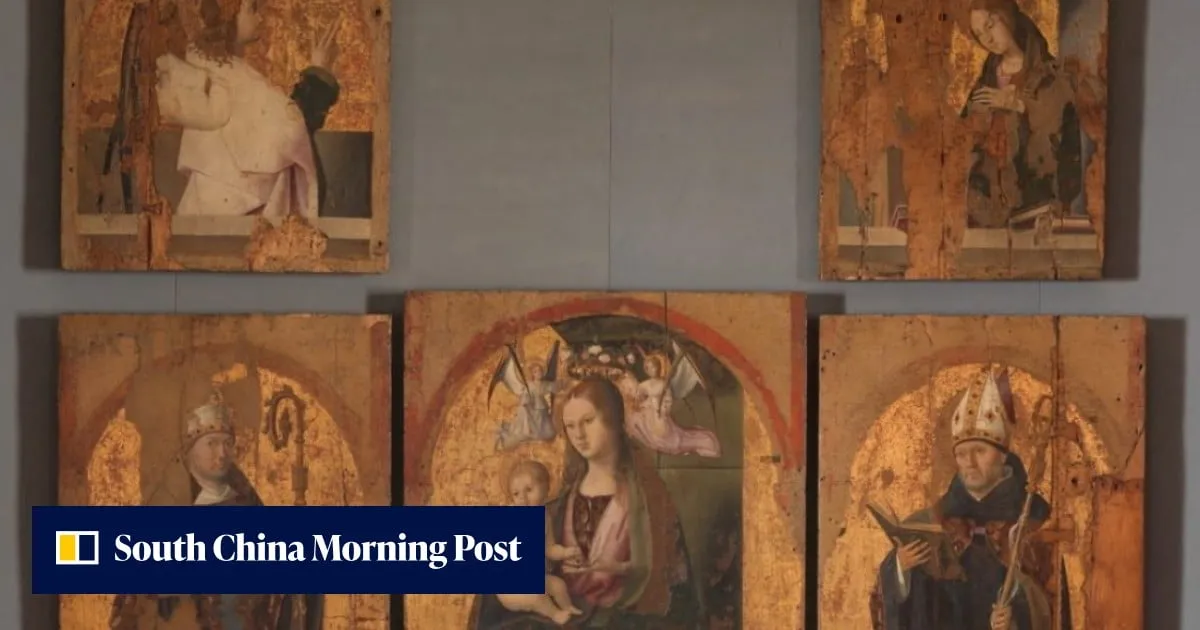
The theft of four paintings by Renaissance master Messina" class="entity-link entity-person" data-entity-id="186497" data-entity-type="person">Antonello da Messina may have involved Organised crime and raised troubling questions about security at a museum in the Sicilian artist’s hometown, a local official said on Monday.Enzo Caruso, Messina’s councillor for culture, said it was difficult to understand how thieves could have removed the works in a matter of minutes without detailed knowledge of the museum’s layout.“It’s a very, very strange affair,” Caruso said.The theft on Saturday at Messina’s Accascina Regional Museum has shocked Italy and revived memories of the infamous 1969 disappearance of a masterpiece by Caravaggio from a Palermo church – a case long associated with Sicily’s Cosa Nostra mafia and never solved.Caruso said the stolen Antonello works were so famous that selling them even on the black market would be virtually impossible, raising the possibility that they could be used as bargaining chips or collateral in criminal dealings.“The Mafia? It’s possible they might try to blackmail the state itself in order to return them. These are the kinds of dynamics that ordinary people never get to see,” he said.He said another possibility was that the paintings could be used as guarantees or currency within the criminal underworld.
SRCSouth China Morning Post
LANGEN
LEANCenter-Right
WORDS199
ENT10
MON · 2026-08-17 · 17:53 GMTBRIEF NSR-2026-0817-103170
NSR-2026-0817-103170News Report·EN·Legal & Judicial
Mafia link feared in theft of grand master paintings from Sicily museum
Four paintings by Renaissance master Antonello da Messina were stolen from the Accascina Regional Museum in Messina, Sicily, on Saturday. Enzo Caruso, Messina's councillor for culture, suggested that organized crime may be involved due to the speed and apparent ease of the theft, which he described as a "very, very strange affair." Caruso noted the difficulty in understanding how thieves could have removed the works so quickly without intimate knowledge of the museum's layout.
ReutersSouth China Morning PostFiled 2026-08-17 · 17:53 GMTLean · Center-RightRead · 1 min
South China Morning PostFIG 01
Reading time
1min
Word count
199words
Sources cited
1cited
Entities identified
10entities
Quality score
100%
§ 01
Briefing Summary
AI-generatedNEWSAR · AI
Four paintings by Renaissance master Antonello da Messina were stolen from the Accascina Regional Museum in Messina, Sicily, on Saturday. Enzo Caruso, Messina's councillor for culture, suggested that organized crime may be involved due to the speed and apparent ease of the theft, which he described as a "very, very strange affair." Caruso noted the difficulty in understanding how thieves could have removed the works so quickly without intimate knowledge of the museum's layout. He speculated that the paintings, too famous to sell, might be used as bargaining chips, collateral, or currency within the criminal underworld, or potentially for blackmailing the state. The incident has revived memories of the unsolved 1969 disappearance of a Caravaggio masterpiece, which has been linked to the Mafia.
Confidence 0.90Sources 1Claims 5Entities 10
§ 02
Article analysis
Model · rule-basedFraming
Legal & Judicial
Human Interest
Tone
Mixed Tone
AI-assessed
CalmNeutralAlarmist
Factuality
0.60 / 1.00
Mixed
LowHigh
Sources cited
1
Limited
FewMany
§ 03
Key claims
5 extracted01
It is difficult to understand how thieves could have removed the works in a matter of minutes without detailed knowledge of the museum’s layout.
quoteEnzo Caruso
Confidence
1.00
02
The stolen Antonello works are so famous that selling them even on the black market would be virtually impossible.
factualEnzo Caruso
Confidence
0.80
03
The paintings could be used as bargaining chips or collateral in criminal dealings.
predictionEnzo Caruso
Confidence
0.70
04
The theft of four paintings by Antonello da Messina may have involved organized crime.
factualEnzo Caruso
Confidence
0.70
05
The Mafia might try to blackmail the state itself in order to return them.
predictionEnzo Caruso
Confidence
0.60
§ 04
Full report
1 min read · 199 words§ 05
Entities
10 identifiedKey playerOppositionContextPositiveNeutralNegative
People3
Organizations1
Locations5
§ 06
Keywords & salience
10 termsart theft
1.00
mafia
1.00
renaissance master
0.90
antonello da messina
0.90
sicily museum
0.80
organised crime
0.70
security
0.60
black market
0.50
criminal dealings
0.50
cosa nostra
0.40
§ 07
Topic connections
Interactive graph No topic relationship data available yet. This graph will appear once topic relationships have been computed.