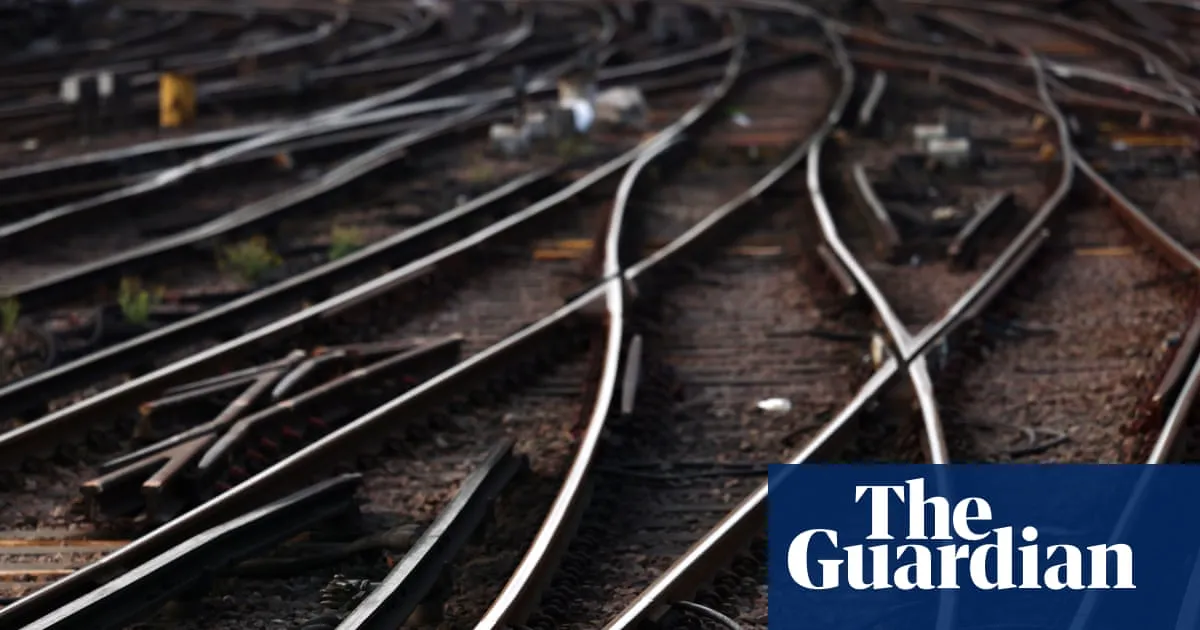
Railway companies are racing to prepare for another brutal summer next year, as a developing El Niño could see 2027 break more heat-related records.Britain’s railway system has already been under stress from extreme heat this summer, with several operators reducing timetables and train speeds.Two trains derailed within 24 hours during the UK’s fifth heatwave in August, in what Network Rail said had “presented exceptional challenges to the railway”.“Traditionally, our railway system hasn’t been designed for hot weather. So that puts our railway system under stress but also our overhead lines as well. That can also cause trouble for the whole [railway] system, not just the ground infrastructure,” said Xueyu Geng, a professor of ground engineering at the University of Warwick.The Met Office has said that the El Niño event developing over the Pacific Ocean is likely to be the strongest for more than 100 years, with the UK forecast to experience increased rainfall and stormy weather this autumn due to the “unprecedented” weather pattern.In 2024, Network Rail increased their projected five-year spending on climate, earthworks and drainage by five times the amount allocated from 2019.“I believe Network Rail has done a great job to maintain our railway network, but we still need to be able to adapt more in order to cope with this changing climate,” Geng said.She warned Britain must begin to factor in higher temperatures as part of the design standards for its railways. “We need to look at how the hot countries are managing their railway systems. For example, in Spain, their rail system is managing between 0C and 45C. Saudi Arabia is 10C to 55C. The track is pre-stressed. We need to manufacture the pre-stress level in order to cope [with extreme heat].”Geng explained that Britain’s railways can typically handle temperatures as low as -10C, and this will need to be maintained. “We might have extreme cold as well. But, in the meantime, we need to look at the upper boundary temperature, and to actually manufacture our rail to cope with both kinds of extreme temperatures.”Prof Adam Scaife, the Met Office’s head of long-range forecasting, said the scale of the growing El Niño is unprecedented. “We’re expecting the biggest El Niño for over a century, [with Pacific sea temperatures] peaking at something over 3C. That is unheard of in modern climate records.”Rail operators need to be prepared in the coming year for both “potentially prolonged periods of hot dry weather and more intense rainfall and storminess,” said William Powrie, professor of geotechnical engineering at the University of Southampton.“There will need to be a serious look at parts of the network where past decisions have compromised the infrastructure, such as the extensive singling on the Salisbury to Exeter line, and reducing the train speed to account for poor track quality as a result of soil moisture deficit destroys the timetable,” Powrie said.skip past newsletter promotionafter newsletter promotion“The immediate priority should be to use the warning time we have,” said Ioannis Koliousis, associate professor at the Cranfield School of Management. “Before a potentially wetter and stormier autumn and winter, Network Rail should intensify drainage clearance, culvert inspections, earthwork monitoring and vegetation management, particularly at locations with a known history of weather-related failures.“The most important consideration is that we should now distinguish between maintenance and adaptation. Clearing a drain prepares us for the next storm, [but] redesigning or increasing the capacity of that drainage system prepares us for the next 30 years. We need to be doing both.”A spokesperson for Network Rail said: “Our long-range forecast suggests it will be a warm, wet winter – in line with climate change predictions for Britain – and we are doing all we can to be ready for that. Britain’s railway is one of the safest in the world and improving its resilience to more frequent and extreme weather is an ongoing priority.“We are continuing to invest in making the railway more resilient to extreme weather and climate change. This includes a £2.6bn programme of works in track maintenance and renewals, including drainage, earthworks, track and overhead power improvements, as well as monitoring and predictive technologies to identify risks earlier and enable proactive intervention.”
SRCThe Guardian - World News
LANGEN
LEANCenter-Left
WORDS692
ENT10
FRI · 2026-08-21 · 18:07 GMTBRIEF NSR-2026-0821-104647
NSR-2026-0821-104647News Report·EN·Environmental
Britain’s railway prepares for more extreme weather as intense El Niño develops
Britain's railway system is preparing for more extreme weather events, including potentially record-breaking heat and increased rainfall, due to a developing El Niño. This follows a summer where extreme heat caused train derailments and operational disruptions, highlighting the system's vulnerability.
Priya BharadiaThe Guardian - World NewsFiled 2026-08-21 · 18:07 GMTLean · Center-LeftRead · 3 min
The Guardian - World NewsFIG 01
Reading time
3min
Word count
692words
Sources cited
3cited
Entities identified
10entities
Quality score
100%
§ 01
Briefing Summary
AI-generatedNEWSAR · AI
Britain's railway system is preparing for more extreme weather events, including potentially record-breaking heat and increased rainfall, due to a developing El Niño. This follows a summer where extreme heat caused train derailments and operational disruptions, highlighting the system's vulnerability. Experts emphasize the need for adaptation, suggesting Britain should adopt design standards used in hotter countries and factor in higher temperatures for railway infrastructure. Network Rail is increasing investment in climate resilience, focusing on track maintenance, earthworks, and drainage. The immediate priority is to intensify drainage clearance and inspections before a potentially wetter autumn and winter, while also undertaking long-term redesigns for future climate challenges.
Confidence 0.90Sources 3Claims 5Entities 10
§ 02
Article analysis
Model · rule-basedFraming
Environmental
Technology
Tone
Mixed Tone
AI-assessed
CalmNeutralAlarmist
Factuality
0.70 / 1.00
Factual
LowHigh
Sources cited
3
Well sourced
FewMany
§ 03
Key claims
5 extracted01
Network Rail increased projected five-year spending on climate, earthworks, and drainage by five times the amount allocated from 2019.
statisticNetwork Rail
Confidence
0.90
02
Britain's railway system has traditionally not been designed for hot weather, causing stress and system issues.
quoteXueyu Geng
Confidence
0.90
03
Railways in hot countries like Spain and Saudi Arabia are designed to manage significantly higher temperatures than the UK's current standards.
factualXueyu Geng
Confidence
0.80
04
The developing El Niño is likely to be the strongest for over 100 years, with the UK forecast to experience increased rainfall and stormy weather this autumn.
predictionMet Office
Confidence
0.80
05
A developing El Niño could see 2027 break more heat-related records for Britain's railway.
prediction
Confidence
0.70
§ 04
Full report
3 min read · 692 words§ 05
Entities
10 identifiedKey playerOppositionContextPositiveNeutralNegative
Organizations3
Locations4
Events1
§ 06
Keywords & salience
10 termsel niño
1.00
extreme weather
1.00
railway infrastructure
0.90
climate change adaptation
0.80
heat-related records
0.70
network rail
0.60
design standards
0.50
overhead lines
0.40
ground engineering
0.40
met office
0.40
§ 07
Topic connections
Interactive graph Network visualization showing 49 related topics
View Full Graph Person Organization Location Event|Click node to navigate|Edge numbers = shared articles