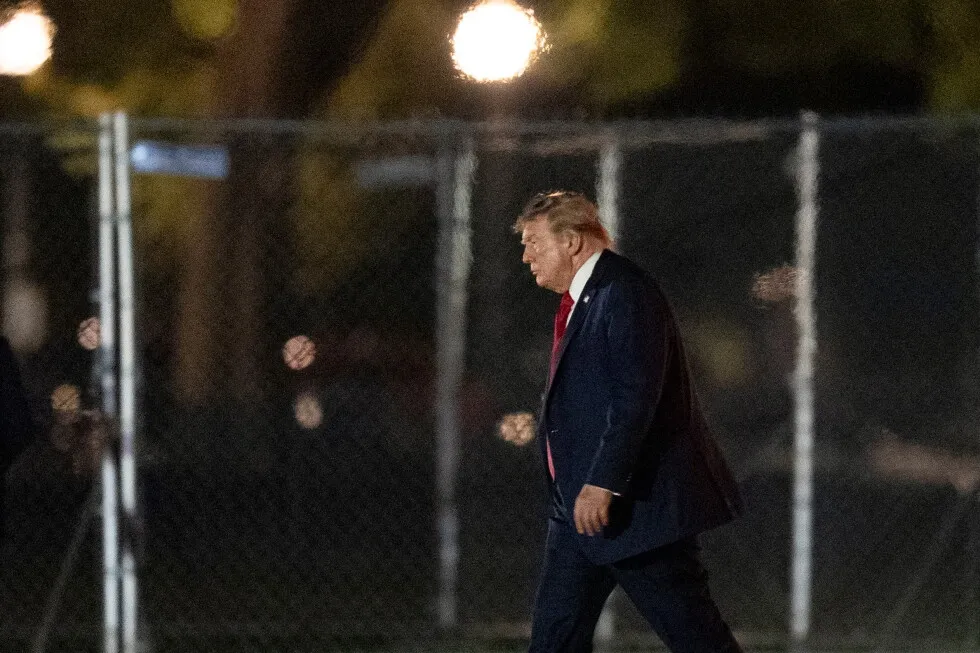
US is set to impose 50% tariffs on $20 billion worth of Canadian products 1 of 2 | President Donald Trump walks on the Ellipse as he arrives on Marine One near the White House, Friday, Aug. 21, 2026, in Washington. (AP Photo/Manuel Balce Ceneta) 2 of 2 | Rolled coils of steel sit in the yard at the ArcelorMittal Dofasco steel plant in Hamilton, Ont. on Thursday, Aug. 20, 2026. (Nick Iwanyshyn /The Canadian Press via AP) By PAUL WISEMAN and ROB GILLIES Updated 5:53 AM MESZ, August 22, 2026 Leer en español Add AP News on Google Add AP News as your preferred source to see more of our stories on Google. Share Share Facebook Copy Link copied Print Email X LinkedIn Bluesky Flipboard Pinterest Reddit Washington (AP) — The United States was set to impose 50% tariffs on $20 billion worth of Canadian products early Saturday after last-ditch negotiations failed to resolve the latest strain in already tense relations between the historic allies. President Donald Trump’s import taxes will hit about 5% of what Canada ships to the United States every year, including products ranging from hockey sticks to tongue depressors. “Tonight, Canada declined to finalize the trade deal under the terms agreed earlier this week. Despite the U.S. offer to Canada to receive the best treatment of any major exporter to our market, new demands and walk backs of other commitments by Canada have upended the careful balance reached in the past days,” U.S. Trade Representative Jamieson Greer said in a statement read to reporters on a press call shortly before midnight. Canadian Prime Minister Mark Carney responded, “Last-minute changes in the U.S. proposed terms were unfair, uneconomic, and called into question the reliability of any deal.” Carney said his government would announce additional support for Canadian workers and businesses in the coming days. Greer said the U.S. offer was “forward-looking” and included “a historic economic and national security partnership.” Canada cancels joint bridge-opening event with US after Trump announces tariffs 4 MIN READ 784 Canadian provincial leader says Trump is a ‘bad person’ as Canada weighs concessions for trade deal 5 MIN READ 18 Prime Minister Carney says Canada is ready to respond if Trump’s new tariffs go into effect 5 MIN READ 18 The political impact will likely be even bigger than the economic fallout. The countries sold each other $880 billion worth of goods and services last year. The tariffs were initially supposed to kick in at 12:01 a.m. Wednesday. But Trump extended the deadline for three days to allow talks to continue, but the two countries still could not reach an agreement in time. The two countries have wrangled for decades over trade, poking each other over sore spots like Canadian softwood lumber imports and U.S. access to Canada’s protected dairy market. This is our AP Ground Game newsletter. You can subscribe below and we will email it you 3 times per week. This site is protected by reCAPTCHA and the Google and Terms of Service apply. Somehow, they still managed to remain friends, allies and trading partners. Canadian soldiers fought alongside Americans in Afghanistan after 9/11. The 5,525-mile U.S.-Canada border is undefended, and nearly 330,000 people and $2 billion worth of goods cross it every day; 800,000 Canadians live in the United States. Trump’s approach to dealing with Canada marks an extraordinary departure from the traditionally cooperative relationship between the two countries. Trump has hit Canadian goods with tariffs — in a push to bring manufacturing back to the United States — and has repeatedly made inflammatory comments about turning Canada into America’s 51st state. The Canadian public is fed up. A petition to expel the U.S. ambassador, a Trump ally, has collected nearly 248,000 signatures since July 21. It accuses Ambassador Pete Hoekstra of having “normalized’’ Trump’s talk of annexing Canada, among other things. Nearly 72% of Canada’s goods exports last year went to the United States. And the Trump administration might be wary of imposing a hefty new tariff — paid by U.S. importers who try to pass along the cost to consumers via higher prices — ahead of November’s midterm elections. American voters are already frustrated with the high cost of living.
SRCAssociated Press (AP)
LANGEN
LEANCenter
WORDS704
ENT12
SAT · 2026-08-22 · 03:53 GMTBRIEF NSR-2026-0822-104738
NSR-2026-0822-104738News Report·EN·Diplomatic
US is set to impose 50% tariffs on $20 billion worth of Canadian products
The United States was set to impose 50% tariffs on $20 billion worth of Canadian products early Saturday, August 22, 2026, following failed last-minute trade negotiations. U.S.
Associated Press (AP)Filed 2026-08-22 · 03:53 GMTLean · CenterRead · 3 min
Associated Press (AP)FIG 01
Reading time
3min
Word count
704words
Sources cited
2cited
Entities identified
12entities
Quality score
100%
§ 01
Briefing Summary
AI-generatedNEWSAR · AI
The United States was set to impose 50% tariffs on $20 billion worth of Canadian products early Saturday, August 22, 2026, following failed last-minute trade negotiations. U.S. Trade Representative Jamieson Greer stated Canada declined to finalize a deal, making new demands and withdrawing commitments. Canadian Prime Minister Mark Carney countered that last-minute changes to U.S. terms were unfair and undermined the deal's reliability. These tariffs will affect approximately 5% of Canada's annual exports to the U.S. and represent a significant departure from the traditionally cooperative relationship between the two nations. The dispute comes amid ongoing trade disagreements and ahead of U.S. midterm elections.
Confidence 0.90Sources 2Claims 5Entities 12
§ 02
Article analysis
Model · rule-basedFraming
Diplomatic
Economic Impact
Tone
Measured
AI-assessed
CalmNeutralAlarmist
Factuality
0.70 / 1.00
Factual
LowHigh
Sources cited
2
Limited
FewMany
§ 03
Key claims
5 extracted01
The countries sold each other $880 billion worth of goods and services last year.
statistic
Confidence
1.00
02
Last-minute changes in the U.S. proposed terms were unfair, uneconomic, and called into question the reliability of any deal.
quoteMark Carney
Confidence
1.00
03
Canada declined to finalize the trade deal under the terms agreed earlier this week.
quoteJamieson Greer
Confidence
1.00
04
President Donald Trump’s import taxes will hit about 5% of what Canada ships to the United States every year.
factual
Confidence
1.00
05
The United States was set to impose 50% tariffs on $20 billion worth of Canadian products early Saturday.
factual
Confidence
1.00
§ 04
Full report
3 min read · 704 words§ 05
Entities
12 identifiedKey playerOppositionContextPositiveNeutralNegative
People3
Organizations3
Locations4
§ 06
Keywords & salience
10 termstariffs
1.00
us-canada relations
0.90
trade deal
0.80
donald trump
0.70
import taxes
0.70
negotiations
0.60
national security
0.50
economic partnership
0.50
mark carney
0.40
steel products
0.40
§ 07
Topic connections
Interactive graph Network visualization showing 51 related topics
View Full Graph Person Organization Location Event|Click node to navigate|Edge numbers = shared articles