Indonesia and Malaysia have agreed to share the skies amid a haze crisis that has closed nearly 600 Malaysian schools and erased much of the Kuala Lumpur skyline from view.The Petronas Twin Towers, usually visible for miles around, have been swallowed by a grey shroud as wildfires that continue to rage across Indonesia’s Sumatra and Kalimantan on the island of Borneo.Authorities from both countries are coordinating operations along their shared Bornean border, with Malaysia’s environment minister confirming that Jakarta has granted permission for joint cloud-seeding operations to tackle the worsening transboundary haze.Malaysia’s national disaster management agency and its meteorological department are scheduling work in border areas, with operations to be coordinated by the Indonesian military.Tourists look at the skyline of Kuala Lumpur shrouded in haze from Indonesia’s wildfires earlier this month. Photo: ReutersNatural Resources and Environmental Sustainability Minister Arthur Joseph Kurup said in a statement on Monday that 16 areas in Malaysia had recorded unhealthy air pollutant index (API) readings as of 10am on August 26.He warned that the El Nino weather phenomenon was expected to intensify by October, coinciding with the southwest monsoon, adding that both nations had pledged to step up preventive measures and early firefighting efforts.“Malaysia stands ready to extend assistance to the Republic of Indonesia at any time, should it be required for immediate firefighting efforts,” Kurup said.In Malaysia, API readings between 0 and 50 indicate good air quality, 51 to 100 moderate, 101 to 200 unhealthy, 201 to 300 very unhealthy and above 300 is classed as hazardous.Three locations in Sarawak state had logged API levels above 160 as of Wednesday. In Peninsular Malaysia, Negeri Sembilan state reached 162, Kuala Lumpur and Cheras recorded 159, and Putrajaya registered 158. Another 52 areas remained at moderate levels, with only Kangar in Perlis and the Langkawi archipelago in Kedah recording good air quality.On Friday, nearly 600 schools in Sarawak were forced to close as pollution reached “very unhealthy” levels, affecting almost 200,000 pupils.Malaysians took to social media to vent their frustration, posting side-by-side photos comparing clear views of the capital’s landmarks with the smog-choked skyline, while urging employers to reinstate work-from-home arrangements from the pandemic era.“It’s OK to allow work from home and online classes for a while instead of forcing people to inhale haze,” one person wrote.Further ReadingOthers complained of sore throats and other illnesses caused by the smog. “The Twin Towers are gone from my view, and my throat hurts,” another user wrote.Indonesia has been battling severe wildfires across multiple provinces since earlier this month. Dozens of people suspected of starting some of the blazes have been arrested.Prabowo’s promised crackdown“We will go after them if they are proven guilty. We will penalise them according to the law,” he told reporters in Palangka Raya, Central Kalimantan.The president flew to West and Central Kalimantan on Saturday to assess the destruction and coordinate emergency responses. Indonesian forest ministry data shows more than 2,000 square km (770 square miles) of land burned between January and July, with nearly 950 square km (366 square miles) affected in last month alone.Six provinces – including Riau, Jambi, South Sumatra and parts of Kalimantan on Borneo – have been designated priority zones for emergency response, with fires also breaking out in Java, Papua and Nusa Tenggara. Thousands of personnel, water-bombing helicopters and cloud-seeding aircraft have been deployed nationwide.
SRCSouth China Morning Post
LANGEN
LEANCenter-Right
WORDS555
ENT12
WED · 2026-08-26 · 06:45 GMTBRIEF NSR-2026-0826-106021
NSR-2026-0826-106021News Report·EN·Public Health
Indonesia opens its skies to Malaysian rainmakers as haze crisis deepens
Indonesia has granted Malaysia permission to conduct joint cloud-seeding operations to combat the worsening haze crisis affecting both nations. Wildfires in Indonesia's Sumatra and Kalimantan regions have caused severe air pollution, leading to the closure of nearly 600 schools in Malaysia and obscuring landmarks like the Petronas Twin Towers.
Ushar DanieleSouth China Morning PostFiled 2026-08-26 · 06:45 GMTLean · Center-RightRead · 3 min
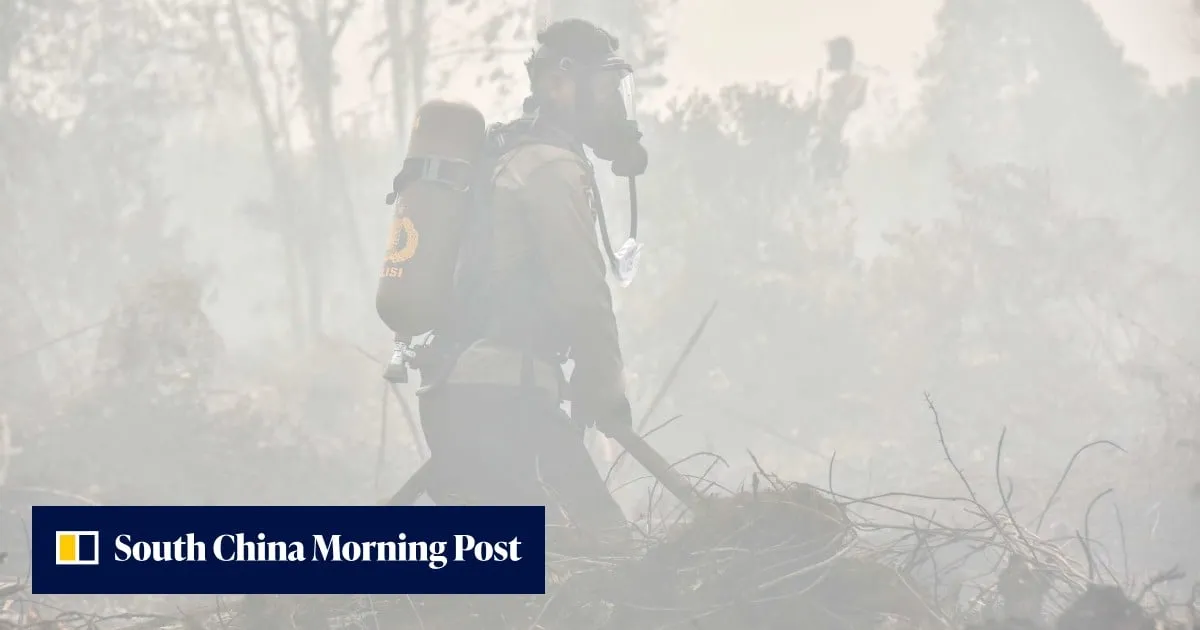
South China Morning PostFIG 01
Reading time
3min
Word count
555words
Sources cited
2cited
Entities identified
12entities
Quality score
100%
§ 01
Briefing Summary
AI-generatedNEWSAR · AI
Indonesia has granted Malaysia permission to conduct joint cloud-seeding operations to combat the worsening haze crisis affecting both nations. Wildfires in Indonesia's Sumatra and Kalimantan regions have caused severe air pollution, leading to the closure of nearly 600 schools in Malaysia and obscuring landmarks like the Petronas Twin Towers. Authorities are coordinating efforts along their shared Bornean border, with the Indonesian military overseeing operations. Air pollutant index readings in 16 Malaysian areas have reached unhealthy levels, with El Nino expected to intensify the situation. Malaysia has pledged assistance for firefighting efforts, while Indonesia is arresting individuals suspected of starting the blazes and deploying thousands of personnel and aircraft nationwide.
Confidence 0.90Sources 2Claims 5Entities 12
§ 02
Article analysis
Model · rule-basedFraming
Public Health
Diplomatic
Tone
Mixed Tone
AI-assessed
CalmNeutralAlarmist
Factuality
0.80 / 1.00
Factual
LowHigh
Sources cited
2
Limited
FewMany
§ 03
Key claims
5 extracted01
16 areas in Malaysia recorded unhealthy air pollutant index (API) readings as of August 26.
statisticNatural Resources and Environmental Sustainability Minister Arthur Joseph Kurup
Confidence
1.00
02
Nearly 600 Malaysian schools were closed due to haze, affecting almost 200,000 pupils.
statisticArticle
Confidence
1.00
03
Indonesia and Malaysia have agreed to share skies for joint cloud-seeding operations to combat transboundary haze.
factualMalaysia's environment minister
Confidence
1.00
04
Dozens of people suspected of starting wildfires in Indonesia have been arrested.
factualArticle
Confidence
0.90
05
El Nino is expected to intensify by October, coinciding with the southwest monsoon, potentially worsening the haze.
predictionNatural Resources and Environmental Sustainability Minister Arthur Joseph Kurup
Confidence
0.90
§ 04
Full report
3 min read · 555 words§ 05
Entities
12 identifiedKey playerOppositionContextPositiveNeutralNegative
Locations9
§ 06
Keywords & salience
9 termshaze crisis
1.00
cloud-seeding operations
0.90
transboundary haze
0.80
wildfires
0.70
air pollutant index
0.60
el nino
0.50
malaysia
0.40
indonesia
0.40
borneo
0.40
§ 07
Topic connections
Interactive graph Network visualization showing 51 related topics
View Full Graph Person Organization Location Event|Click node to navigate|Edge numbers = shared articles