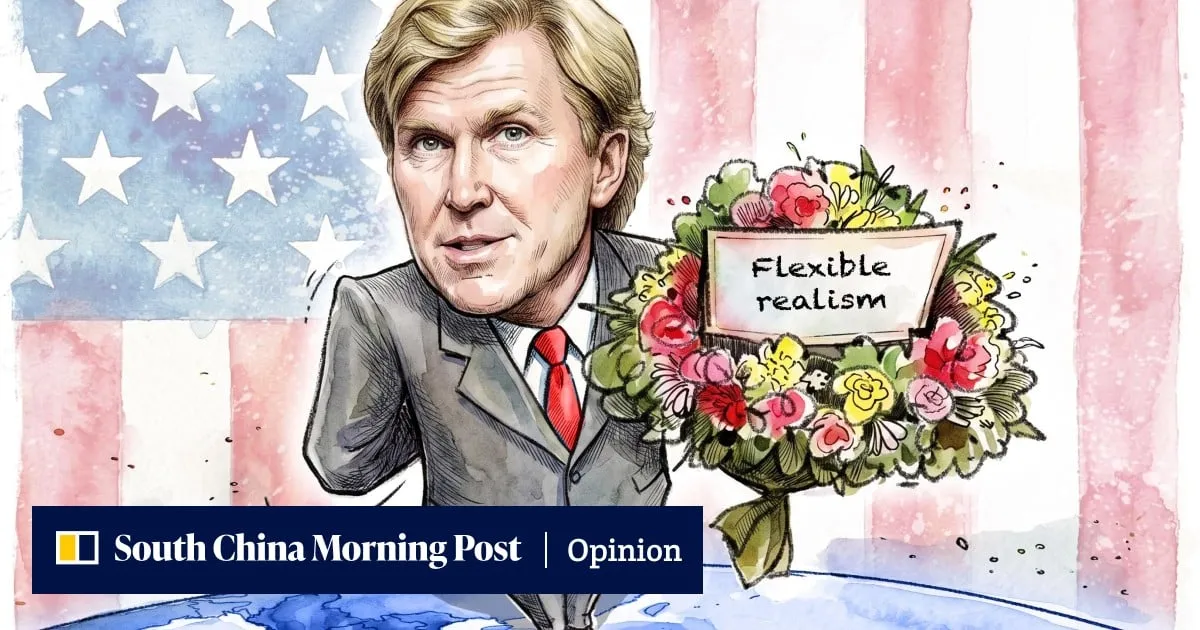
In arguably his most important foreign trip, Elbridge Colby, US undersecretary for defence policy, visited key Southeast Asian capitals this month. In a speech in Manila, the Pentagon policy chief extolled America’s “flexible realism”, which he said serves “the practical, concrete interests of regular Americans” and echoes Southeast Asian nations’ commitment to “pragmatism, an openness to dialogue, respect for counterparts, proud nationalism, and a focus on economic prosperity”.Amid the United States’ growing unpopularity, and deepening doubts over its wherewithal due to the festering conflict in the Middle East, Colby sought to reassure his hosts by emphasising how the Trump administration views Asia as being of “paramount importance” strategically. He stressed the US commitment to preserving a “favourable balance of power” to ensure the region remains “free of hegemony”. He dismissed criticisms of American foreign policy as “the cheap talk of the cognoscenti”.Colby described his host, the Philippines, as a “model ally” and highlighted the deployment of American coastguard forces amid rising tensions in the South China Sea. He carried a similar message of reassurance and strategic sympathy to Jakarta, where he hailed a “partnership founded on mutual respect and deeper cooperation” in a meeting with Indonesian President Prabowo Subianto, while pushing for expanded defence relations in Thailand and Cambodia.Through burden-sharing, mutual capacity-building and diplomatic reciprocity, Colby essentially argued, the United States was in a historic position to reassert its leadership and strategic primacy in the region. By all indications, however, Southeast Asia remained sceptical of American strategic commitment.Battered by US tariffs and the energy shock of the ill-conceived Iran war, there is widespread discontent with Washington’s foreign policy. Moreover, key regional states have doubled down on their strategic cooperation with China. The US has yet to provide its closest Southeast Asian ally, the Philippines, with sufficient military and economic assistance despite mounting challenges.Colby is no ordinary apparatchik. A scion of the American strategic elite, the Ivy League-educated strategist has enjoyed support across key constituencies within the Republican Party. This includes the more nationalist-populist wing represented by Vice-President J.D. Vance, who personally pitched for Colby’s Senate confirmation last year.Elbridge Colby, US undersecretary of defence for policy, at a forum in Manila, Philippines, on Monday, August 10. Photo: AP
SRCSouth China Morning Post
LANGEN
LEANCenter-Right
WORDS367
ENT12
THU · 2026-08-27 · 21:30 GMTBRIEF NSR-2026-0827-106631
NSR-2026-0827-106631Analysis·EN·Political Strategy
Why Southeast Asia isn’t buying the US’ offer of ‘flexible realism’
US Undersecretary of Defense Policy Elbridge Colby recently visited Southeast Asian capitals, including Manila, Jakarta, Thailand, and Cambodia, to promote America's "flexible realism" foreign policy. Colby aimed to reassure regional partners of the US commitment to their strategic interests and economic prosperity, emphasizing a desire to preserve a favorable balance of power and prevent hegemony.
Richard HeydarianSouth China Morning PostFiled 2026-08-27 · 21:30 GMTLean · Center-RightRead · 2 min
South China Morning PostFIG 01
Reading time
2min
Word count
367words
Sources cited
2cited
Entities identified
12entities
Quality score
100%
§ 01
Briefing Summary
AI-generatedNEWSAR · AI
US Undersecretary of Defense Policy Elbridge Colby recently visited Southeast Asian capitals, including Manila, Jakarta, Thailand, and Cambodia, to promote America's "flexible realism" foreign policy. Colby aimed to reassure regional partners of the US commitment to their strategic interests and economic prosperity, emphasizing a desire to preserve a favorable balance of power and prevent hegemony. He highlighted the Philippines as a model ally and discussed expanded defense relations with Indonesia, Thailand, and Cambodia. Despite Colby's efforts, Southeast Asian nations remain skeptical of US strategic commitment. This skepticism stems from discontent with US foreign policy, including tariffs and the impact of the Iran conflict, and a growing strategic cooperation between key regional states and China. The US has also faced criticism for insufficient military and economic assistance to allies like the Philippines.
Confidence 0.90Sources 2Claims 5Entities 12
§ 02
Article analysis
Model · rule-basedFraming
Political Strategy
Diplomatic
Tone
Measured
AI-assessed
CalmNeutralAlarmist
Factuality
0.60 / 1.00
Mixed
LowHigh
Sources cited
2
Limited
FewMany
§ 03
Key claims
5 extracted01
Colby dismissed criticisms of American foreign policy as 'the cheap talk of the cognoscenti'.
quoteElbridge Colby
Confidence
1.00
02
Elbridge Colby, US undersecretary for defence policy, visited key Southeast Asian capitals this month to promote 'flexible realism'.
factualarticle
Confidence
1.00
03
Colby sought to reassure Southeast Asian nations by emphasizing the Trump administration's view of Asia as strategically paramount.
factualarticle
Confidence
0.90
04
The US has not provided sufficient military and economic assistance to the Philippines despite mounting challenges.
factualarticle
Confidence
0.80
05
Southeast Asia remained skeptical of American strategic commitment due to US tariffs, the Iran war, and increased cooperation with China.
factualarticle
Confidence
0.80
§ 04
Full report
2 min read · 367 words§ 05
Entities
12 identifiedKey playerOppositionContextPositiveNeutralNegative
§ 06
Keywords & salience
10 termsflexible realism
1.00
southeast asia
0.90
us foreign policy
0.80
strategic commitment
0.70
balance of power
0.60
pragmatism
0.50
hegemony
0.50
elbridge colby
0.40
south china sea
0.40
economic prosperity
0.40
§ 07
Topic connections
Interactive graph Network visualization showing 51 related topics
View Full Graph Person Organization Location Event|Click node to navigate|Edge numbers = shared articles