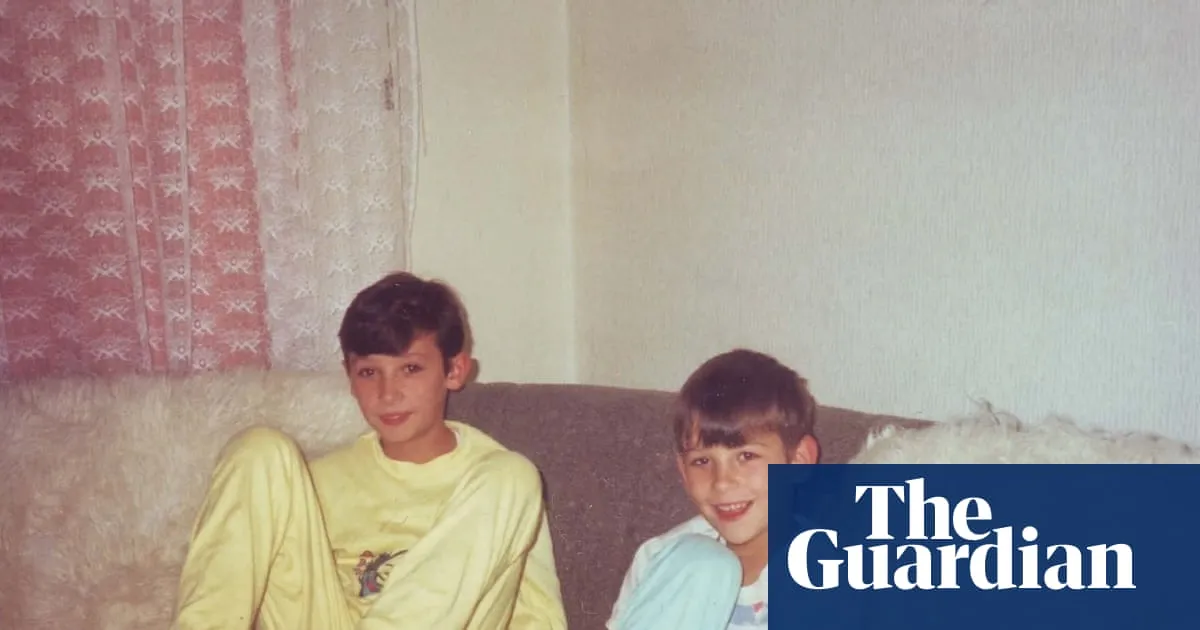
To most of the world, he was and will always be the “Butcher of Bosnia”, a grim epithet but one that still fails to fully convey the evil and horror inflicted on its people by Gen Ratko Mladić, who died in prison on Thursday.As commander of the Bosnian Serb forces, Mladić was responsible for the killing of an estimated 100,000 men, women and children during the savage breakup of Yugoslavia in the 1990s. He was most notoriously the architect of ethnic cleansing and the genocide at Srebrenica in which at least 8,000 Bosnian Muslim men and boys were slaughtered.Today, 31 years after the Dayton Agreement ended the Bosnian conflict and the 1,425-day siege of Sarajevo – the longest in modern warfare – Mladić is dead, but his legacy still divides the Balkans.Džemil Hodžić was 12 when his brother Amel, 16, was killed by a sniper while playing tennis in Sarajevo in May 1995. “As kids, Mladić was a kind of horror creature. Everyone knew him and his name. We were very well aware that he was responsible for our situation and the suffering we were going through,” Hodžić, now 43 and founder of the Sniper Alley photo project in Sarajevo, told the Guardian.Džemil and his father at Amel’s grave after his funeral. Photograph: Family handout“Perhaps we were too young to comprehend everything, but children living through the Sarajevo siege knew the shootings by snipers, the shelling of our schools, the killing of our friends and family … all of that was down to him.”Zoran Kusovać, a Croatian journalist and geopolitical analyst who reported from the Balkan wars, met Mladić several times, once on a mountain plateau overlooking Sarajevo where Bosnian Serb forces surrounding the city had installed heavy artillery. During the siege of the Bosnian capital they killed more than 11,000 people, including 2,000 children, in a terrifying daily campaign of shelling, bombing and sniping.“We were up on the mountain overlooking the city and Mladić said to me: ‘Look, I have Sarajevo in the palm of my hand. I can either destroy it or take it whenever I want,’” Kusovać said.“He was a bully and nobody, not even his superiors, had the guts to tell him he was wrong. He also kept meticulous notes of what he did … he wrote everything down with the absolute confidence of a man who believed he would never be held responsible for it.”As well as those killed in Bosnia in the 1992-94 conflict, 20,000-50,000 women and girls were raped and 2.7 million people were displaced.Srebrenica is remembered as one of the most shameful failures of the international community. The Bosnian town, its mainly Muslim population swollen by refugees, was declared a UN “safe haven” and residents were ordered to hand over all weapons to international peacekeepers.A memorial cemetery near Srebrenica, in eastern Bosnia. Photograph: Andrej Isaković/AFP/Getty ImagesThe UN then abandoned Srebrenica to a bloody fate. The image of Mladić ruffling the hair of a child in the enclave shortly before marching all men and boys away to be killed, is particularly chilling.To many Serbians, however, Mladić was a hero: a man who believed in a mythical “Greater Serbia” but was traduced in an international campaign against Serbs who felt – and still feel – misunderstood and victimised.On Thursday, the Serbian government in Belgrade once again defied international condemnation as it announced that Mladić, who died serving a life sentence for genocide, war crimes and crimes against humanity, would be buried with “all the military and state honours to which he is entitled”. He was either 83 or 84 when he died, according to differing official and family accounts.skip past newsletter promotionafter newsletter promotionThe ultranationalist politician Vojislav Šešelj told journalists: “Mladić fought against those villains [at The Hague] for a long time; they expected his death two or three years ago, but he did not give up.” Milorad Dodik, the Bosnian Serb separatist leader, added: “Mladić was respected by the Serbian people. As a commander he stood to defend Serbs.”A statement from the office of the UN secretary general, António Guterres, cautioned those in power to “refrain from denying the seriousness of the crimes”, particularly the denial of the Srebrenica genocide or glorifying of war crimes.Emir Suljagić, the director of the Srebrenica Memorial, who was one of only a handful of males to escape the town, said Mladić’s death did not change historical facts or erase the consequences of genocide. “The people he sent to their deaths never had the chance to grow old. That is the only fact about his death that matters to me,” Suljagić told the Bosnian newspaper Dnevni Avaz.“Now the hardest part of the job remains: not to let the truth, responsibility and memory die with him. Mladić’s death is another moment in which we must decide what we will remember and, more importantly, what we will not allow to be erased.”Suljagić has repeatedly pointed out that Mladić did not act alone. “When are we going to deal with the people who did his bidding? Everyone knows who they are, the Bosnian judiciary knows who they are,” he told the Observer in 2021. “These guys are mass murderers, they are knee-deep in blood and they are walking about as free men. It means that Bosnian people still don’t feel entirely safe – and who can blame them?”Dr Waqar Azmi, of the Remembering Srebrenica group, wrote on X: “His legacy is not one of heroism, but of shame: a dark reminder of the depths of human cruelty.”Hodžić added: “Sadly, there are people who consider Mladić a hero and celebrate his life and his atrocities. The butcher may be gone, but unfortunately his legacy is still there … many share his ideology and views that the job is not yet finished because we are still here … still fighting genocide denial and the relativisation of his crimes.“His ideas and ideals are not dead and we are witnessing this on a daily basis. It is the glorification of a monster.”
SRCThe Guardian - World News
LANGEN
LeanCenter-Left
WORDS997
ENT12
SAT · 2026-08-29 · 04:00 GMTBRIEF NSR-2026-0829-107088
NSR-2026-0829-107088News Report·EN·Human Rights
‘The butcher may be gone, but to many he is a hero’: victims condemn glorification of Mladić
General Ratko Mladić, responsible for the Srebrenica genocide and the deaths of an estimated 100,000 people during the Bosnian War, died in prison. While widely condemned as the "Butcher of Bosnia," his death has highlighted the ongoing division in the Balkans, with some Serbians viewing him as a hero who defended Serbs.
Kim WillsherThe Guardian - World NewsFiled 2026-08-29 · 04:00 GMTLean · Center-LeftRead · 4 min
The Guardian - World NewsFIG 01
Reading time
4min
Word count
997words
Sources cited
2cited
Entities identified
12entities
NEWSAR · AI
General Ratko Mladić, responsible for the Srebrenica genocide and the deaths of an estimated 100,000 people during the Bosnian War, died in prison. While widely condemned as the "Butcher of Bosnia," his death has highlighted the ongoing division in the Balkans, with some Serbians viewing him as a hero who defended Serbs. Victims and survivors condemned any glorification of Mladić, emphasizing that his ideology persists. The UN cautioned against denying war crimes or glorifying perpetrators. Mladić's legacy continues to be a point of contention, with survivors stressing the importance of preserving the truth and memory of the atrocities.
Confidence 0.90Sources 2Claims 5Entities 12
Framing
Human Rights
Conflict
Tone
Mixed Tone
AI-assessed
CalmNeutralAlarmist
Factuality
0.80 / 1.00
Factual
LowHigh
Sources cited
2
Limited
FewMany
01
Mladić told a journalist, 'Look, I have Sarajevo in the palm of my hand. I can either destroy it or take it whenever I want.'
quoteZoran Kusovać
Confidence
1.00
02
Mladić was the architect of ethnic cleansing and the genocide at Srebrenica in which at least 8,000 Bosnian Muslim men and boys were slaughtered.
factual
Confidence
1.00
03
Gen Ratko Mladić, commander of Bosnian Serb forces, died in prison on Thursday.
factual
Confidence
1.00
04
During the siege of Sarajevo, Bosnian Serb forces killed more than 11,000 people, including 2,000 children.
statistic
Confidence
0.90
05
Mladić was responsible for the killing of an estimated 100,000 men, women and children during the breakup of Yugoslavia.
statistic
Confidence
0.90
§ 04
Full report
4 min read · 997 wordsKey playerOppositionContextPositiveNeutralNegative
People3
Events3
gen ratko mladić
1.00
bosnian war
0.90
genocide
0.90
srebrenica
0.80
ethnic cleansing
0.80
sarajevo siege
0.70
war crimes
0.60
yugoslavia breakup
0.50
victims
0.40
legacy
0.40
§ 07
Connections
Who appears together in the newsIn this articleWider coverageLine weight = articles in common
Laying out network…
Strongest ties articles in common
- 11
- 10
- 8
- 8
- 8
- 8
Recurring context not named in this article
- PRadovan Karadziclinks 5
- LThe Haguelinks 5
- LSerbialinks 5
- TGenocidelinks 5
- LBosnia and Herzegovinalinks 5
- OUnited Nationslinks 5
- EBosnian Warlinks 4
- PAleksandar Vuciclinks 4