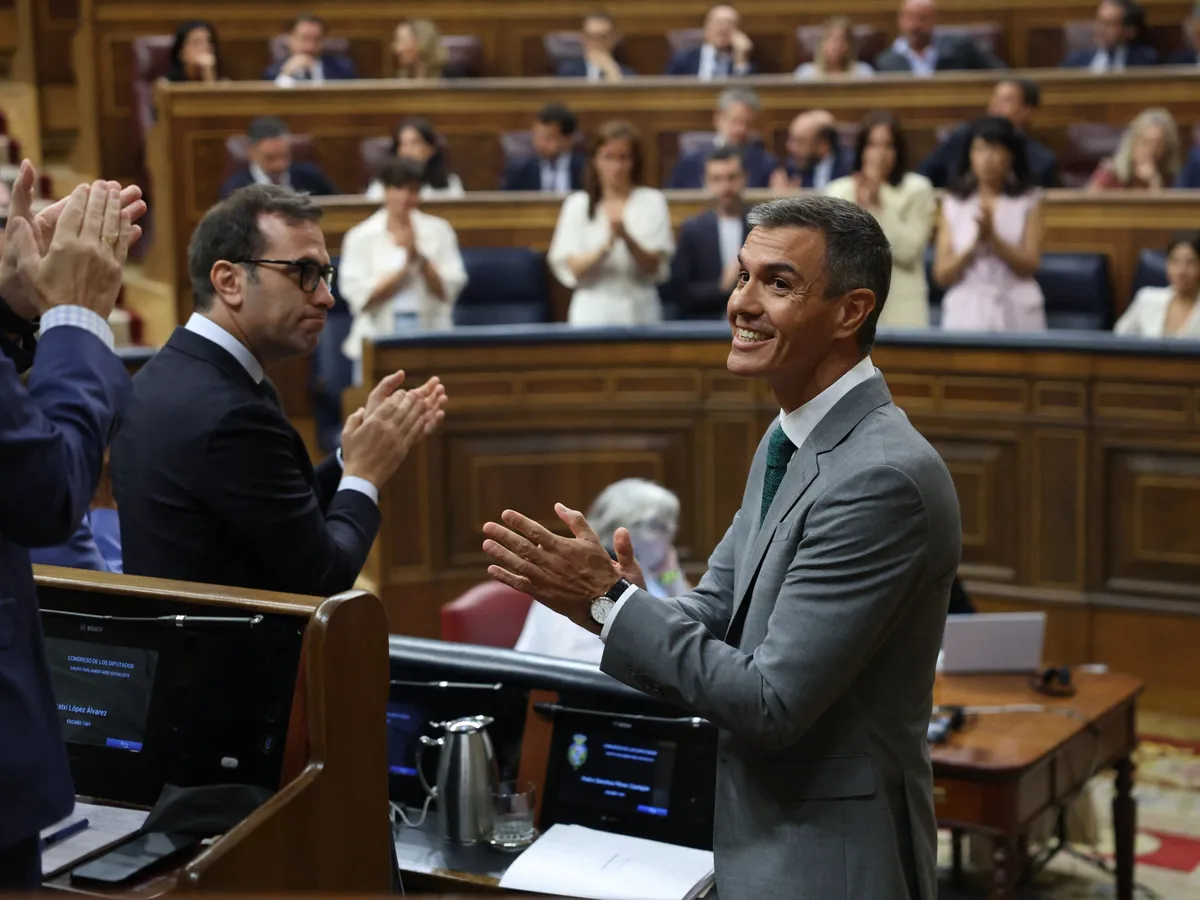
Prime Minister Pedro Sanchez addresses police report suggesting July border surge was planned to overwhelm border controls.Spanish Prime Minister Pedro Sanchez says Madrid has found no evidence that Morocco orchestrated a surge of 70,000 people who crossed into its North African enclave of Ceuta a month ago.Speaking in parliament on Thursday, Sanchez responded to claims in a police report that emerged this week and suggested the border rush into Ceuta in late July was planned to overwhelm border controls.Recommended Stories list of 3 itemslist 1 of 3Migrant women face sexual assault in Ceutalist 2 of 3Spain’s Sanchez says Russia, Israel spread Disinformation on Ceuta crisislist 3 of 3Tens of thousands rally across Spain over Ceuta migrant crisisend of list“I can assure you that no institution – not the diplomatic service nor the European Commission nor any international body – has provided the Spanish government with any solid evidence that Morocco planned or carried out the incident. None whatsoever,” Sanchez said.However, he said Moroccan police did allow crossings to occur during a 10-hour peak period on July 30. Spanish authorities had yet to determine whether this was due to inaction or an inability to contain the influx, Sanchez added.In late July, about 72,000 people swam and rushed into Ceuta, a Spanish enclave with a population of 84,000 that borders Morocco.The police report, commissioned by a High Court judge last month, alleged that Moroccan security forces were initially deployed in smaller numbers than usual near the border and did not make a serious attempt to disperse the crowds.Moroccan authorities previously denied any permissiveness, blaming the misinterpretation of a Spanish court ruling that appeared to open a legal loophole for arrivals by sea and a social media campaign that spread information about a mass crossing.Sanchez has defended Morocco during the crisis, highlighting Rabat’s cooperation in returning most of the migrants within 48 hours.
SRCAl Jazeera
LANGEN
OutletState media · Qatar
WORDS310
ENT10
THU · 2026-09-03 · 17:32 GMTBRIEF NSR-2026-0903-108937
NSR-2026-0903-108937News Report·EN·Diplomatic
Spain’s PM says no evidence Morocco planned Ceuta border rush
Spanish Prime Minister Pedro Sanchez stated that the government has found no evidence that Morocco planned the surge of approximately 70,000 people who crossed into the Spanish enclave of Ceuta in late July. This response comes after a police report suggested the border rush was orchestrated to overwhelm controls.
By AP and ReutersAl JazeeraFiled 2026-09-03 · 17:32 GMTOutlet · State media · QatarRead · 2 min
Al JazeeraFIG 01
Reading time
2min
Word count
310words
Sources cited
3cited
Entities identified
10entities
NEWSAR · AI
Spanish Prime Minister Pedro Sanchez stated that the government has found no evidence that Morocco planned the surge of approximately 70,000 people who crossed into the Spanish enclave of Ceuta in late July. This response comes after a police report suggested the border rush was orchestrated to overwhelm controls. Sanchez assured parliament that no diplomatic, European, or international body has provided solid evidence of Moroccan planning. He did note, however, that Moroccan police allowed crossings to occur during a 10-hour peak period, though the government is still determining if this was due to inaction or inability to contain the influx. Moroccan authorities had previously denied permissiveness, attributing the event to a misinterpreted court ruling and social media campaigns. Sanchez has previously defended Morocco's cooperation in returning most migrants.
Confidence 0.90Sources 3Claims 5Entities 10
Framing
Diplomatic
Political Strategy
Tone
Measured
AI-assessed
CalmNeutralAlarmist
Factuality
0.70 / 1.00
Factual
LowHigh
Sources cited
3
Well sourced
FewMany
01
Sanchez defended Morocco, highlighting Rabat’s cooperation in returning most migrants within 48 hours.
factualPedro Sanchez
Confidence
1.00
02
About 72,000 people crossed into Ceuta, a Spanish enclave bordering Morocco, in late July.
statistic
Confidence
1.00
03
Spanish Prime Minister Pedro Sanchez stated that no institution has provided solid evidence that Morocco planned the Ceuta border surge.
quotePedro Sanchez
Confidence
1.00
04
Moroccan authorities blamed the incident on the misinterpretation of a Spanish court ruling and a social media campaign.
factualMoroccan authorities
Confidence
0.90
05
A police report suggested the July border rush into Ceuta was planned to overwhelm border controls.
factualpolice report
Confidence
0.90
§ 04
Full report
2 min read · 310 wordsKey playerOppositionContextPositiveNeutralNegative
Organizations2
Events1
ceuta border surge
1.00
morocco planned influx
0.90
spanish prime minister
0.80
border controls
0.70
migrant crisis
0.60
police report
0.50
diplomatic service
0.40
european commission
0.40
§ 07
Connections
Who appears together in the newsIn this articleWider coverageLine weight = articles in common
Laying out network…
Strongest ties articles in common
- 380
- 225
- 159
- 149
- 120
- 98
Recurring context not named in this article
- LRussialinks 8
- LEuropelinks 8
- OEuropean Unionlinks 8
- LIranlinks 7
- PDonald Trumplinks 7
- LMadridlinks 7
- LUnited Stateslinks 7
- LFrancelinks 7