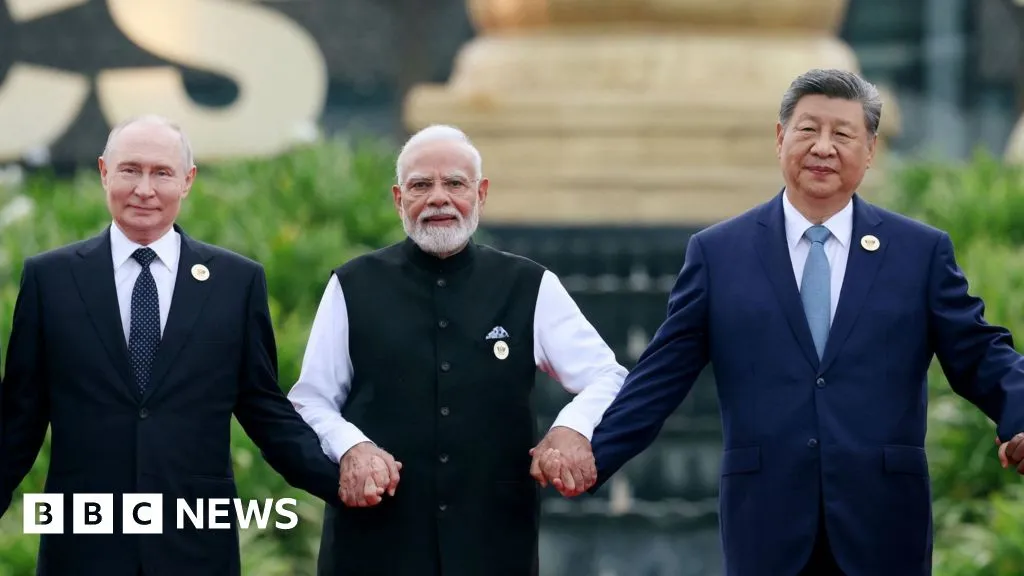
This weekend, some of the most powerful people in the world gathered in Delhi around a vast circular table.Indian Prime Minister Narendra Modi announced that together, the leaders next to him should increasingly become "rule-shapers", not "rule-takers".Among those listening were members of the Brics group, including Chinese President Xi Jinping, Russian President Vladimir Putin, Iran's President Masoud Pezeshkian, Abu Dhabi's Crown Prince Sheikh Khaled bin Mohamed bin Zayed Al Nahyan and South African President Cyril Ramaphosa.These are hardly natural allies. They have histories of border disputes and even military confrontations.India and China engaged in a deadly clash along their disputed border in 2020. Iran and the UAE have been on opposing ends of the war in the Middle East, with Tehran launching missiles and drones at its fellow Brics member as the conflict sent shockwaves across global economies.The fact that India was able to gather these leaders together in person is a feat in and of itself and testament to its diplomatic reach. The weekend also provided a platform for countries to reassess their relationships in light of the Iran war.But agreeing on what a new global order should look like and achieving clear, tangible outcomes was a much harder task, and that tension ran through this weekend's summit.A counterweight to Western influenceFor members such as China, Russia and Iran, Brics offers a vehicle to dilute the influence of the US and western Europe.
SRCBBC News - World
LANGEN
LEANCenter
WORDS234
ENT12
SUN · 2026-09-13 · 11:23 GMTBRIEF NSR-2026-0913-110938
NSR-2026-0913-110938Analysis·EN·Diplomatic
Iran war reshapes Brics ties but also exposes divisions
At a recent summit in Delhi, leaders from the Brics group, including those from India, China, Russia, Iran, and the UAE, gathered. Indian Prime Minister Narendra Modi stated that these nations should become "rule-shapers" rather than "rule-takers," signaling a desire for a new global order.
37 minutes agoShareSaveAdd as preferred on GoogleAzadeh MoshiriSouth Asia Correspondent, DelhiBBC News - WorldFiled 2026-09-13 · 11:23 GMTLean · CenterRead · 1 min
BBC News - WorldFIG 01
Reading time
1min
Word count
234words
Sources cited
0cited
Entities identified
12entities
Quality score
100%
§ 01
Briefing Summary
AI-generatedNEWSAR · AI
At a recent summit in Delhi, leaders from the Brics group, including those from India, China, Russia, Iran, and the UAE, gathered. Indian Prime Minister Narendra Modi stated that these nations should become "rule-shapers" rather than "rule-takers," signaling a desire for a new global order. While the summit demonstrated India's diplomatic capabilities in bringing together these disparate nations, it also highlighted divisions within the group. Members like China, Russia, and Iran see Brics as a way to counter Western influence. However, agreeing on the specifics of a new global order and achieving tangible outcomes proved challenging, with underlying tensions evident among the participants, who have histories of disputes and even military confrontations.
Confidence 0.90Claims 4Entities 12
§ 02
Article analysis
Model · rule-basedFraming
Diplomatic
Conflict
Tone
Measured
AI-assessed
CalmNeutralAlarmist
Factuality
0.60 / 1.00
Mixed
LowHigh
Sources cited
0
No named sources
FewMany
§ 03
Key claims
4 extracted01
India and China engaged in a deadly clash along their disputed border in 2020.
factual
Confidence
1.00
02
Indian Prime Minister Narendra Modi announced that Brics leaders should increasingly become 'rule-shapers', not 'rule-takers'.
quoteNarendra Modi
Confidence
1.00
03
Iran and the UAE have been on opposing ends of the war in the Middle East, with Tehran launching missiles and drones at its fellow Brics member.
factual
Confidence
0.90
04
For members such as China, Russia and Iran, Brics offers a vehicle to dilute the influence of the US and western Europe.
factual
Confidence
0.80
§ 04
Full report
1 min read · 234 words§ 05
Entities
12 identifiedKey playerOppositionContextPositiveNeutralNegative
People6
Organizations1
§ 06
Keywords & salience
9 termsbrics
1.00
iran war
0.90
global order
0.80
rule-shapers
0.70
western influence
0.70
diplomatic reach
0.60
delhi summit
0.50
global economies
0.40
border disputes
0.40
§ 07
Topic connections
Interactive graph Network visualization showing 26 related topics
View Full Graph Person Organization Location Event|Click node to navigate|Edge numbers = shared articles