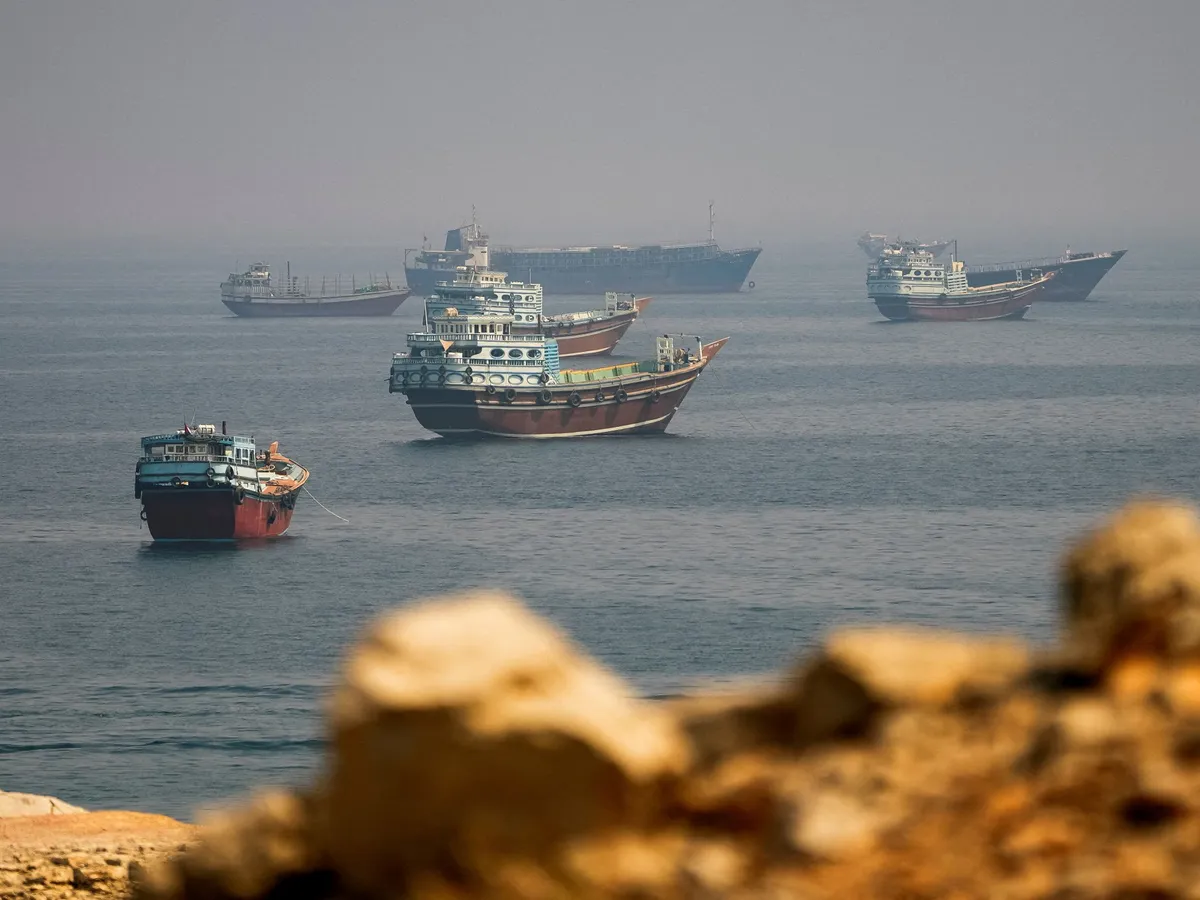
Negotiations in Oman between Iran and Gulf Arab states have been postponed at the request of some regional countries, Iranian media have reported.The postponement came hours after an attack on an Iranian commercial cargo vessel killed one person in the Strait of Hormuz.Recommended Stories list of 3 itemslist 1 of 3Fighting continues between Yemen gov’t forces, Houthis: What is the latest?list 2 of 3A dignified life is a ‘distant dream’ for many Iranian families amid US warlist 3 of 3BRICS summit: What are the key takeaways?end of listIran’s Fars news agency, quoting the director general of the Iranian foreign ministry’s Gulf affairs office, said on Sunday the postponement “was made at the request of some countries in the region and was a joint decision by Tehran and Muscat”.Omani Foreign Minister Badr Albusaidi said on X that the meeting, scheduled for Monday, had been postponed “in the interests of consensus”.“We remain committed to fostering dialogue that supports stability and lasting cooperation in our region,” Albusaidi said.Oman has emerged as a key mediator in the war, building on its decades-long role as a trusted interlocutor with Tehran. The country is also directly affected by the dispute over navigation through the Strait of Hormuz, whose southern shore lies in Omani territory.In July, Muscat proposed a joint regional mechanism that would split control of the strait 50-50. The proposal also suggested “voluntary fees” from shipping vessels that would go to both countries.The system is similar to an agreement governing the Strait of Malacca, which asks ships transiting the strait to voluntarily contribute to fund navigation, environmental protection and search-and-rescue operations. Iran rejected the idea of a voluntary fee, insisting instead that payments should be compulsory for vessels transiting the chokepoint.
SRCAl Jazeera
LANGEN
LEANCenter
WORDS286
ENT12
SUN · 2026-09-13 · 21:50 GMTBRIEF NSR-2026-0913-111045
NSR-2026-0913-111045News Report·EN·Diplomatic
Tehran and Muscat delay talks, citing regional consensus need
Talks between Iran and Gulf Arab states in Oman have been postponed at the request of some regional countries, according to Iranian media. The decision was a joint one by Tehran and Muscat, with Oman's Foreign Minister stating the delay was "in the interests of consensus" and to foster dialogue supporting regional stability.
By The Associated PressAl JazeeraFiled 2026-09-13 · 21:50 GMTLean · CenterRead · 2 min
Al JazeeraFIG 01
Reading time
2min
Word count
286words
Sources cited
3cited
Entities identified
12entities
Quality score
100%
§ 01
Briefing Summary
AI-generatedNEWSAR · AI
Talks between Iran and Gulf Arab states in Oman have been postponed at the request of some regional countries, according to Iranian media. The decision was a joint one by Tehran and Muscat, with Oman's Foreign Minister stating the delay was "in the interests of consensus" and to foster dialogue supporting regional stability. This postponement occurred shortly after an attack on an Iranian cargo vessel in the Strait of Hormuz. Oman has been a mediator in regional disputes and is directly affected by navigation issues in the Strait of Hormuz. Previously, Oman proposed a regional mechanism for shared control and voluntary fees for vessels transiting the strait, a proposal Iran rejected, advocating for compulsory payments.
Confidence 0.90Sources 3Claims 5Entities 12
§ 02
Article analysis
Model · rule-basedFraming
Diplomatic
Conflict
Tone
Measured
AI-assessed
CalmNeutralAlarmist
Factuality
0.80 / 1.00
Factual
LowHigh
Sources cited
3
Well sourced
FewMany
§ 03
Key claims
5 extracted01
The meeting, scheduled for Monday, had been postponed in the interests of consensus.
quoteOmani Foreign Minister Badr Albusaidi
Confidence
0.95
02
The postponement was made at the request of some countries in the region and was a joint decision by Tehran and Muscat.
quoteDirector general of the Iranian foreign ministry’s Gulf affairs office
Confidence
0.95
03
Muscat proposed a joint regional mechanism that would split control of the Strait of Hormuz 50-50.
factual
Confidence
0.90
04
Negotiations in Oman between Iran and Gulf Arab states have been postponed.
factualIranian media
Confidence
0.90
05
Oman has emerged as a key mediator in the war, building on its decades-long role as a trusted interlocutor with Tehran.
factual
Confidence
0.85
§ 04
Full report
2 min read · 286 words§ 05
Entities
12 identifiedKey playerOppositionContextPositiveNeutralNegative
Organizations3
§ 06
Keywords & salience
10 termsregional consensus
1.00
strait of hormuz
0.90
oman mediation
0.80
iran gulf arab talks
0.70
maritime security
0.60
regional stability
0.50
navigation fees
0.50
muscat
0.40
cargo vessel attack
0.40
tehran
0.40
§ 07
Topic connections
Interactive graph Network visualization showing 51 related topics
View Full Graph Person Organization Location Event|Click node to navigate|Edge numbers = shared articles